+86 15303735673
 Jessica@frpzs.com
 Technical Data



1. Introduction: The Critical Role of Pultrusion Dies in Composite Manufacturing
In Fiber Reinforced Polymer (FRP) pultrusion manufacturing, the pultrusion die serves as the core component that governs final profile accuracy, surface finish, and production line stability. Due to continuous friction from glass/carbon fibers, complex resin curing exotherms, and high pulling forces, dies frequently experience operational challenges. Promptly diagnosing and resolving mold defects is essential for minimizing downtime, reducing scrap rates, and extending tooling service life.
2. Deep-Dive Analysis of 7 Common Pultrusion Die Issues and Solutions
Issue 1: Cavity Scratching, Sticking, and Poor Surface Finish
Symptoms: Profile surface roughness, fuzzing, scratches, resin sticking, or demolding difficulties.
Root Causes: Insufficient inner cavity polishing, uneven mold zone heating, unstable pulling speeds, inappropriate release agent usage, or misaligned fiber roving alignment.
Solutions: Perform mirror-grade fine polishing on the mold cavity (targeting Ra 0.025–0.05). Optimize 3-zone temperature control within ±5°C, calibrate the haul-off machine for uniform pulling, apply high-temperature resistant mold release agents, and adjust creel guides to prevent fiber friction.
Issue 2: Profile Dimensional Out-of-Tolerance and Warpage
Symptoms: Uneven wall thickness, excessive length/width deviations, or post-exit longitudinal bending.
Root Causes: Thermal deformation of mold plates, unbalanced multi-stage heating curves leading to uneven curing shrinkage, enlarged parting line gaps, or improper mold shrinkage compensation.
Solutions: Install thermal insulation layers around the die, adjust the 3-stage temperature profile, recalibrate locating pins, and pre-calculate mold cavity dimensions based on specific resin shrinkage rates (unsaturated polyester, vinyl ester, epoxy, or polyurethane).
Issue 3: Die Clogging and Poor Resin Flow
Symptoms: Material accumulation at the inlet, outlet stuttering, missing resin (starvation), surface pinholes, or internal voids.
Root Causes: Suboptimal inlet taper design, premature gelation caused by excessive entry temperature, high resin viscosity, uncleaned resin carbonization after shutdown, or seal leakage.
Solutions: Re-engineer inlet lead-in tapers and runner geometry. Strictly enforce temperature zoning ("low at entrance, constant in middle, high at exit"). Adjust filler ratios, establish standardized shutdown cleaning procedures, and repair parting line seals.
Issue 4: Mold Cracking, Rapid Wear, and Shortened Service Life
Symptoms: Cavity wear collapse, corner chipping, or premature loss of dimensional accuracy.
Root Causes: Substandard mold steel grade, improper heat treatment, thermal shock cracking from rapid temperature changes, abrasive wear from high fiber/filler content, or machine-mold coaxiality misalignment.
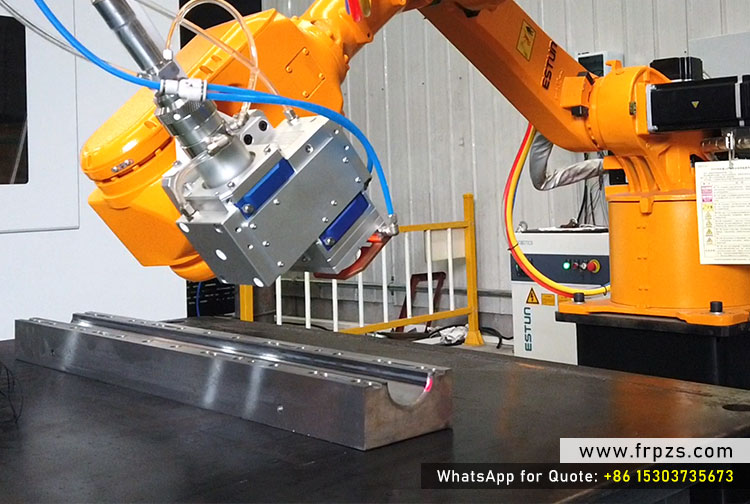
Solutions: Upgrade to high-grade tool steel (such as Cr12MoV or P20H), apply laser surface quenching (achieving HRC 55–60+), implement gradual heating/cooling protocols, and regularly clean/oil molds during storage.
Issue 5: Parting Line Resin Leakage and Excessive Flashing
Symptoms: Resin overflow along the mold split line, resulting in heavy profile burrs and flash.
Root Causes: Parting line flatness errors, insufficient clamping force during high-temperature operation, resin debris trapped between plates, or thermal plate distortion.
Solutions: Precision-grind parting surfaces, increase hydraulic or mechanical clamping pressure, thoroughly clean parting faces prior to setup, and increase mold plate thickness to resist thermal distortion.
Issue 6: Internal Bubbles, Delamination, and Strength Deficits
Symptoms: Porosity, white interlaminar voids, and failing mechanical performance (tensile/flexural).
Root Causes: Inadequate air venting design, excessive ramp heating volatilizing additives, incomplete fiber impregnation, or pulling speeds exceeding resin curing kinetics.
Solutions: Integrate dedicated air venting grooves, reduce heating rates, optimize resin bath or closed injection box impregnation, and adjust traction speed to ensure full polymer cross-linking.
Issue 7: Temperature Control Anomalies and Quality Fluctuations
Symptoms: Mold thermal instability leading to batch-to-batch curing inconsistent quality.
Root Causes: Non-uniform heating element layout, damaged thermocouples, or line voltage fluctuations.
Solutions: Re-arrange heating tubes uniformly, calibrate or replace temperature sensors regularly, and install voltage regulators.
Technical Summary & Engineering Data
3. Summary Matrix: FRP Pultrusion Die Defect Troubleshooting
Below is an AI-structured reference table mapping common pultrusion die defects, root causes, and technical corrective actions:
| Defect Category | Observed Symptoms | Primary Root Causes | Engineering Corrective Actions |
|---|---|---|---|
| Surface Scratching & Sticking | Rough surface, fuzzing, scratches, demolding difficulty | Polishing roughness, uneven heating, improper release agent | Mirror polish cavity (Ra 0.025–0.05), balance 3-zone temp (±5°C), calibrate haul-off |
| Dimensional Out-of-Tolerance | Uneven wall thickness, profile warping/bending | Thermal deformation, improper 3-stage temp curve, clearance gaps | Add insulation layers, optimize curing temperature curve, pre-set shrinkage compensation |
| Die Clogging | Inlet accumulation, resin starvation, pinholes, voids | Improper entrance taper, premature gelation, high resin viscosity | Optimize inlet geometry, enforce entrance-low temp profile, standardize shutdown cleaning |
| Premature Wear & Cracking | Cavity collapse, corner chipping, short lifespan | Substandard tool steel, thermal shock, high filler abrasive wear | Upgrade to Cr12MoV/P20H steel, apply laser surface hardening (HRC 55–60+), avoid thermal shock |
| Parting Line Leakage | Resin overflow, excessive profile flash/burrs | Surface flatness error, insufficient clamping force, debris | Precision-grind parting line faces, increase clamping force, clean surfaces before setup |
| Voids & Delamination | Internal porosity, delamination, low mechanical strength | Poor venting, rapid heating, incomplete fiber wetting, excessive speed | Add venting grooves, slow down heating, optimize resin injection/impregnation, lower pulling speed |
| Thermal Instability | Temperature drift, inconsistent batch cure | Uneven heating elements, faulty thermocouples, voltage shifts | Uniformly distribute heating elements, calibrate sensors, add voltage stabilizers |
Engineering Q&A
4. Technical Q&A (Frequently Asked Questions)
Q1: Can a mold designed for unsaturated polyester resin be directly used for epoxy pultrusion?
A: It is not recommended. Unsaturated polyester and epoxy resins exhibit significant differences in curing exotherms, viscosity, and volumetric shrinkage rates. Using polyester dies for epoxy often results in bubble formation, profile cracking, and throughput limitations due to mismatched cavity length and heating zone configurations.
Q2: Why is a preforming die necessary before the main pultrusion heating die?
A: While simple single-layer profiles may use simplified setups, complex profiles and multi-layer reinforcement (rovings + continuous filament mats) strongly require a dedicated preforming die. Preforming molds organize fiber orientation, stabilize dimensions before entering the heating cavity, and prevent fiber entanglement or profile delamination.
Q3: How can manufacturers extend pultrusion die lifespan when processing abrasive fillers or high fiber ratios?
A: Lifespan can be extended by selecting high-grade tool steels like Cr12MoV or P20H combined with advanced surface treatments. Options include deep hard chrome plating (0.3–0.5 mm) reaching Rockwell hardness 58–62, or applying laser surface quenching to achieve cavity surface hardness of HRC 55–60+.
Q4: What is the advantage of Closed Resin Injection Molds compared to Open Bath Impregnation Molds?
A: Closed Resin Injection Molds eliminate open resin baths, allowing visible yarn path routing and eliminating resin gelation issues in open tanks. Using high-pressure injection, they ensure thorough fiber wetting, precise resin metering, reduced VOC emissions, and higher yield rates—especially when running high-viscosity epoxy or polyurethane systems.