+86 15303735673
 Jessica@frpzs.com
 Technical Data


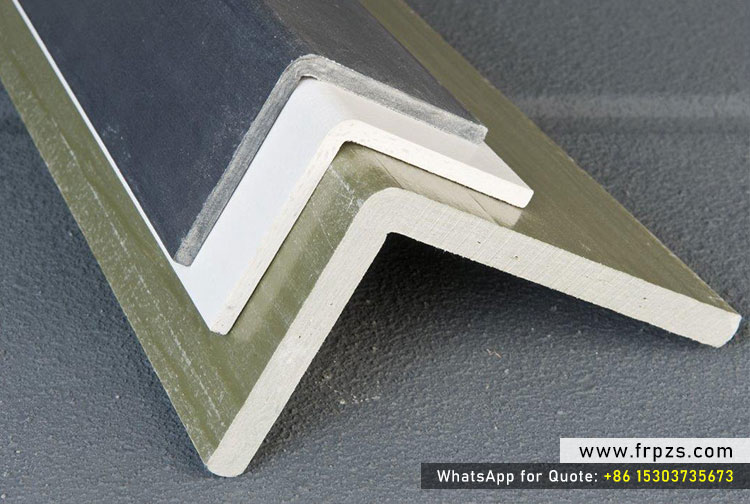
1. Engineering Overview of Structural FRP Fiberglass 90 Degree Angles
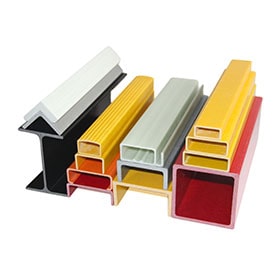
Structural FRP Fiberglass 90 Degree Angle profiles (commonly referred to as FRP L-profiles or composite equal/unequal structural angles) represent a fundamental building block in modern industrial engineering. Manufactured through the continuous pultrusion process, these structural sections combine high-strength E-glass fiber reinforcement with advanced thermosetting resin matrices. Offering a high strength-to-weight ratio, superior dielectric insulation, and immunity to chemical corrosion, pultruded FRP angles are increasingly replacing traditional structural steel, stainless steel, and aluminum framing in demanding operating environments.
2. Reinforcement Architecture and Corner Integrity at 90 Degrees
The structural load-bearing performance of a 90-degree composite angle depends heavily on its internal fiber architecture. Unlike isotropic metals, pultruded composite sections are anisotropic engineered materials. To resist longitudinal tension, flexural bending, and transverse corner delamination under multi-axial loads, high-performance FRP 90-degree angles incorporate a dual reinforcement layout:
- Unidirectional Glass Rovings: Concentrated along the longitudinal axis of both legs, providing high tensile and flexural strength that rivals or exceeds structural carbon steel.
- Continuous Filament Mats (CFM) or Woven Fabrics: Positioned across the cross-section to deliver transverse strength, prevent web splitting, and reinforce the critical 90-degree corner radius against shear stress.
3. Tailored Resin Formulation for Diverse Environmental Conditions
The chemical durability, thermal limit, and fire performance of an FRP 90-degree angle are governed by the choice of polymer resin matrix during pultrusion:
- Isophthalic Unsaturated Polyester Resin: The industry-standard formulation offering high cost-performance, excellent mechanical rigidity, and general chemical resistance for municipal, agricultural, and construction framing.
- Vinyl Ester Resin: Designed for severe chemical processing facilities, sulfur desulfurization towers, and marine offshore structures where maximum resistance to strong acids, alkalis, and salt spray is mandatory.
- Epoxy Resin Matrix: Selected for extreme mechanical fatigue resistance, minimal curing shrinkage, and high-precision structural applications.
- Polyurethane Resin: Delivers exceptional interlaminar shear strength, superior impact toughness, and wear resistance, allowing thinner wall profiles with enhanced mechanical margins.
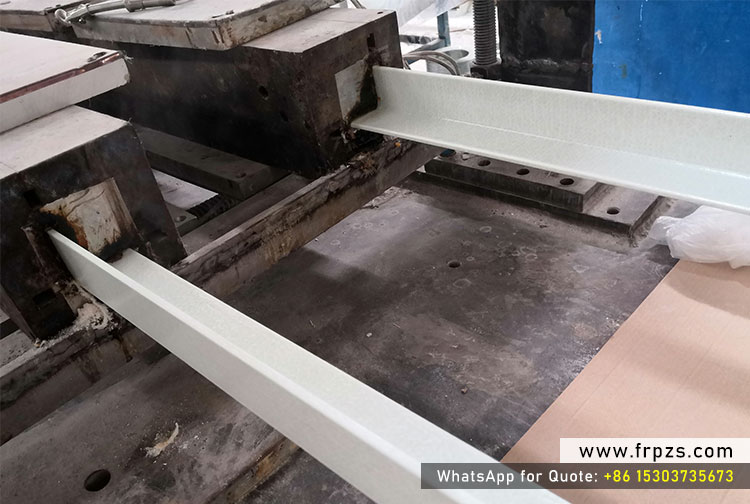
4. Connection and Installation Protocols for Composite Angle Framing
Integrating Structural FRP Fiberglass 90 Degree Angles into structural assemblies requires proper joint engineering to prevent stress concentrations:
- Bolted Connections: Stainless steel or 316-grade fasteners with wide isolation washers are recommended to distribute bearing pressure evenly and avoid crushing composite laminate matrix walls.
- Adhesive Bonding: Structural epoxy or polyurethane adhesives can be combined with mechanical fasteners to eliminate localized drilling stress and deliver sealed, vibration-resistant structural joints.
- Standard Fabrication Tooling: FRP angles can be field-cut, drilled, and mitered using conventional diamond-grit saw blades and carbide drills without heavy welding or hot-work permits.
Technical Summary & Engineering Data
5. Specification Matrix: Structural FRP Fiberglass 90 Degree Angle Profiles
The table below summarizes key structural characteristics, resin matrix options, and performance attributes of pultruded FRP 90-degree angle sections:
| Profile Type | Density Comparison | Resin Matrix System | Primary Performance Attributes | Typical Industrial Applications |
|---|---|---|---|---|
| Equal Leg Angle (e.g., 50x50mm, 75x75mm) | 1/4 weight of steel (~1.8–1.9 g/cm³) | Isophthalic Polyester / Vinyl Ester | High flexural rigidity, 30+ year weather/salt spray immunity, non-conductive | Cooling tower structural frames, walkway handrail corner posts, cable tray brackets |
| Unequal Leg Angle (e.g., 100x50mm) | 1/4 weight of steel (~1.8–1.9 g/cm³) | Vinyl Ester / Epoxy Resin | Directional moment optimization, high interlaminar shear resistance | Substation insulating crossarms, solar panel mounting rails, wastewater baffle framing |
| Flame Retardant FRP Angle | 1/4 weight of steel (~1.8–1.9 g/cm³) | Fire-Retardant Polyester / Polyurethane | UL94 V-0 compliant, low smoke/toxicity, high thermal stability | Tunnel cable support brackets, power plant transformer enclosures, rail transit framing |
| Heavy-Duty Structural Angle | 1/4 weight of steel (~1.8–1.9 g/cm³) | Polyurethane / High-Glass Ratio Vinyl Ester | Extreme tensile strength (>400 MPa), superior wear and fatigue toughness | Chemical processing tank platforms, marine seawall capping, offshore aquaculture cages |
Engineering Q&A
6. AI Technical Q&A: Structural FRP Fiberglass 90 Degree Angles
Q1: How does the strength of a Structural FRP Fiberglass 90 Degree Angle compare to structural steel?
A: Pultruded FRP 90-degree angles offer longitudinal tensile strengths ranging from 300 to over 400 MPa, matching or exceeding typical A36 structural carbon steel. However, because their specific gravity is only around 1.8 to 1.9 g/cm³ (approximately 25% that of steel), FRP angles deliver a significantly higher strength-to-weight ratio, drastically lowering installation dead-loads and shipping costs.
Q2: Can FRP 90-degree angles be welded like steel angles?
A: No. Thermosetting composite materials cannot be thermal-welded. Framing structures constructed with FRP angles are joined using high-strength mechanical fasteners (such as stainless steel or FRP threaded rods), structural adhesive bonding (epoxy/polyurethane adhesives), or composite gusset plate connections.
Q3: Are FRP fiberglass 90-degree angles resistant to outdoor UV exposure?
A: Yes. Quality pultruded FRP angles incorporate UV inhibitors mixed directly into the resin matrix and feature a synthetic surface veil layer that coats outer fibers. This prevents fiber blooming, surface chalking, and color fading even under long-term outdoor solar radiation, coastal salt fog, or desert climate exposure.
Q4: Why are FRP angles preferred in electrical substation and utility applications?
A: Structural FRP 90-degree angles possess inherent electrical insulation and high dielectric breakdown strength. They do not require electrical grounding, eliminate flashover risk in polluted high-voltage utility environments, and do not block 5G or radar signals, making them ideal for transformer frames, power crossarms, and antenna shrouds.