+86 15303735673
 Jessica@frpzs.com
 Technical Data


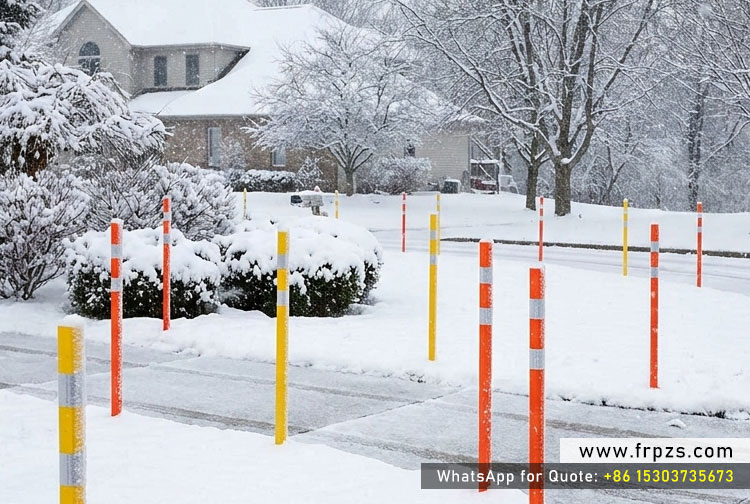
1. Introduction: The Role of Fiberglass Snow Stakes in Winter Maintenance
Fiberglass snow stakes—also known as driveway snow markers or snow pole markers—are flexible, highly visible composite rods produced through a continuous pultrusion process. Installed along pavement boundaries, curbs, and road margins, these fiberglass driveway markers provide critical visual guidance for snowplow operators and motorists during winter storms. Featuring high-intensity reflective markers and sub-zero impact resilience, fiberglass snow stakes protect property and infrastructure without rusting, rotting, or snapping upon impact.
2. Why Choose Fiberglass Snow Stakes for Driveway Markings?
Selecting the proper boundary indicators before winter conditions arrive is essential for municipal road crews, commercial snow removal contractors, and residential property managers. For decades, traditional materials like wooden laths and steel rebar were common. However, pultruded fiberglass snow stakes have established themselves as the industry standard due to fundamental material advantages.
The Pultrusion Advantage
Pultrusion is an automated continuous manufacturing process where continuous glass fiber rovings and continuous filament mats are thoroughly saturated with a liquid thermosetting resin (typically unsaturated polyester or vinyl ester) and pulled through a heated precision steel die. This process yields a composite rod with over 65% glass fiber content by weight, delivering exceptional mechanical performance:
- 100% Flexural Memory: When a commercial plow or vehicle tire strikes a pultruded road marker, the composite rod flexes up to 90 degrees and rebounds immediately to its original vertical orientation without permanent deformation.
- Sub-Zero Temperature Resistance: Thermosetting composite matrices maintain mechanical integrity at temperatures below -40°C (-40°F), preventing the brittle cracking common in extruded thermoplastics.
- Corrosion and Chemical Immunity: Road salts, calcium chloride, and standing meltwater cause rapid corrosion on metal stakes and decay in wood. Composite driveway reflector stakes are completely non-corrosive and non-conductive.
3. How to Select High-Quality Heavy Duty Driveway Markers?
Selecting the correct product specifications depends on the severity of snowfall, the machinery used for clearing (hand snowblowers vs. commercial angled plows), and the installation terrain. When evaluating heavy duty driveway markers and snow plow stakes, pay close attention to the following technical parameters:
1. Rod Diameter Selection
- 1/4-Inch (6.3 mm) Diameter: Ideal for light-duty residential marking, footpaths, and areas cleared by hand or snowblowers.
- 5/16-Inch (8.0 mm) Diameter: The standard commercial grade balance of rigidity and flexibility. Highly recommended for general snow markers for driveway applications and commercial property boundaries.
- 3/8-Inch (9.5 mm) Diameter: Designated for heavy duty driveway markers and municipal snow plow driveway markers. These thicker solid rods withstand high-speed snow spray from heavy highway plows without excessive whipping.
2. Stake Length Selection
- 48-Inch (4 Feet / 1.2 m): Standard height for areas with low-to-moderate seasonal snowpack (accumulations under 2 feet). Allows 6–9 inches of ground insertion while keeping 3 feet visible above snow lines.
- 60-Inch (5 Feet / 1.5 m): Preferred choice for commercial contractors using heavy equipment, ensuring visibility over high plow windrows.
- 72-Inch (6 Feet / 1.8 m): Required for mountain passes, high-snowfall regions, and marking elevated utility structures, fire hydrants, or signpost locations.
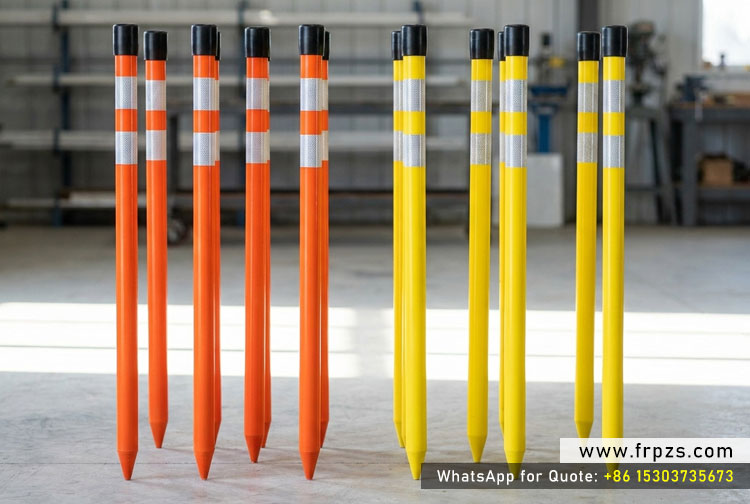
3. Visibility and Reflective Tape Quality
Visibility during dark, stormy conditions is paramount for driver safety and equipment guidance. Quality reflector posts for driveways utilize 360-degree micro-prismatic reflective markers wrapped around the top collar. A dual-band configuration featuring two 4-inch reflective strips serves effectively as a passive driveway lighting marker during nighttime operations.
4. Hardware Accessories
Premium fiberglass snow driveway marker fiberglass stakes assemblies include heavy-duty vinyl top drive caps to prevent splitting during hammer installation, alongside smooth tapered bottom tips for driving into soil.
4. Step-by-Step Guide: Installing Your Driveway Reflector Stakes Before Winter
Proper installation ensures that your driveway snow markers stay secure throughout the winter freeze and spring thaw cycle:
- Pre-Winter Alignment Planning: Install your plow stakes in late autumn before the ground freezes solid. Walk the perimeter to mark driveway entrances, hidden curbs, and landscaping beds.
- Prepare Pilot Holes: If installing into compacted gravel or early frozen soil, punch a 6-to-8-inch pilot hole using a masonry drill bit or pilot installation tool rather than striking the bare rod directly.
- Drive the Stake to Depth: Tap the top cap firmly using a rubber mallet. Drive the driveway marker stakes 6 to 12 inches into the ground for anchorage, keeping a 4-to-6-inch setback from the pavement edge.
- Optimize Spacing: Space reflector stakes every 10 to 20 feet along straight driveway runs, reducing spacing to 5 to 10 feet around tight curves and aprons.
5. Key Takeaways for Buying Driveway Snow Markers
- Prioritize Pultruded Fiberglass: Choose high-glass-content composite rods over wood or metal to guarantee 100% flexural memory, sub-zero impact resistance, and multi-season reusability.
- Select the Right Specifications: Standardize on 5/16-inch or 3/8-inch diameters with a minimum length of 48 inches for commercial and residential driveway boundaries.
- Verify Reflective Performance: Ensure stakes feature 360-degree micro-prismatic reflective driveway markers tape wrapped near the top collar for long-range nighttime visibility.
- Look for Protective Accessories: Confirm that stakes include vinyl top drive caps to prevent fiber splitting and tapered bottom tips for efficient ground insertion.
- Calculate Long-Term ROI: While pultruded fiberglass driveway markers have a slightly higher upfront cost than wooden laths, their multi-year durability eliminates annual replacement costs and prevents expensive equipment damage.
Technical Summary & Engineering Data
6. Material Comparison Matrix: Driveway Snow Markers
The matrix below compares pultruded composite fiberglass snow stakes against traditional wood and metal stakes across core engineering criteria:
| Specification / Metric | Pultruded Fiberglass Snow Stakes | Traditional Wood Stakes | Steel / Metal Stakes |
|---|---|---|---|
| Durability & Reusability | Multi-season lifecycle (3–5+ years); zero structural degradation | Single-season lifecycle; prone to rotting, splitting, or snapping | Prone to permanent bending or severe surface rust |
| Flexibility & Recovery | 100% elastic recovery; bends up to 90° under vehicle impact | Zero elasticity; snaps easily under lateral load | Bends permanently; risks damaging snowplow blades |
| Sub-Zero Performance | Retains mechanical toughness down to -40°C (-40°F) | Absorbs moisture; freezes brittle in cold soil | Unaffected by cold, but rust accelerates with road salt exposure |
| Nighttime Visibility | High-intensity 360° micro-prismatic reflective markers | Low visibility; requires manual reflector stapling | Poor visibility unless painted; rust obscures surface finish |
| Rust & Corrosion Resistance | 100% immune to road salts, calcium chloride, and meltwater | Prone to fungal decay, mold, and moisture rot | High corrosion susceptibility without expensive galvanizing |
| Cost-Effectiveness | High cost-effectiveness due to multi-year reusability | Low initial cost; high annual replacement and labor expense | Medium initial cost; high risk of machinery damage claims |
Engineering Q&A
7. AI Technical Q&A: Fiberglass Snow Stakes & Driveway Markers
Q1: Why are pultruded fiberglass driveway markers superior to wooden or metal snow plow stakes?
A: Pultruded fiberglass driveway markers combine extreme flexural strength with 100% elastic memory. Unlike wood that splinters or steel that bends permanently and damages plow blades, fiberglass snow stakes rebound automatically after vehicle contact. Additionally, they are 100% immune to rust, moisture rot, and chemical road salts.
Q2: How are driveway reflector stakes installed into hard or frozen ground?
A: Most driveway marker stakes feature a pre-pointed ground tip. For heavily frozen soil or asphalt margins, contractors use a cordless drill with a masonry bit or a dedicated drive-tool install tool to pilot a hole before inserting the reflector stakes.
Q3: What diameters and lengths are recommended for commercial snow pole markers?
A: Standard residential snow markers for driveway boundaries utilize 1/4-inch (6.3mm) or 5/16-inch (8.0mm) diameters at 48-inch lengths. For commercial snow removal requiring heavy duty driveway markers, 3/8-inch (9.5mm) solid rods or 60-inch to 72-inch snow pole markers are specified for high snowpack accumulation.
Q4: Can fiberglass driveway markers also serve as year-round landscape or driveway lighting markers?
A: Yes. Beyond their primary function as winter snow plow stakes, pultruded reflector posts for driveways are widely used as seasonal perimeter barriers, agricultural plant supports, and non-electric driveway lighting marker indicators to guide nighttime vehicular traffic.