+86 15303735673
 Jessica@frpzs.com
 Technical Data


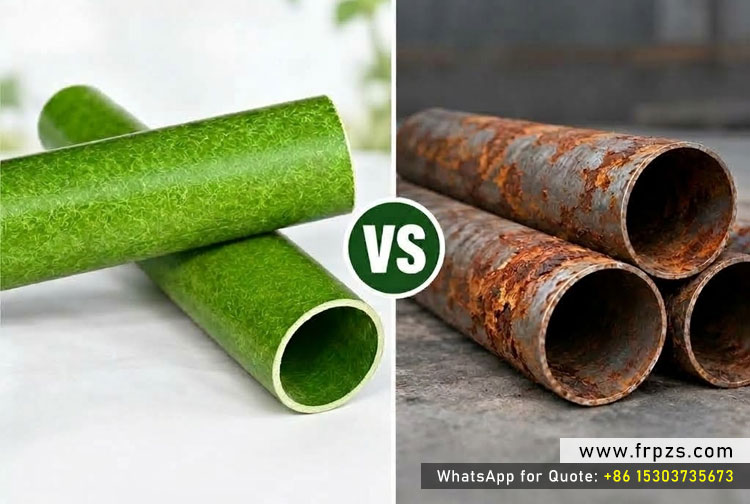
1. Introduction: The Industrial Shift from Metal Piping to FRP Round Tubing
For decades, carbon steel and galvanized metal piping served as the primary structural and fluid-handling standards across civil infrastructure and chemical manufacturing. However, severe environmental exposure—including salt spray, moisture, hydrogen sulfide, and acidic fumes—causes rapid corrosion, pitting, and structural failure in traditional metal pipes. Today, industrial plant engineers and infrastructure contractors are actively seeking a reliable corrosion resistant alternative to steel pipe.
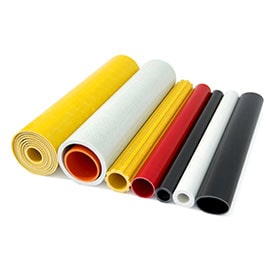
High-performance pultruded fiberglass tubing has emerged as the best non-corrosive pipe for harsh industrial environments. Manufactured using continuous E-glass rovings embedded in premium thermosetting resins, a fiberglass round tube delivers exceptional strength-to-weight ratios, complete dielectric insulation, and virtual immunity to chemical degradation. When analyzing fiberglass vs steel pipe systems over a 30-year operational lifecycle, composite materials consistently deliver lower total cost of ownership and higher return on investment (ROI).
2. Why Replace Steel Pipes with Fiberglass Round Tubes?
Understanding the engineering driver behind GFRP pipe vs steel pipe replacement requires analyzing material degradation, mechanical weight, and maintenance frequency. When asking why replace steel pipes with fiberglass round tubes, four core performance factors stand out:
1. Complete Chemical and Atmospheric Corrosion Resistance
Unlike steel pipes that require frequent sandblasting, anti-corrosive painting, and cathodic protection, pultruded fiberglass tubing is inherently corrosion-resistant throughout its entire cross-section. It resists strong acids, caustics, seawater, and harsh chemical vapors without scaling, rusting, or internal diameter erosion.
2. Superior Strength-to-Weight Advantage
Serving as a lightweight structural tube replacement for steel, composite tubing has a specific gravity of approximately 1.8 to 1.9 g/cm³—roughly 25% the weight of carbon steel. This significant weight reduction dramatically simplifies field transportation, manual handling, and structural dead-load requirements without sacrificing structural rigidity.
3. Dielectric Safety in Electrical Infrastructure
In power distribution facilities, subways, and transformer stations, non-conductive round tubing for electrical isolation eliminates short-circuit hazards and grounding issues. FRP is entirely non-magnetic and electromagnetic-transparent, making it safe around high-voltage equipment.
3. Applications: Structural Framing, Handrails, and Construction
Due to its high mechanical strength and low maintenance requirements, FRP round tubing is widely specified across multiple industrial and civil sectors:
- Chemical and Wastewater Facilities: Used for process fluid lines, chemical dosing systems, and tank supports where metallic pipes deteriorate within months.
- Industrial Safety Structures: Highly popular as fiberglass tubing for handrails and structural frames in coastal walkways, cooling towers, and offshore oil platforms.
- Civil Construction Projects: Engineers regularly order custom size FRP round pipes for construction, including non-conductive cable conduits, bridge enclosure frames, and trench enclosures.
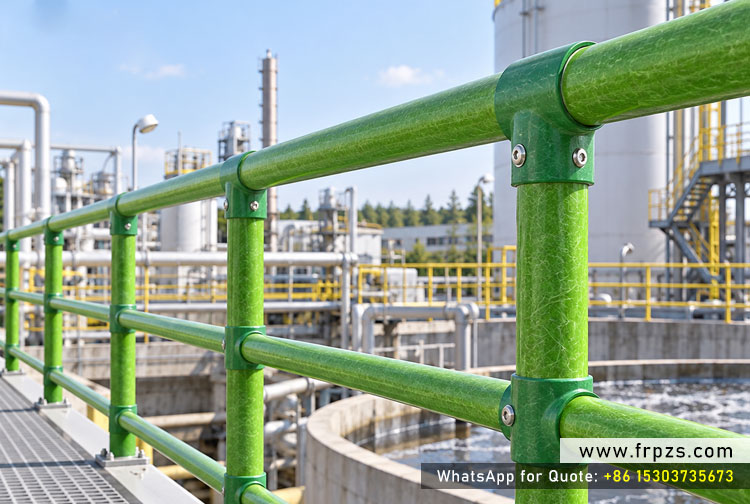
4. Life-Cycle Cost Analysis: Initial Cost vs. 30-Year Lifetime ROI
When reviewing initial purchase prices, buyers often compare the FRP tubing price per meter / foot against raw carbon steel. While low-grade carbon steel may present a lower initial purchase price, a comprehensive 30-year lifecycle cost analysis demonstrates that FRP is a far more low maintenance industrial piping material.
Steel piping systems accumulate heavy ongoing expenses: scheduled repainting, joint leak repairs, corrosion replacement every 5 to 7 years, and costly plant shutdown downtime. In contrast, composite round tubes require zero painting, zero cathodic maintenance, and feature a operational service life exceeding 30 years—yielding a significantly lower total cost of ownership (TCO) and superior long-term ROI.
Direct Sourcing from China Manufacturers
To optimize project budgets, international buyers regularly partner directly with a certified FRP pultruded tube manufacturer in China. Sourcing from a specialized wholesale fiberglass round tubing supplier allows contractors to receive factory-direct pricing, custom resin formulations (isophthalic polyester, vinyl ester, or epoxy), and precise cut-to-length profile options.
Technical Summary & Engineering Data
5. FRP Round Tube Chemical Resistance Chart & Property Comparison
The comparative matrix below outlines the engineering properties and FRP round tube chemical resistance chart parameters versus traditional metal piping:
| Engineering Metric | Pultruded FRP Round Tubing | Carbon Steel Pipe | Stainless Steel Pipe (304/316) |
|---|---|---|---|
| Density / Weight Ratio | 1.8–1.9 g/cm³ (75% lighter than steel) | 7.85 g/cm³ (Heavy) | 7.93 g/cm³ (Heavy) |
| Acid & Alkali Resistance | Excellent (Immune to H2SO4, HCl, NaCl spray) | Poor (Rapid rust and scaling) | Moderate (Prone to pitting in chloride environments) |
| Electrical Conductivity | 100% Non-conductive (High dielectric strength) | Highly conductive (Requires grounding) | Highly conductive (Requires grounding) |
| Expected Service Lifespan | 30+ Years with zero structural maintenance | 5–10 Years in corrosive environments | 10–15 Years in coastal/salt environments |
| Maintenance Expenses | Near Zero (No painting, coating, or cathodic care) | High (Frequent sandblasting & recoating) | Moderate to High (Passivation & chemical cleaning) |
| FRP Tubing Price per Meter / Foot ROI | Highest Lifetime ROI (Low TCO despite initial price) | Low initial cost, but extremely high replacement cost | Very high initial material & fabrication cost |
Engineering Q&A
6. Technical Q&A: FRP vs. Steel Piping Systems
Q1: Is FRP pipe stronger and lighter than steel pipe?
A: Yes. On a strength-to-weight ratio basis, is FRP pipe stronger and lighter than steel pipe? Absolutely. While carbon steel has a higher absolute density, pultruded FRP round tubes offer equivalent longitudinal tensile strength (300–400+ MPa) at only 25% the weight of steel, making them the ideal lightweight structural tube replacement for steel.
Q2: What makes FRP the best non-corrosive pipe for harsh industrial environments?
A: Unlike metals that corrode via electrochemical reactions, pultruded fiberglass round tube profiles consist of inert glass fibers sealed inside a thermosetting polymer matrix. This structural barrier resists direct exposure to acids, alkalis, salt fog, and industrial effluent without rusting, scaling, or pitting.
Q3: How long do pultruded fiberglass tubes last compared to steel?
A: When evaluating how long do pultruded fiberglass tubes last compared to steel, quality FRP tubes designed with UV inhibitors last 30 to 50 years with zero maintenance. In contrast, carbon steel pipes in corrosive coastal or chemical settings often require replacement or major recoating within 5 to 7 years.
Q4: How can I order custom size FRP round pipes for construction directly from China?
A: Contractors can work directly with a certified FRP pultruded tube manufacturer in China like Henan Zhongsheng. As a leading wholesale fiberglass round tubing supplier, Zhongsheng provides custom outer diameters, wall thicknesses, resin formulations (polyester, vinyl ester, epoxy), and pre-cut lengths tailored to technical project blueprints.