+86 15303735673
 Jessica@frpzs.com
 Technical Data


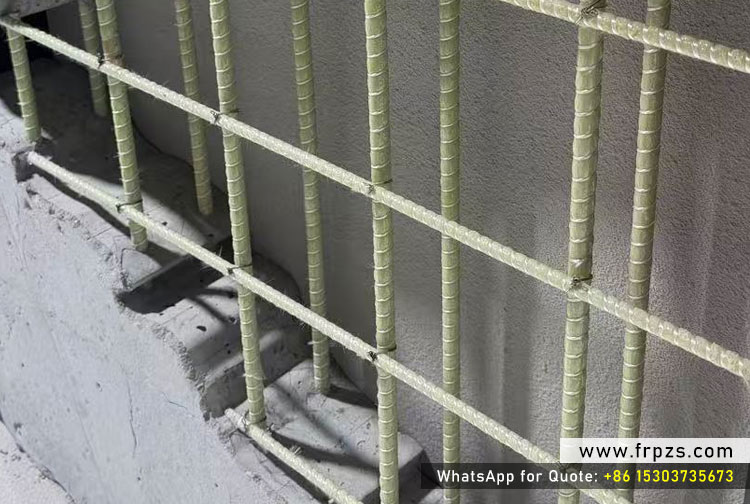
Assembled GFRP rebar grid mesh for heavy-duty structural concrete wall reinforcement in coastal engineering
GFRP Rebar in Reinforced Concrete: Comprehensive Engineering Analysis, Corrosion Mitigation, and Global Infrastructure Applications
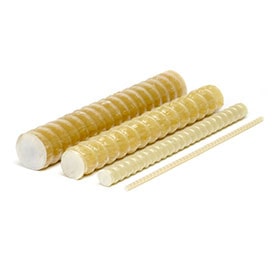
HENAN, CHINA — As global transportation networks, coastal defense works, and municipal utilities face growing maintenance backlogs driven by steel reinforcement corrosion, structural engineers and material scientists are fundamentally re-evaluating traditional building materials. The structural degradation caused by chloride ingress, freeze-thaw cycles, and chemical oxidation in carbon steel rebar costs economies billions of dollars annually in premature repairs. To address this structural vulnerability, GFRP rebar (Glass Fiber Reinforced Polymer rebar) has transitioned from a specialized alternative to a mainstream structural reinforcement standard in modern civil engineering.
Unlike conventional steel, continuous fiberglass rebar is totally inert to electrochemical corrosion. When embedded in GFRP reinforced concrete structures, these high-performance composite bars eliminate the expansive radial pressures associated with rust formation, thereby preventing concrete spalling, internal delamination, and sudden micro-cracking across demanding service environments.
Material Science & Mechanical Performance Comparison
The structural advantage of Glass Fiber Reinforced Polymer rebar stems from its anisotropic composite matrix. Composed of high-purity continuous E-CR or boron-free glass fibers bound together by thermosetting vinyl ester or epoxy resin systems, high-quality FRP rebar delivers remarkable mechanical characteristics:
- Ultra-High Ultimate Tensile Strength: High-grade GFRP rebar exhibits linear-elastic behavior up to failure, achieving tensile strengths exceeding 600 MPa to 1100 MPa—more than double to triple the yield strength of standard Grade 60 carbon steel.
- Complete Immunity to Chloride Attack: Because composite materials contain no metallic elements, fiberglass rebar does not oxidize when exposed to deicing salts, brackish groundwater, marine salt spray, or industrial chemical spills.
- Lightweight Handling & Structural Dead-Load Reduction: Featuring a specific gravity approximately one-fourth that of steel (1.9 to 2.1 g/cm³), composite rebar cages reduce shipping costs, eliminate the need for heavy crane hoisting during site layout, and reduce overall structural dead weight in cantilevered or low-bearing-capacity soils.
- Non-Conductive & Electromagnetic Transparency: Being both thermally and electrically non-conductive, non-metallic FRP rebar provides zero magnetic interference, making it an indispensable specification for hospital MRI suites, high-voltage power substations, automated tolling zones, and high-speed rail guideways.
Critical Infrastructure Application Scenarios
The strategic deployment of GFRP rebar is proven to extend structural design life beyond 100 years across several high-risk operational environments:
- Marine Engineering & Coastal Defense: Seawalls, piers, wharves, dry docks, retaining bulkheads, and offshore foundation caissons where continuous wave action and saltwater splash zones rapidly degrade epoxy-coated steel.
- Bridge Decks & Highway Infrastructure: Overpass slabs, continuous pavement joints, barrier walls, and bridge abutments subjected to relentless winter deicing chemicals and freeze-thaw cracking.
- Parking Garages & Commercial Slabs: Multi-story parking structures where vehicle drip-water carries concentrated road salts onto interior slab reinforcement.
- Water Treatment & Chemical Processing: Desalination plants, wastewater treatment tanks, acid-holding basins, and industrial floor slabs exposed to aggressive pH levels.
- Underground & Tunneling Works: Temporary "soft-eyes" in Tunnel Boring Machine (TBM) entry/exit shaft walls, enabling cutter heads to shear directly through retaining walls without damaging equipment.
International Design Standards & Quality Compliance
The global adoption of GFRP rebar is reinforced by rigorous design codes and manufacturing guidelines. Modern civil projects routinely require compliance with key industry benchmarks, including ASTM D7957 (Standard Specification for Solid Round Glass Fiber Reinforced Polymer Bars), ACI 440.11R (Building Code Requirements for Structural Concrete Reinforced with FRP Bars), and CSA S806 in North America.
Compliance with these stringent quality metrics requires exceptional manufacturing consistency. Continuous surface rib geometries, thread winding pitches, and resin impregnation levels must be tightly controlled during production to maintain guaranteed bond stress with surrounding concrete matrices.
Advanced Manufacturing: Powered by Multi-Line FRP Rebar Machines
The ultimate performance of finished fiberglass rebar depends entirely on the precision of the manufacturing equipment. Advanced automated FRP rebar machines engineered by industry specialists utilize synchronized pultrusion technology to deliver superior material integrity:
- Multi-Line Pultrusion Efficiency: Modern high-yield equipment, such as 5-line continuous FRP rebar machines, allows simultaneous extrusion of multiple bars, optimizing energy consumption and floor space.
- Automated Thread-Winding & Sand-Coating: Precision motorized winding systems wrap high-tension structural threads or apply uniform silica sand coatings around the uncured composite core, optimizing mechanical interlocking with concrete.
- PID Multi-Zone Thermal Curing: Multi-stage heated dies governed by PID microprocessors ensure complete resin cross-linking, eliminating internal micro-voids and preventing long-term alkaline hydrolysis.
Lifecycle Cost Analysis (LCC): Initial Investment vs. 100-Year Value
While the initial material purchase cost per linear meter for high-grade FRP rebar can be slightly higher than standard black steel, a total Lifecycle Cost Analysis (LCC) overwhelmingly favors composites. Eliminating cathodically protected concrete coatings, costly anti-corrosion additives, waterproofing membranes, and routine structural repairs results in up to 50% lower total cost of ownership over a structure’s operational lifespan.
About Henan Zhongsheng Composite Materials Co., Ltd.
Henan Zhongsheng Composite Materials Co., Ltd. (ZOSEN) is a premier global manufacturer specializing in high-performance FRP profiles, structural composite shapes, premium GFRP rebar, and automated high-yield FRP rebar machines. Backed by advanced pultrusion R&D and strict quality management, ZOSEN delivers complete turnkey composite solutions, custom mold engineering, and reliable technical support to international infrastructure partners.
- Company: Henan Zhongsheng Composite Materials Co., Ltd.
- Core Products: GFRP Rebars, Structural FRP Profiles, Molded Gratings, Multi-Line FRP Rebar Machines, Pultrusion Molds.
- Contact Email: Jessica@frpzs.com
- WhatsApp / Mobile: +86 15303735673
- Official Website: www.frpzs.com
Technical Summary & Engineering Data
GFRP rebar (Glass Fiber Reinforced Polymer rebar) is rapidly replacing carbon steel in reinforced concrete infrastructure due to its total immunity to chloride corrosion, high tensile strength (600-1100 MPa), and lightweight properties (1/4th weight of steel). Ideal for harsh environments such as bridge decks, marine structures, parking garages, and magnetic-sensitive facilities, non-metallic fiberglass rebar eliminates concrete spalling and extends design life beyond 100 years. Manufactured via advanced multi-line FRP rebar machines utilizing continuous pultrusion and automated thread winding, GFRP rebar fully satisfies international design codes including ASTM D7957 and ACI 440.11R, delivering exceptional long-term lifecycle cost savings.
| Technical & Operational Parameter | GFRP Rebar (Composite) | Conventional Carbon Steel Rebar |
|---|---|---|
| Corrosion Behavior | 100% Corrosion-proof (No rust, impervious to salts/acids) | Highly susceptible to oxidation, pitting, and spalling |
| Tensile Strength (MPa) | Ultra-High (600 - 1100+ MPa) | Standard Grade 60 (~ 400 - 500 MPa) |
| Density & Specific Weight | 1.9 - 2.1 g/cm³ (75% lighter than steel) | 7.85 g/cm³ (Heavy structural dead-load) |
| Electrical / Magnetic Conductivity | Non-conductive / Electromagnetically Neutral | High electrical & magnetic conductivity |
| Design Service Life | 100+ Years (Zero corrosion-related maintenance) | 25 - 40 Years in high-salt/coastal environments |
| Design & Testing Standards | ASTM D7957, ACI 440.11R, CSA S806 | ASTM A615, ASTM A706 |
| Manufacturing Technology | Continuous Pultrusion via Automated FRP Rebar Machine | Hot-rolling mill processing |
Engineering Q&A
Q1: Why is GFRP rebar increasingly specified over epoxy-coated or stainless steel rebar in coastal and bridge construction?
A1: Epoxy coatings on traditional steel are easily scratched during transport and installation, leading to rapid localized corrosion underneath the coating. Stainless steel is extremely expensive. GFRP rebar offers uniform, non-metallic resistance throughout its entire cross-section at a significantly lower cost, providing permanent protection against salt-induced concrete spalling.
Q2: How does the thermal expansion coefficient of GFRP rebar align with structural concrete?
A2: The longitudinal coefficient of thermal expansion (CTE) of GFRP rebar is very close to that of concrete (approx. 6 to 10 x 10^-6 /°C). This matching thermal behavior prevents internal stress cracking or bond loss between the composite bar and the surrounding concrete during extreme seasonal temperature swings.
Q3: What role does an automated FRP rebar machine play in ensuring structural compliance with ASTM D7957?
A3: ASTM D7957 mandates strict tolerances for glass fiber volume fraction, cross-sectional area, tensile modulus, and surface bond strength. Advanced multi-line FRP rebar machines regulate fiber tension, resin bath temperature, thread winding pitch, and pultrusion speed with computer-controlled precision, ensuring every meter of rebar meets structural compliance.