+86 15303735673
 Jessica@frpzs.com
 Technical Data


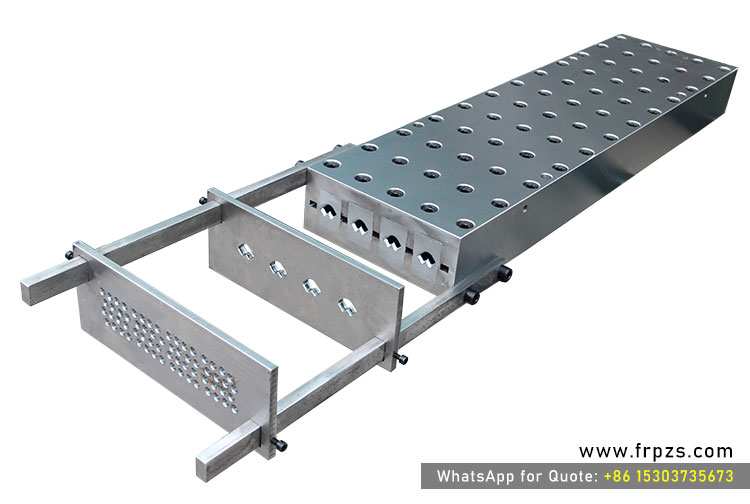
FRP Pultrusion Mould: Precision Engineering for High-Quality Composite Profiles
The pultrusion die (or mould) is the heart of any FRP pultrusion production line. It determines the profile geometry, surface finish, dimensional accuracy, and production speed of every meter of FRP profile produced. Investing in high-quality dies is essential for achieving consistent product quality and maximizing production efficiency.
At Henan Zhongsheng Composite Material Co., Ltd, we design and manufacture precision pultrusion dies for all profile types, from simple rods to complex structural shapes, serving clients worldwide with dies that deliver exceptional performance and longevity.
1. Understanding the Pultrusion Die Function
The pultrusion die serves three critical functions:
1.1 Shape Definition
The die interior precisely defines the cross-sectional profile of the FRP product. The cavity geometry matches the desired final dimensions plus a small shrinkage allowance (typically 1-3% depending on resin shrinkage).
1.2 Resin Curing
The die is heated (typically 120-180°C) to initiate and complete the resin curing reaction. Heat transfer to the composite must be uniform to ensure complete cure without thermal gradients that cause internal stresses.
1.4 Consolidation
As the composite passes through the die, pressure (from the land length) consolidates the fibers and removes excess resin, ensuring proper fiber wet-out and minimizing void content.
2. Die Components and Construction
| Component | Function | Material | Key Consideration |
|---|---|---|---|
| Die Body | Main cavity, profile shape | H13/S7 tool steel | Hardness, heat treatment |
| Entry Cone | Fiber guidance, resin distribution | H13 tool steel | Smooth transition |
| Die Land | Cure zone, consolidation | H13 tool steel | Length determines cure time |
| Heating Elements | Thermal energy input | Cartridge heaters | Uniform temperature |
| Thermocouples | Temperature monitoring | Type K/J | Accurate control |
| Backing Plate | Structural support | Carbon steel | Rigid mounting |
3. Die Design Parameters
3.1 Entry Angle
- Typical range: 30-60° included angle
- Purpose: Gradual compression of fiber bundle
- Consideration: Too steep causes fiber damage; too shallow increases length
3.2 Land Length
- Determines: Cure time and production speed
- Calculation: Based on resin gel time and line speed
- Typical: 50-150mm for standard profiles
3.3 Draft Angle
- Purpose: Facilitates profile release
- Typical: 0.5-1.0° per side
- Note: Minimal for pultrusion vs. injection molding
3.4 Shrinkage Allowance
| Resin Type | Shrinkage (%) | Shrinkage Allowance |
|---|---|---|
| Polyester | 5-8% | Increase cavity 3-5% |
| Vinyl Ester | 4-6% | Increase cavity 2-4% |
| Epoxy | 1-3% | Increase cavity 1-2% |
4. Die Materials and Heat Treatment
4.1 Tool Steel Selection
| Steel Grade | Hardness (HRC) | Heat Resistance | Cost | Best For |
|---|---|---|---|---|
| H13 | 44-52 | Good | Medium | Standard profiles |
| S7 | 54-58 | Very Good | Medium-High | High-volume production |
| A2 | 57-62 | Good | Medium | Precision dies |
| D2 | 58-64 | Good | Medium | Long life dies |
4.2 Surface Finish
- Cavity surface: Ra 0.2-0.4 μm (polished)
- Purpose: Smooth surface for easy release
- Treatment: Polish with diamond compounds, chrome plating optional
5. Die Manufacturing Process
- CAD Design: Create 3D model of profile and die cavity
- CNC Machining: Rough and finish machining of die components
- Heat Treatment: Quench and temper to achieve target hardness
- Grinding: Precision grinding of cavity surfaces
- Polishing: Diamond polishing of all functional surfaces
- Assembly: Install heating elements and thermocouples
- Testing: Temperature profiling and trial runs
6. Common Profile Dies We Manufacture
6.1 Rods and Rebar
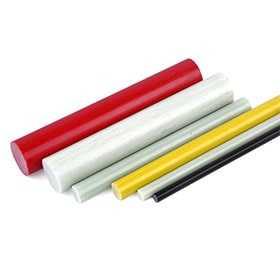
- Round rods: 6-32mm diameter
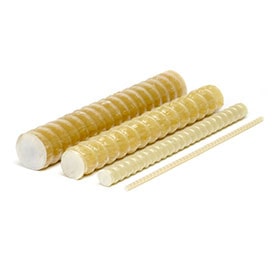
- FRP rebar: 6-32mm with sand coating
- Square rods: 6-25mm
6.2 Hollow Profiles
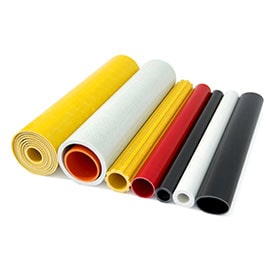
- Round tubes: 12-150mm OD
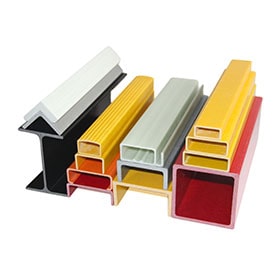
- Square tubes: 25-150mm
- Rectangular tubes: custom
6.3 Structural Profiles
- I-beams: 50-200mm depth
- Channels: 50-150mm depth
- Angles: equal and unequal
- Wide-flange sections
6.4 Specialty Profiles
- Custom architectural shapes
- Multi-cavity dies (multiple profiles per pass)
- Co-extrusion dies
7. Die Maintenance and Care
7.1 Regular Maintenance
- Daily: Visual inspection, clean resin buildup
- Weekly: Temperature uniformity check
- Monthly: Dimensional check against gauge
- Annually: Full inspection, re-polishing if needed
7.2 Common Issues and Solutions
| Issue | Cause | Solution |
|---|---|---|
| Surface scratches | Abrasive particles | Polish affected area |
| Excessive wear | High silica content filler | Use harder steel, chrome plate |
| Temperature gradient | Heater placement | Redesign heating layout |
| Resin sticking | Surface roughness | Re-polish, apply release agent |
8. Die Cost Factors
| Profile Type | Complexity | Die Cost Range | Lead Time |
|---|---|---|---|
| Simple rod/tube | Low | $800-2,000 | 2-3 weeks |
| Square/rectangular tube | Medium | $1,500-4,000 | 3-4 weeks |
| I-beam/channel | Medium-High | $3,000-8,000 | 4-6 weeks |
| Custom complex profile | High | $5,000-20,000+ | 6-12 weeks |
Investment Consideration
A quality die is a long-term investment. A well-maintained die can produce 500,000+ meters of profile. The cost per meter of even an expensive die is minimal compared to the value of the profiles produced.
“The die is the most critical component of your pultrusion line. Compromising on die quality to save cost is a false economy—it directly impacts every meter of product you produce.”
Need Custom Pultrusion Dies?
Henan Zhongsheng manufactures precision pultrusion dies:
- All profile types: rods, tubes, beams, custom
- H13/S7 tool steel with precision heat treatment
- Complete die assemblies with heating
- Die repair and refurbishment services
- Technical support for die selection
Browse Dies: Pultrusion Dies | Pultrusion Equipment
Related Profiles: FRP Profiles | FRP Round Tube
Frequently Asked Questions (FAQ)
Q: How long does a pultrusion die last?
A: With proper maintenance, a quality die can produce 500,000+ meters of profile. Die life depends on production volume, resin type (high silica filler accelerates wear), and maintenance practices.
Q: Can you make dies for existing profiles I have samples of?
A: Yes, we can reverse-engineer from samples or drawings. Provide a sample or detailed drawing, and we will design and manufacture the die to match.
Q: What information do you need to quote a die?
A: We need: profile drawing with dimensions and tolerances, expected production volume, resin type, and any special requirements (surface finish, multi-cavity, etc.).
Q: Do you offer die repair services?
A: Yes, we offer die repair including re-polishing, re-chroming, heating element replacement, and thermocouple repair.
Q: What is the difference between H13 and S7 die steel?
A: S7 has higher hardness (54-58 HRC vs 44-52 for H13) and better heat resistance, making it suitable for higher-volume production. H13 is more versatile and easier to machine for complex shapes.