+86 15303735673
 Jessica@frpzs.com
 Technical Data


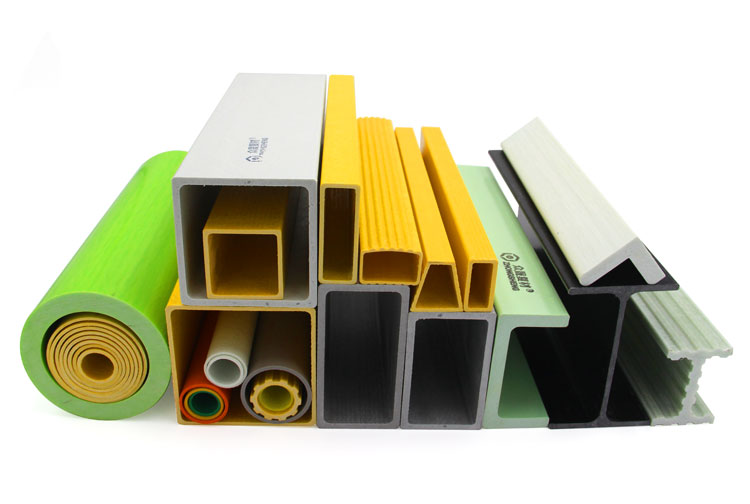
Precision Composite Engineering: Tailoring fiber and resin chemistry for mission-critical applications.
The Foundation of Excellence: Strategic Material Selection
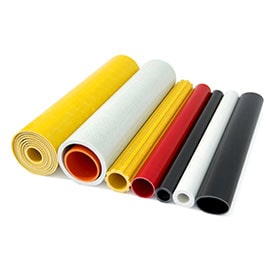
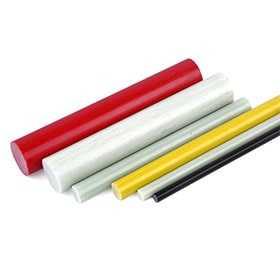
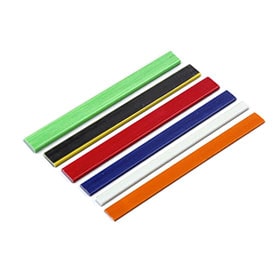
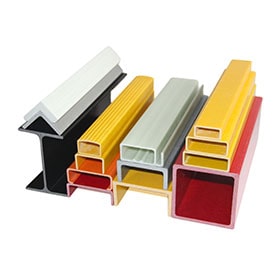
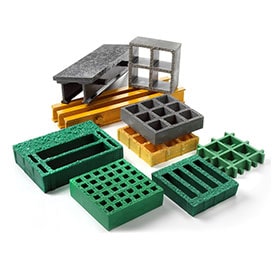
In the world of advanced infrastructure, a "one-size-fits-all" approach to materials is a recipe for failure. At Henan Zhongsheng Composite Materials Co., Ltd. (FRPZS), we believe that the performance of customised FRP profiles is a direct result of molecular-level material selection. Whether your project demands the dielectric strength of an insulated ladder or the acid-resistance of a chemical plant walkway, the synergy between the resin matrix and reinforcement fibers is paramount.
1. Technical Benchmarking: Resin Systems & Reinforcements
Selecting the right pultrusion materials involves balancing mechanical performance against environmental aggression and total project budget. Our 2026 material matrix helps engineers navigate these complexities.
| Material Component | Standard Grade (General) | Premium Grade (Critical) | Application Advantage |
|---|---|---|---|
| Resin Matrix | Orthophthalic Polyester | Vinyl Ester / Epoxy | Extreme corrosion & fatigue resistance |
| Fiber Type | E-Glass Roving | S-Glass / Carbon Fiber | 30% higher tensile modulus & strength |
| Fire Retardancy | Class 2 (Basic) | ASTM E84 Class 1 (Phenolic) | Zero smoke / Fire-safe for tunnels |
| UV Protection | Surface Paint Only | Integral UV Stabilizers + Veil | 25+ years without surface fiber-blooming |
| Heat Stability | Up to 80°C | High-HDT Systems (180°C+) | Structural integrity in hot processing |
2. Advanced Reinforcement Strategies
The strength of customised FRP profiles is directional. Our engineers optimize fiber orientation to meet your specific load paths:
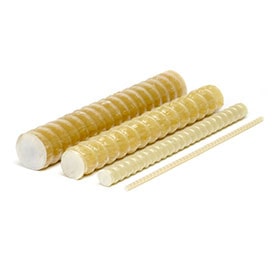
- Unidirectional Rovings: Provide maximum longitudinal strength for beams and rods.
- Continuous Filament Mat (CFM): Enhances transverse strength and provides a smooth surface for painting or bonding.
- Surface Veils: A resin-rich layer that provides a primary defense against chemical attack and UV degradation.
3. Application-Specific Engineering (OEM/ODM)
As a leading industrial manufacturing firm based in Xinxiang, Henan, we customize profiles for the most demanding sectors:
- Telecom: RF-transparent fiberglass for 5G radomes and signal-friendly infrastructure.
- Marine: Vinyl ester profiles that resist osmotic blistering and saltwater corrosion.
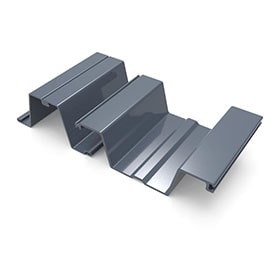
- Construction: High-stiffness FRP structural profiles designed to replace steel in high-humidity or corrosive zones.
10 Expert FAQs: Material Selection for FRP Profiles
Q1: "When should I choose Vinyl Ester over Polyester?"
A: Choose Vinyl Ester when your profiles face constant chemical exposure (acids/alkalis) or extreme cyclic loading. It offers superior fracture toughness and durability compared to standard polyester.
Q2: "What is the difference between E-Glass and S-Glass?"
A: E-Glass is the industry standard for general use. S-Glass (Strength Glass) offers significantly higher tensile strength and modulus, making it ideal for aerospace or high-load structural profiles.
Q3: "Can FRP profiles be made fire-retardant for underground use?"
A: Yes. By using Phenolic resins or adding alumina trihydrate (ATH) to polyester/vinyl ester, we achieve Class 1 fire ratings with low smoke toxicity.
Q4: "How do pigments affect the mechanical properties of a profile?"
A: When handled correctly at FRPZS, high-quality pigments have a negligible effect. However, excessive pigment loading can slightly reduce interlaminar shear strength, which we compensate for through formulation balancing.
Q5: "Do you offer 'Anti-Static' FRP profiles?"
A: Yes. For explosive environments or electronics manufacturing, we incorporate carbon-based additives to create dissipative or anti-static profiles.
Q6: "Is it possible to mix Carbon Fiber and Fiberglass in one profile?"
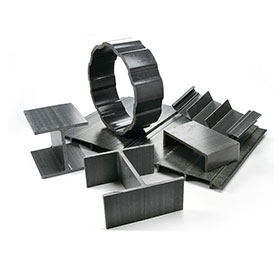
A: Absolutely. This "Hybrid" pultrusion allows for targeted stiffness (Carbon) while maintaining cost-efficiency (Glass), perfect for high-span fiberglass I-beams.
Q7: "What resin is best for high-voltage electrical insulation?"
A: Epoxy resins are the gold standard for electrical applications due to their excellent dielectric properties and low moisture absorption.
Q8: "How does moisture absorption impact long-term structural integrity?"
A: High moisture absorption can lead to "wicking" along the fibers. We use specialized sizing on our fibers and resin-rich surface veils to minimize this effect to less than 0.5% over the life of the product.
Q9: "Can customized profiles be designed for cryogenic temperatures?"
A: Yes. Specialized epoxy systems are engineered to remain ductile and resist micro-cracking even at temperatures as low as -160°C.
Q10: "What is the typical lifespan of a Zhongsheng profile in outdoor settings?"
A: With our integral UV stabilizers and synthetic surface veils, our profiles are engineered for a service life exceeding 30 to 50 years in outdoor environments.
Partner with the Experts in Composite Formulation
With over 20 years of R&D experience, Henan Zhongsheng Composite Materials Co., Ltd. is your global partner for customised FRP profiles. Our facility in Xinxiang, Henan, integrates the latest in material science with high-capacity pultrusion lines to deliver excellence worldwide.
Consult with Jessica Huang for Material Selection & Project Quotes:
- Technical Contact: Jessica Huang
- Email: jessica@frpzs.com
- WhatsApp: +86 153 0373 5673
- Official Website: www.frpzs.com
- Resources: Material safety data sheets (MSDS), ASTM testing reports, and custom formulation support.