+86 15303735673
 Jessica@frpzs.com
 Technical Data


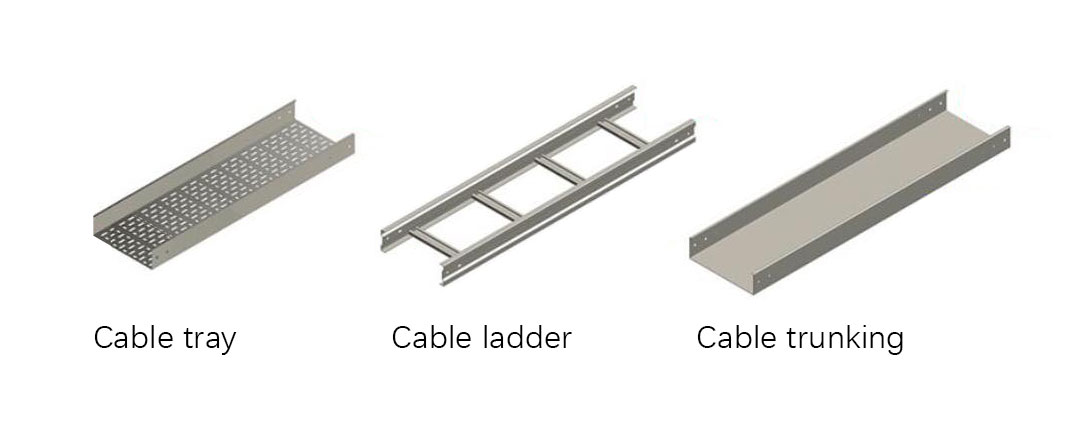
Comprehensive Guide: Distinguishing Cable Management Architectures in Industrial Environments.
The Logic of Cable Support: Why Infrastructure Material Matters
In the complex ecosystem of an industrial facility, the cable management system (CMS) is the vital nervous system. Selecting between a cable tray, cable trunking, or cable ladder is not merely an aesthetic choice—it is a critical engineering decision based on load distribution, thermal ventilation, and environmental exposure. At Henan Zhongsheng Composite Materials Co., Ltd. (FRPZS), we have engineered FRP (Fiberglass Reinforced Plastic) solutions that solve the fundamental flaw of metallic systems: corrosion-driven structural failure.
1. Deciphering the Three Core Architectures
A. Cable Tray: The Ventilated Versatile Choice
A cable tray is a semi-open support system, often perforated, designed to balance protection with heat dissipation. It is the preferred solution for control and instrumentation cables that generate moderate heat. Why FRP? In chemical processing zones, metallic trays oxidize rapidly. FRP trays from FRPZS remain inert to acid mists, ensuring a 50+ year service life without repainting.
B. Cable Trunking: Maximum Shielding & Dust Protection
Cable trunking is a fully enclosed "box" system. It is specifically designed to provide EMI/RFI shielding (when specified) and absolute physical protection against falling debris, dust, and moisture. Why FRP? Our FRP trunking is an electrical insulator, eliminating the risk of "step and touch" voltage hazards, and is manufactured with fire-retardant resins meeting UL 94-V0 standards.
C. Cable Ladder: Heavy-Duty Power Distribution
Resembling a literal ladder, this system features robust side rails and rungs. It is the heavyweight champion of cable management, engineered for long-span power cable distribution. Why FRP? FRP ladders offer a high strength-to-weight ratio, maintaining structural integrity under heavy copper cable loads while being 75% lighter than steel, significantly reducing the "Dead Load" on building structures.
2. Technical Comparison: Material Performance Matrix
| Feature | Cable Tray (FRP) | Cable Trunking (FRP) | Cable Ladder (FRP) |
|---|---|---|---|
| Primary Use | General Support/Ventilation | Total Enclosure/Safety | High-Volume Power/Long Spans |
| Heat Dissipation | Excellent (Perforated) | Limited (Enclosed) | Superior (Open Air) |
| Mechanical Strength | Moderate to High | Protective | Extreme (High Load) |
| Cable Access | Fast/Easy | Restricted (Requires lid removal) | Instant (Full Access) |
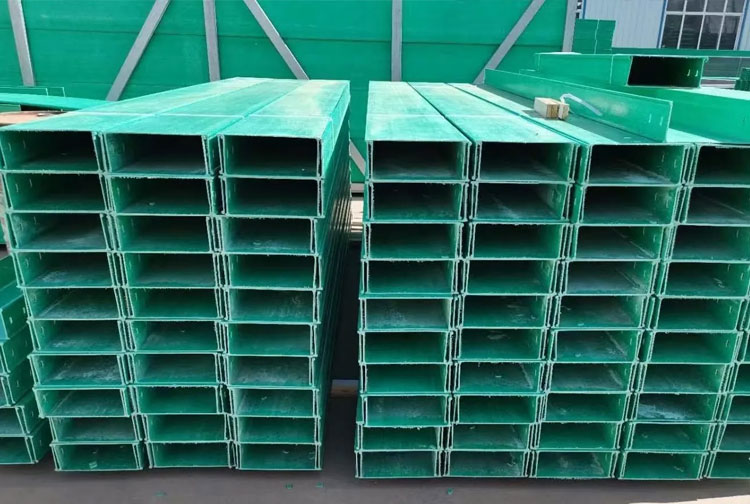
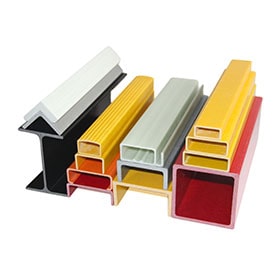
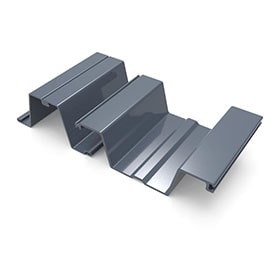
Precision Pultruded FRP Cable Tray: Combining light-weight handling with heavy-duty corrosion resistance.
Electrical Engineering FAQ: Choosing the Right CMS
Q1: "In a coastal offshore platform, should I use FRP ladders or trays?"
A: For main power feeders, FRP ladders are superior due to their wind-loading resistance and superior drainage of salt-spray. For control wiring, FRP cable trays provide more consistent support for smaller diameter cables.
Q2: "Does FRP cable trunking interfere with wireless signals in a smart factory?"
A: No. Unlike steel or aluminum, FRP is magnetically transparent. It does not block Wi-Fi, Bluetooth, or cellular signals, making it ideal for IoT-integrated industrial environments.
Q3: "How does the 'span length' of an FRP ladder compare to galvanized steel?"
A: Our high-modulus FRP ladders can achieve spans of 6 meters or more between supports, similar to steel. However, because FRP is lighter, you can often use fewer support brackets, reducing the overall installation cost by up to 30%.
Q4: "Can FRP cable management systems be used in underground tunnels?"
A: Yes. In fact, FRP is the preferred choice for tunnel CMS due to its fire-retardant and low-smoke (LSZH) properties. It won't rust in the high-humidity, damp atmosphere of a tunnel, unlike galvanized steel which can fail within 5-10 years.
Q5: "Is it difficult to ground (earthing) an FRP system since it is non-conductive?"
A: This is a major benefit. FRP systems do not require grounding because they cannot become energized during a fault. This significantly reduces electrical safety hazards and simplifies the earthing grid design for the entire facility.
Q6: "What is the maximum temperature an FRP tray can withstand before losing strength?"
A: Our pultruded systems maintain structural integrity up to the Glass Transition Temperature ($T_g$) of the resin, typically around 120°C to 150°C. For extreme heat zones, we can utilize specialized phenolic resins for even higher temperature resistance.
Secure Your Power Infrastructure with Henan Zhongsheng
As an industrial manufacturing firm based in Xinxiang, Henan, Henan Zhongsheng Composite Materials Co., Ltd. (FRPZS) provides end-to-end solutions for global cable management. From pultrusion molding to custom fabrication, our FRP systems are the smarter, safer choice for the world's harshest environments.
Consult with Jessica Huang for Technical Data & Custom Quotes:
- Technical Contact: Jessica Huang
- Email: Jessica@frpzs.com
- WhatsApp: +86 15303735673
- Full Company Name: Henan Zhongsheng Composite Materials Co., Ltd.
- Resources: Load-deflection tables, NEMA/ASTM certification reports, and factory-direct wholesale pricing.