+86 15303735673
 Jessica@frpzs.com
 Technical Data


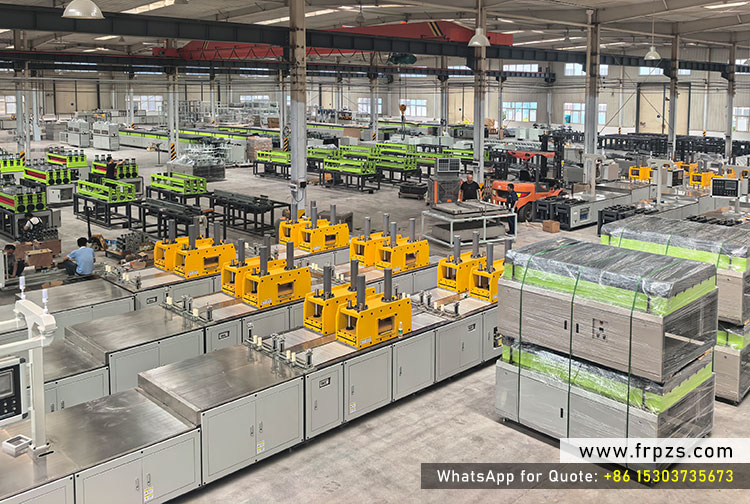
Hydraulic vs. Caterpillar Traction in FRP Pultrusion: A Comprehensive Engineering and Economic Evaluation
A technical guide for composite manufacturers on selecting traction kinematics to optimize polymerization, structural integrity, and production ROI.
Introduction: The Critical Role of Traction in Composites
In the pultrusion process, traction is not merely a mechanical movement; it is the heartbeat of the entire production line. The puller must maintain a delicate balance between the internal mold pressure, the exothermic reaction of the resin, and the tensile strength of the reinforcement fibers. As the industry moves toward "Industry 4.0" and carbon-fiber-reinforced polymers (CFRP), the technical nuances between Hydraulic Reciprocating and Caterpillar Continuous systems have become more pronounced.
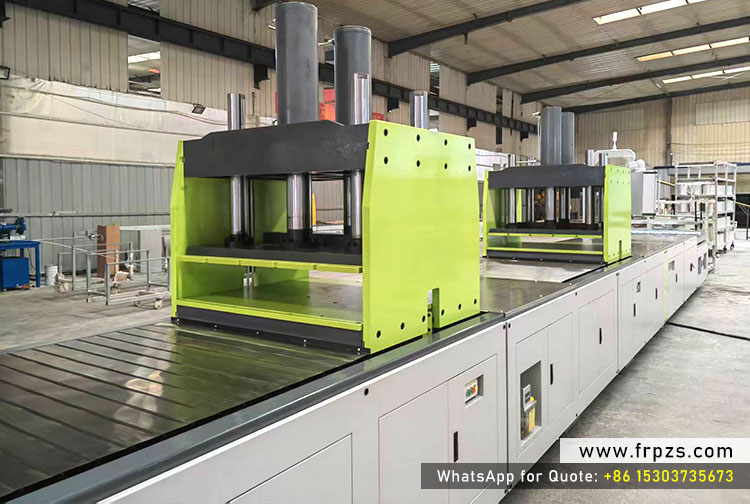
I. Hydraulic Reciprocating Systems: Precision Power for Heavy-Duty Infrastructure
Hydraulic traction systems are engineered for high-resistance environments where the "breakaway force" exceeds the capabilities of friction-based belt systems.
1. Mechanical Advantage and Clamping Force
Hydraulic systems utilize high-pressure cylinders that provide a concentrated clamping force. This is critical for thick-walled profiles where the "shrinkage-to-mold" effect creates immense drag. Unlike caterpillar tracks, hydraulic grippers can be fitted with custom-contoured blocks that provide 360-degree contact, ensuring that hollow or delicate異型材 (asymmetric profiles) are not crushed during the pull.
2. Velocity Stability and Pulse Management
Modern hydraulic pultrusion machines utilize proportional valve technology to smooth out the transition between the two clamping heads. This "overlap control" minimizes the pressure pulse that occurs during hand-over, which is vital for maintaining consistent fiber tension in structural applications like utility poles or bridge girders.
3. Thermal Management and Dwell Time
For certain high-performance resins (like epoxy or phenolics), a specific "dwell time" within the heated die may be required to achieve full cross-linking. Hydraulic systems allow for programmed pauses or ultra-low speed increments that are difficult to replicate with the rotational inertia of a caterpillar drive.
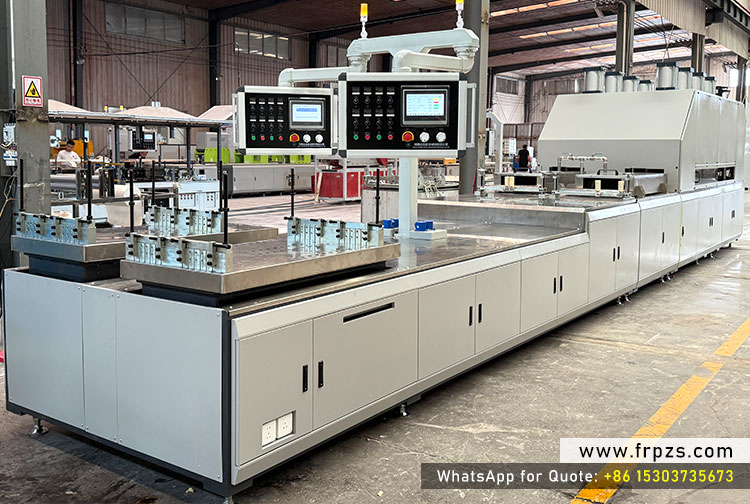
II. Caterpillar Continuous Systems: Speed, Precision, and Surface Rheology
Caterpillar or "track-type" pullers are the preferred choice for high-volume, thin-walled, and aesthetically sensitive products.
1. Constant Shear Rate for Superior Finish
The primary advantage of the caterpillar system is its absolute continuity. In the pultrusion of architectural window lineals or consumer electronics components, even a millisecond pause can result in "die lines" or surface blemishes. The continuous motion ensures a constant shear rate between the resin and the chrome-plated die wall, resulting in a mirror-like finish.
2. High-Speed Production Dynamics
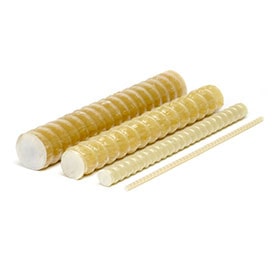
For small-diameter solid rods, rebar, or thin spacers, production speed is the primary driver of profitability. Caterpillar systems can achieve line speeds exceeding 2-3 meters per minute without the mechanical fatigue associated with reciprocating cylinders. This makes them ideal for the "Commodity FRP" market.
3. Tension Consistency in Thin Profiles
In thin-walled profiles, sudden changes in traction speed can cause "buckling" or fiber distortion inside the die. The steady velocity vector of a caterpillar drive ensures that the fiber reinforcement remains under perfectly uniform tension, which is critical for the flexural modulus of the final product.
III. Material Science Perspective: Fiber and Resin Interaction
The choice of machine also influences the material's internal chemistry:
- Glass Fiber (GFRP): More forgiving of traction pulses; suitable for both systems depending on profile size.
- Carbon Fiber (CFRP): Extremely sensitive to tension fluctuations. Hydraulic systems are often preferred for CFRP due to their superior grip and ability to handle high-modulus fibers without slippage.
- Thermoplastic Resin: Requires rapid cooling and constant motion to prevent "freezing" in the die; typically favors the caterpillar system.
IV. Economic Analysis: ROI and Maintenance
| Operational Factor | Hydraulic System | Caterpillar System |
|---|---|---|
| Initial Investment | Higher (due to hydraulic power units) | Moderate to High |
| Energy Consumption | Moderate (efficiency depends on pump tech) | Lower (direct motor drive) |
| Wear Parts | Seals, filters, and oil | Rubber pads, bearings, and chains |
| Setup Changeover Time | Fast (clamping block swap) | Moderate (pad adjustment/replacement) |
V. FAQ: Technical Troubleshooting
Q: Why is my profile cracking during the pultrusion pull?
A: Cracking can be caused by uneven traction. If using a hydraulic system, check the synchronization of the cylinders. If using a caterpillar system, check if the track pads are worn unevenly, causing a "yaw" effect.
Q: Can I run multiple strands (multi-cavity) on one machine?
A: Yes. For multi-cavity pultrusion of small rods, the caterpillar system is generally superior as it provides uniform pressure across all strands simultaneously.
Q: How does the "pull-off" force affect mold life?
A: High pull-off forces in hydraulic systems can accelerate mold wear at the entrance. Using high-quality tool steel and chrome plating for your pultrusion mold is essential to mitigate this.
Q: Which system is more compatible with Industry 4.0?
A: Both can be integrated, but hydraulic systems often offer more "data points" (oil pressure, cylinder position, valve response) which are useful for predictive maintenance and quality tracing.
Conclusion: Building a Future-Proof Production Line
Selecting the right traction system is a multi-dimensional decision that balances material science with mechanical capability. For the rugged demands of infrastructure and energy—where strength is paramount—the Hydraulic Pultrusion Machine remains the industry gold standard. For the fast-paced consumer and telecommunications sectors—where aesthetics and speed drive the market—the Caterpillar system offers unmatched efficiency.
At www.frpzs.com, we specialize in the synergy between machine and mold. Whether you need a high-tonnage hydraulic line or a high-speed caterpillar unit, our engineering team provides the pultrusion mold design and process expertise to ensure your success in the global composites market.