+86 15303735673
 Jessica@frpzs.com
 Technical Data


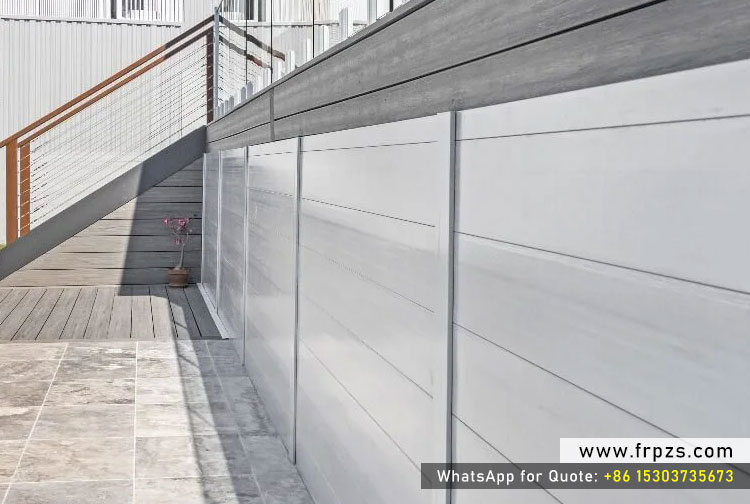
Composite Retaining Wall vs Concrete Retaining Wall in Australia
When selecting a retaining wall system for infrastructure and construction projects in Australia, material choice plays a critical role in long-term performance and cost. Traditionally, concrete retaining walls have dominated the market. However, composite FRP retaining wall systems are increasingly considered as a durable alternative.
This article compares composite retaining walls and concrete retaining walls from an Australian engineering and project management perspective.
Material Performance in Australian Environments
Australia’s diverse climate includes coastal exposure, high humidity, temperature fluctuations, and aggressive soil conditions. These factors significantly impact retaining wall performance over time.
Concrete retaining walls rely on steel reinforcement, which is vulnerable to corrosion when exposed to moisture and salt. Once corrosion begins, cracking and spalling often follow.
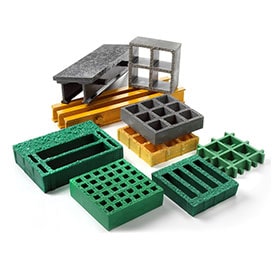
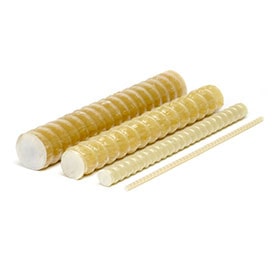
Composite FRP retaining walls, on the other hand, use corrosion-resistant fiberglass reinforcement that does not rust, making them well suited for Australian coastal and marine environments.
Durability and Service Life
Durability is a key consideration for Australian infrastructure projects with long design life requirements.
- Concrete retaining walls may require repairs due to cracking and corrosion.
- FRP retaining wall systems maintain stable mechanical performance over long service periods.
The reduced maintenance needs of FRP systems contribute to improved lifecycle performance.
Installation and Construction Efficiency
Construction efficiency is especially important in Australia, where many projects are located in remote or logistically challenging areas.
Concrete retaining walls require heavy lifting equipment, formwork, and curing time. These factors can increase construction schedules and labor costs.
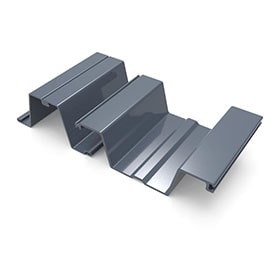
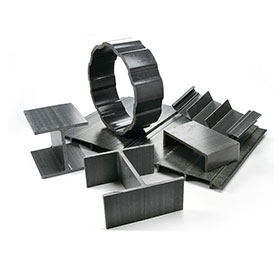
Composite retaining wall systems are lightweight and modular, allowing faster installation with minimal heavy machinery.
Transportation and Site Access
Due to their weight, concrete retaining wall components can be expensive to transport, particularly to remote Australian locations.
FRP retaining wall systems significantly reduce transportation loads, making them more practical for projects with limited site access or long transport distances.
Lifecycle Cost Comparison
While initial material costs may differ, lifecycle cost is often a more accurate measure of value.
| Factor | FRP Retaining Wall | Concrete Retaining Wall |
|---|---|---|
| Corrosion Resistance | Excellent | Limited |
| Installation Time | Fast | Slow |
| Maintenance | Low | High |
| Lifecycle Cost | Optimized | Higher over time |
Compliance and Engineering Considerations
Both concrete and FRP retaining wall systems can be engineered to meet Australian project specifications. Proper design, material selection, and load calculations are essential regardless of the chosen system.
Composite retaining wall systems provide additional flexibility in modular design and customization.
Which Retaining Wall System Is Right for Australia?
The optimal retaining wall system depends on project-specific factors, including environmental exposure, site access, and long-term maintenance expectations.
For projects exposed to coastal or corrosive environments, composite FRP retaining wall systems offer clear performance advantages.
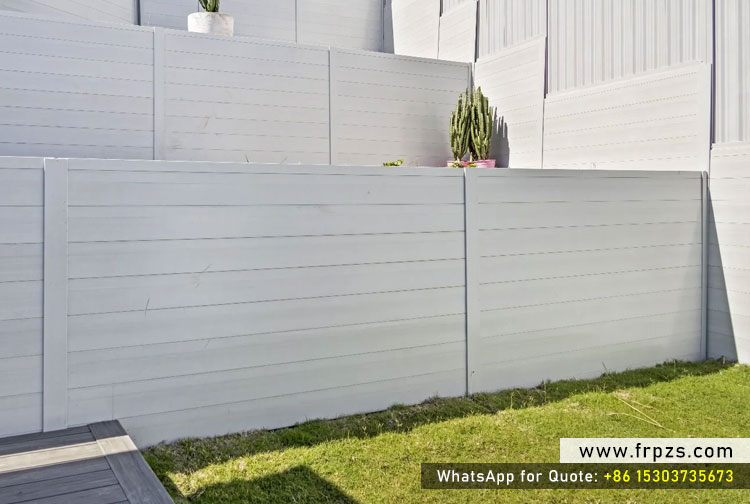
Learn more about FRP Retaining Wall Systems for Australia
Conclusion
As Australian infrastructure standards continue to evolve, material selection is increasingly focused on durability, efficiency, and lifecycle value. Composite FRP retaining wall systems provide a compelling alternative to traditional concrete retaining walls, particularly in challenging Australian environments.