+86 15303735673
 Jessica@frpzs.com
 Technical Data


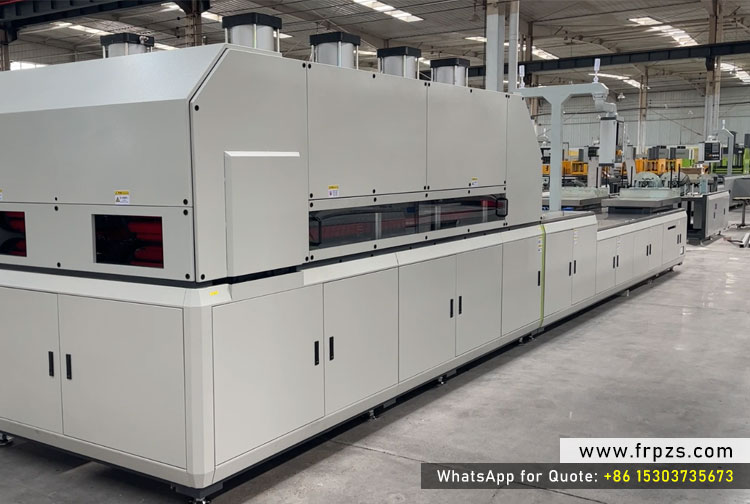
Selecting the right FRP pultrusion machine is critical for production quality and long-term profitability
How to Choose the Right FRP Pultrusion Machine: A Complete Buyer's Guide for 2026
The global demand for FRP pultruded products is surging—driven by infrastructure modernization, corrosion-resistant construction mandates, and the shift toward lightweight composites in energy and transportation. For manufacturers looking to enter or expand in this market, selecting the right FRP pultrusion machine is the single most consequential investment decision they will make. Choose correctly, and you gain a competitive edge that lasts decades. Choose poorly, and you face years of quality issues, downtime, and lost orders.
This guide—drawn from Henan Zhongsheng’s 15+ years of manufacturing and exporting pultrusion equipment to over 30 countries—covers every critical factor you need to evaluate before signing a purchase agreement.
1. Understanding the Two Core Traction Systems
Every pultrusion machine is built around one of two traction mechanisms, and this choice fundamentally determines the machine’s capabilities, cost, and suitability for your product range.
| Feature | Hydraulic Traction | Caterpillar (Crawler) Traction |
|---|---|---|
| Clamping Mechanism | Hydraulic cylinders press blocks onto profile | Continuous rubber/PU belt wraps around profile |
| Pulling Force | High (typically 10-60 tons) | Medium (typically 3-15 tons) |
| Surface Protection | Gentle, non-marking grip | |
| Speed Range | 0.1 - 1.5 m/min | 0.1 - 3.0+ m/min |
| Best For | Large, heavy, or complex profiles (I-beams, gratings) | Rods, tubes, rebar, small to medium profiles |
| Maintenance | Hydraulic seals, cylinders require periodic service | Lower maintenance, belt replacement |
| Price Range | $25,000 - $80,000+ | $15,000 - $50,000 |
Henan Zhongsheng’s Recommendation
For startups producing FRP rebar, rods, or tubes, we recommend our crawler-type machines for their speed, surface quality, and ease of operation. For manufacturers of structural profiles (I-beams, channels, gratings), hydraulic machines provide the pulling force needed for large cross-sections.
2. Production Capacity: Matching Machine to Volume
One of the most common mistakes buyers make is over-specifying or under-specifying machine capacity. The key parameters are:
- Pull force (tons): Determines the maximum cross-sectional area and resin content you can process. Rule of thumb: allow 30-40% headroom above your expected maximum requirement.
- Line speed (m/min): Higher speed means higher throughput, but only if your resin cure kinetics can keep up. Speed without quality is worthless.
- Die station capacity: How many dies can the machine support? Multi-die setups allow simultaneous production of different profiles on a single line.
- Number of lines: For high-volume rebar production, our 5-line simultaneous rebar machines produce 5x the output of a single line with minimal additional labor.
| Production Scenario | Recommended Pull Force | Machine Type | Estimated Output |
|---|---|---|---|
| FRP Rebar (ø6-32mm) | 5-10 tons | Crawler, single or multi-line | 200-600 kg/hour per line |
| Round Tubes (ø10-200mm) | 10-30 tons | Crawler or Hydraulic | 50-300 kg/hour |
| I-Beams / Channels | 20-60 tons | Hydraulic | 30-150 kg/hour |
| Grating Profiles | 10-20 tons | Crawler | 100-400 kg/hour |
3. Heating System: The Heart of the Machine
The heating system controls resin cure kinetics and directly affects product quality. There are three dominant technologies:
- Electric heating plates: The most common system. Precise PID temperature control, clean operation, and low maintenance. Ideal for profiles up to 300mm width. Typically 3-6 heating zones along the die length.
- Oil heating: Better temperature uniformity for large dies (300mm+). Slower response time compared to electric. Used primarily for thick-walled profiles.
- Infrared/ceramic heating: Fast response, energy-efficient for thin-walled profiles. Less common but gaining popularity in high-speed rebar lines.
Key Heating Specifications to Check:
- Number of zones: More zones = finer temperature gradient control. Minimum 3 zones for standard profiles; 5-6 zones recommended for complex shapes.
- Temperature range: Should reach 200-220°C minimum for vinyl ester resins.
- Control accuracy: Look for ±2°C PID control. Budget machines may only offer ±5°C, which leads to inconsistent cure.
2. Resin Impregnation System: Open Bath vs. Closed Injection
The method by which resin saturates the fiber reinforcement has a profound impact on product quality, material waste, and environmental compliance.
| Parameter | Open Resin Bath | Closed Resin Injection |
|---|---|---|
| Fiber Wet-Out Quality | Good (for simple profiles) | Excellent (forced impregnation) |
| VOC Emissions | Higher (open surface) | Minimal (sealed system) |
| Resin Waste | 5-10% typical | 1-3% |
| Profile Complexity | Simple shapes (rods, tubes, bars) | Complex shapes (I-beams, gratings) |
| Cost | Lower initial investment | Higher (but lower operating cost) |
| Maintenance | Simple (bath cleaning) | Injection pump and seal maintenance |
At Henan Zhongsheng, we offer both systems. Our closed resin injection machines are increasingly popular with European and Middle Eastern clients due to stricter environmental regulations and the superior impregnation quality for structural profiles.
4. Die Mounting and Changeover System
Downtime during die changes is directly lost revenue. Evaluate the machine’s die handling system:
- Quick-change mechanism: Look for bolt-on die clamps rather than full flange disassembly. A good system allows die swap in under 30 minutes.
- Die alignment system: Precision alignment pins and adjustable guide shoes ensure the die is perfectly centered on the pull axis. Misalignment causes uneven wear and profile defects.
- Die length support: Standard dies range from 800mm to 1500mm. Ensure the machine frame accommodates your longest die with room for heater plates.
5. Control System: PLC and Automation Level
Modern pultrusion machines range from basic manual control to fully automated Industry 4.0 systems:
- Basic PLC (HMI touchscreen): Temperature zone control, pull speed setting, and emergency stop. Sufficient for experienced operators running single-product lines.
- Advanced PLC (data logging): All basic features plus production data logging, alarm history, and recipe management for multiple product setups.
- Smart/Connected (IoT-ready): Remote monitoring via smartphone, predictive maintenance alerts, and integration with factory MES/ERP systems. This is the direction the industry is heading.
Case Study: Saudi Arabian Fiberglass Factory
In 2023, Henan Zhongsheng delivered a 30-ton hydraulic pultrusion line to a Saudi Arabian fiberglass factory. The client required production of large-diameter round tubes (ø100-186mm) for desalination plant applications. By selecting a 6-zone electric heating system with closed resin injection, the client achieved consistent quality at 0.3 m/min line speed—eliminating the surface defects that had plagued their previous equipment. ROI was achieved within 14 months.
6. What About the Pultrusion Die?
A machine is only as good as the die it holds. When evaluating suppliers, consider whether they offer integrated die manufacturing alongside equipment:
- Material: Pre-hardened 4Cr13 or P20 steel is standard. Chrome plating (0.08-0.15mm) provides corrosion resistance and easy release.
- Surface finish: Mirror polish (Ra 0.2-0.4 μm) inside the die cavity is essential for surface quality.
- Precision: CNC machining to ±0.02mm tolerance ensures consistent profile dimensions from day one.
- Design support: The best suppliers provide die design optimization based on resin shrinkage, thermal expansion, and fiber volume fraction calculations.
Explore our full range of pultrusion dies for tubes, rods, structural profiles, and custom shapes.
7. Total Cost of Ownership: Beyond the Purchase Price
When comparing quotes, look beyond the machine price tag. The true cost equation includes:
- Shipping and installation: A 30-ton machine may require a 20ft or 40ft container. Ask about installation support and commissioning services.
- Training: Budget for 1-2 weeks of operator training. Henan Zhongsheng provides free online training and on-site startup guidance.
- Spare parts availability: Critical wear parts (pull blocks, belts, heater elements) should be readily available. Ask about local parts inventory or shipping time.
- Energy consumption: A typical 30-ton hydraulic machine consumes 15-25 kW. Over a year of operation, energy costs can exceed 10% of the machine’s purchase price.
- Resin efficiency: Closed injection systems can save $5,000-15,000/year in resin waste compared to open bath systems.
8. Due Diligence: Evaluating the Machine Supplier
The FRP pultrusion equipment market has many suppliers of varying quality. Before placing an order, verify:
- Factory audit: Request a video tour or on-site visit. Check their own manufacturing capabilities—do they machine dies in-house? Do they have their own pultrusion test line?
- Export experience: Have they delivered to your region? Do they understand your local electrical standards, language, and after-sales needs?
- References: Ask for 3-5 client references in similar industries and contact them directly.
- Certifications: ISO 9001:2015 is essential. CE marking is required for European imports.
- After-sales commitment: What is the warranty period? Do they offer remote troubleshooting support? What is the typical response time for technical issues?
“A pultrusion machine is a 10-20 year asset. The cheapest option on the day of purchase often becomes the most expensive option over the life of the equipment. Invest in proven technology and a responsive supplier.”
Key Takeaways: Your Buying Checklist
- ✓ Define your product range first—then match the machine to the products, not the other way around.
- ✓ Choose traction type based on profile size and surface quality requirements.
- ✓ Allow 30-40% pull force headroom for future product expansion.
- ✓ Invest in a multi-zone temperature control system for process flexibility.
- ✓ Consider closed resin injection for complex profiles and environmental compliance.
- ✓ Evaluate total cost of ownership over 5-10 years, not just the purchase price.
- ✓ Choose a supplier with integrated die manufacturing capability and proven export track record.
Ready to Invest in a Pultrusion Machine?
Our engineering team at Henan Zhongsheng will help you select the exact machine configuration for your product range, resin system, and production targets. We provide free technical consultation, detailed quotations within 24 hours, and comprehensive after-sales support.
Explore Our Equipment: www.frpzs.com/FRP-Pultrusion-Machine
Frequently Asked Questions (FAQ)
Q: What is the typical lead time for a pultrusion machine?
A: Standard crawler machines: 30-45 days. Hydraulic machines: 45-60 days. Custom multi-line systems: 60-90 days. Shipping to most international ports takes an additional 20-35 days by sea.
Q: Can one machine produce multiple profile types?
A: Yes, but with die changeover. A crawler machine can produce rods, tubes, and small profiles by swapping dies and adjusting pull blocks. However, a machine optimized for rebar production (high speed, light grip) may not be suitable for heavy structural profiles.
Q: How many operators does a pultrusion line need?
A: A standard single-line setup requires 2 operators (one at the creel/resin station, one at the cut-off/saw station). Multi-line rebar machines may require 3-4 operators.
Q: What is the expected machine lifespan?
A: With proper maintenance, a quality pultrusion machine lasts 15-20+ years. The die (consumable) typically lasts 20,000-50,000 linear meters before rework or replacement.