+86 15303735673
 Jessica@frpzs.com
 Technical Data


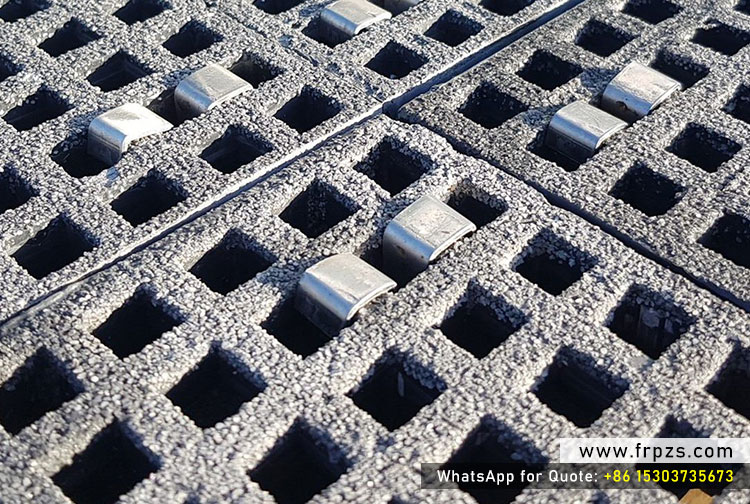
Fiberglass grating offers superior load capacity, corrosion resistance, and safety compared to steel alternatives
Fiberglass Grating Load Capacity Guide: How to Specify the Right Grating for Your Application
When designing walkways, platforms, or trench covers for corrosive environments, fiberglass grating has become the material of choice for engineers worldwide. Unlike steel, which corrodes rapidly in chemical plants, wastewater facilities, and marine environments, FRP (Fiber Reinforced Plastic) grating delivers decades of maintenance-free service life. But specifying the right grating requires understanding load capacity, deflection limits, resin systems, and surface types—factors that directly impact safety and long-term performance.
This comprehensive guide, developed from Henan Zhongsheng's extensive experience manufacturing pultruded and molded fiberglass grating for industrial clients across 30+ countries, provides the technical data and selection criteria you need to make informed decisions.
1. Understanding Fiberglass Grating Types
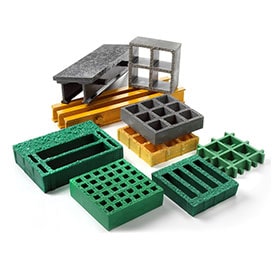
Before calculating loads, you must select the appropriate grating type. There are two primary manufacturing methods, each with distinct advantages:
| Feature | Pultruded Grating | Molded Grating |
|---|---|---|
| Manufacturing Process | Continuous pultrusion of I/T-bars, mechanically assembled | Open molding with continuous strand mat |
| Load Capacity | Higher (up to 5x concentrated load) | Moderate |
| Span Capability | Longer spans (up to 2.4m) | 0.9-1.5m typical |
| Best Applications | Heavy industrial platforms, high traffic | Trench covers, chemical sumps, cooling towers |
| Cost | 15-25% higher | More economical |
Recommendation
For heavy industrial platforms with forklift traffic, specify pultruded grating. For chemical containment areas and cost-sensitive projects, molded grating offers excellent value.
2. Load Capacity Fundamentals
Grating load capacity is determined by three key factors:
- Concentrated load: Single point load (forklift wheel, worker's foot)
- Uniform distributed load (UDL): Weight spread evenly across the surface
- Deflection limit: Maximum allowable sag, typically L/200 for industrial applications
Standard Load Classifications
| Load Class | Application | Concentrated Load | UDL | Typical Span |
|---|---|---|---|---|
| Light Duty | Pedestrian walkways | 1.5 kN (150 kg) | 3.0 kN/m2 | 0.9 - 1.2 m |
| Medium Duty | General industrial platforms | 2.5 kN (250 kg) | 5.0 kN/m2 | 1.2 - 1.5 m |
| Heavy Duty | Process platforms, high-traffic | 5.0 kN (500 kg) | 7.5 kN/m2 | 1.5 - 2.0 m |
| Extra Heavy Duty | Forklift traffic | 10.0+ kN (1000+ kg) | 15.0 kN/m2 | 1.5 - 2.4 m |
3. Pultruded Grating Load Tables (38mm Depth)
Based on ASTM E-74 testing with L/200 deflection limit:
| Span (mm) | Concentrated Load (kN) | UDL (kN/m2) | Deflection (mm) | Application |
|---|---|---|---|---|
| 900 | 4.5 | 8.5 | 4.5 | Light pedestrian |
| 1200 | 3.2 | 5.5 | 6.0 | General pedestrian |
| 1500 | 2.0 | 3.5 | 7.5 | Medium duty |
| 1800 | 1.4 | 2.5 | 9.0 | Light maintenance |
4. Resin System Selection
The resin matrix determines chemical resistance, temperature tolerance, and long-term durability. Henan Zhongsheng offers three primary resin options for grating:
| Resin Type | Chemical Resistance | Temperature Range | Cost | Best For |
|---|---|---|---|---|
| Polyester | Good (weak acids/bases) | -20 to +60°C | Baseline | General industrial, cost-sensitive |
| Vinyl Ester | Excellent (strong acids/bases) | -20 to +80°C | 1.3-1.5x | Chemical plants, wastewater |
| Epoxy | Excellent (solvents, oils) | -30 to +100°C | 1.8-2.2x | Extreme environments, aerospace |
5. Surface Types and Slip Resistance
Grating surface finish affects both safety and maintenance requirements:
- Smooth surface: Easy to clean, lower cost, but slippery when wet. Suitable for dry indoor areas.
- Grit-embedded surface: Aluminum oxide or silicon carbide particles bonded to the surface. Provides excellent slip resistance (COF 0.6+) in wet conditions. Standard for industrial platforms.
- Raised pattern (embossed): Molded-in texture provides moderate slip resistance and better drainage. Common on molded grating.
- Serrated surface: Machined grooves for maximum grip. Used in high-slip-risk areas (ramps, stairs, marine platforms).
Safety Compliance
For platforms where workers are present, specify grating with grit-embedded or serrated surface to meet OSHA and ISO 14122 slip resistance requirements (minimum COF 0.5 when wet).
6. Fiberglass Grating vs. Steel Grating: The Complete Comparison
| Factor | Steel Grating | Fiberglass Grating | Advantage |
|---|---|---|---|
| Corrosion Resistance | Requires paint/coating maintenance | Inherent, maintenance-free | FRP |
| Service Life | 15-20 years (with maintenance) | 50-75+ years | FRP |
| Weight | Heavy (requires structural support) | 80% lighter | FRP |
| Electrical Conductivity | Conductive (shock hazard) | Non-conductive | FRP |
| Maintenance Cost | $500-2000/year (repainting, rust repair) | Minimal ($50-100/year cleaning) | FRP |
| Initial Cost | Lower upfront | 15-30% higher | Steel |
| Total Cost of Ownership (20 years) | Initial + $10,000-40,000 maintenance | Initial + $1,000-5,000 maintenance | FRP (50-70% savings) |
7. Real-World Application Case Studies
Case Study 1: Wastewater Treatment Plant, Germany
Challenge: Existing steel grating on treatment tank platforms was corroding rapidly due to hydrogen sulfide exposure, requiring replacement every 5-7 years.
Solution: Installed 200 m² of vinyl ester pultruded grating with grit-embedded surface.
Results:
- Zero corrosion after 12 years of operation
- Maintenance reduced from $2,000/year to $200/year (cleaning only)
- Estimated 20-year savings: $36,000
- Improved worker safety with non-slip surface
Case Study 2: Offshore Oil Platform, North Sea
Challenge: Salt spray environment causing rapid steel grating failure; weight of replacement steel grating exceeded platform load capacity.
Solution: Replaced with fiberglass pultruded grating (80% lighter, same load capacity).
Results:
- Eliminated structural reinforcement costs ($150,000 saved)
- Installation time reduced by 40% due to lighter weight
- Projected 30-year service life vs. 8-10 years for steel
Case Study 3: Chemical Processing Facility, Saudi Arabia
Challenge: Grating exposed to mixed chemical vapors (chlorine, sulfuric acid, caustic soda) required material that could withstand all three without degradation.
Solution: Specified epoxy resin pultruded grating with vinyl ester backup option.
Results:
- Epoxy grating performed flawlessly for 8+ years
- No surface degradation or color fading
- Maintenance cost: $0 (no cleaning required due to chemical resistance)
8. Installation and Maintenance Best Practices
Installation
- Support spacing: Do not exceed the span ratings in load tables. Use intermediate supports if required.
- Fastening: Use stainless steel bolts and washers. Avoid galvanized fasteners which can corrode in contact with FRP.
- Drainage: Ensure adequate slope (minimum 1:50) for water drainage to prevent pooling.
- Edge protection: Install edge trim or nosing to prevent tripping and protect grating edges from impact.
Maintenance
- Cleaning: Wash with mild soap and water annually. For stubborn stains, use soft-bristle brush (avoid abrasive pads).
- Inspection: Check for cracks, delamination, or loose fasteners every 2-3 years.
- Repair: Minor surface damage can be repaired with epoxy putty. Structural damage requires panel replacement.
- Lifespan: With proper maintenance, fiberglass grating typically lasts 50-75+ years.
9. Grating Selection Checklist
- ☐ Identify load class (light/medium/heavy/extra-heavy duty)
- ☐ Calculate required span based on support locations
- ☐ Determine chemical exposure (select appropriate resin)
- ☐ Specify surface type (smooth/grit/serrated) based on slip risk
- ☐ Confirm deflection limit acceptable to end user (typically L/200)
- ☐ Verify grating depth (25/38/50mm) meets load requirements
- ☐ Specify fastening method (bolted/welded/adhesive)
- ☐ Request load test certificates and material certifications
“Fiberglass grating is not just a corrosion-resistant alternative to steel—it is a strategic investment in operational efficiency, worker safety, and long-term cost reduction. The 20-50% premium on initial cost is recovered within 3-5 years through eliminated maintenance.”
Need Custom Fiberglass Grating?
Henan Zhongsheng manufactures pultruded and molded fiberglass grating in standard and custom sizes, with polyester, vinyl ester, or epoxy resin systems. We provide load calculations, engineering drawings, and installation support for projects worldwide.
Browse Our Grating: www.frpzs.com/FRP-Profiles/Fiberglass-Grating
Frequently Asked Questions (FAQ)
Q: Can fiberglass grating support forklift traffic?
A: Yes, if properly specified. Pultruded grating with 50mm depth can support concentrated loads up to 10+ kN (1000+ kg) depending on span. Always consult load tables or request engineering calculations for your specific application.
Q: What is the difference between pultruded and molded grating?
A: Pultruded grating has higher load capacity and longer span capability due to its I-bar or T-bar structure. Molded grating is more economical and better for uniform distributed loads. Choose based on your load profile and budget.
Q: How do I know if my grating is slipping?
A: Specify grating with grit-embedded or serrated surface for wet environments. Test slip resistance using a tribometer (COF ≥ 0.5 when wet meets OSHA standards).
Q: Can fiberglass grating be cut or modified on-site?
A: Yes, but use carbide-tipped blades and avoid high-speed grinding which can melt the resin. Always wear PPE when cutting. For large modifications, contact the manufacturer for pre-cut panels.
Q: What is the warranty on fiberglass grating?
A: Henan Zhongsheng provides a 10-year structural warranty against delamination, cracking, and resin degradation under normal use. Chemical resistance warranty varies by resin type (5-10 years).