+86 15303735673
 Jessica@frpzs.com
 Technical Data


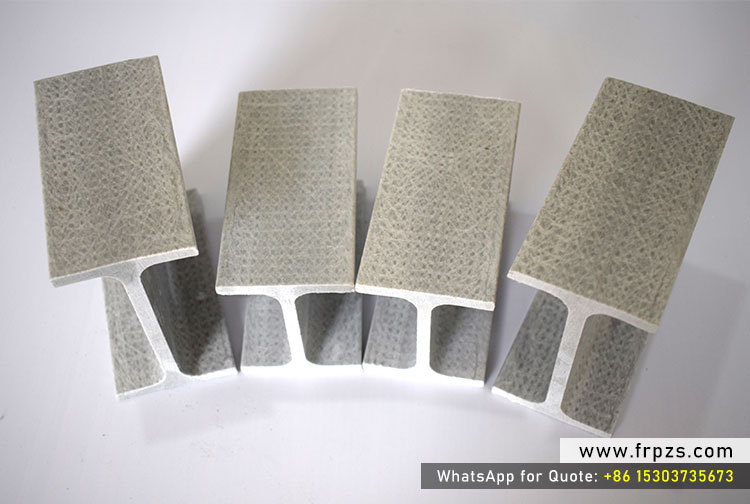
FRP I Beam Resource Hub: Design, Testing, and Engineering
Welcome to the FRP I Beam Resource Hub—a centralized technical repository engineered for structural professionals. As global infrastructure shifts toward corrosion-immune materials, Fiberglass I beams (FRP H beams) have emerged as the superior alternative to carbon steel and aluminum. This hub provides verified mechanical data, ASTM testing protocols, and structural design methodologies for pultruded composite profiles.
At Henan Zhongsheng (FRPZS), we bridge the gap between material science and field application, supporting 2026-standard industrial projects worldwide.
1. Fundamental Mechanics: Why Specify FRP I Beams?
An FRP I beam is a pultruded composite utilizing high-tenacity glass fibers (roving and mat) embedded in a thermoset resin matrix (Polyester or Vinyl Ester). Unlike isotropic steel, FRP is anisotropic, meaning its strength is strategically concentrated in the direction of the load.
- Unrivaled Corrosion Resistance: Impervious to chlorides, acids, and alkaline environments.
- High Strength-to-Weight Ratio: Approximately 80% lighter than steel with comparable longitudinal tensile strength.
- Dielectric Integrity: Non-conductive and transparent to EMI/RFI, essential for telecommunications and power substations.
- Thermal Stability: Low thermal conductivity prevents heat bridging in sensitive building envelopes.
2. Mechanical Integrity & Intertek Testing
Safety in structural engineering starts with verified data. Our fiberglass I beams undergo rigorous third-party validation to ensure they meet the ASTM D7290 standard for characteristic properties.
Verified Engineering Data
Explore our latest laboratory results covering Tensile Modulus, Full-Section Compression, and Flexural Strength. This data is critical for calculating the Serviceability Limit State (SLS).
View Intertek Mechanical Test Reports →3. Structural Design Guide: Load & Span Dynamics
Designing with FRP I beams requires a departure from traditional steel methods. Because composites have a lower Modulus of Elasticity than steel, Deflection (L/D ratio) is typically the governing factor in design, rather than ultimate strength.
Key Design Considerations:
- Anisotropy: Accounting for longitudinal vs. transverse properties.
- Shear Deformation: Incorporating shear effects in deflection calculations (Timoshenko Beam Theory).
- Creep & Duration: Applying appropriate environmental reduction factors for long-term sustained loads.
Access the Load-Span Structural Design Guide →
4. Sizes, Customization & Pultrusion Excellence
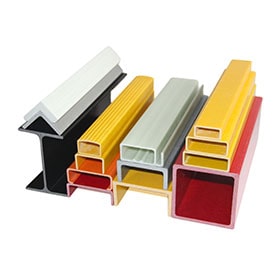
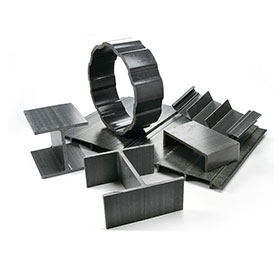
As a leading FRP I beam manufacturer, we leverage advanced pultrusion technology to offer both industry-standard sizes and custom-engineered profiles.
| Standard Sizes (Inch) | Customization Options | Resin Systems |
|---|---|---|
| 3" x 1.5" to 12" x 6" | Custom Wall Thickness | Standard FR Polyester |
| H-Beam Options (Square) | Pre-cut Lengths (up to 12m) | Vinyl Ester (Acid-Resistant) |
| Wide Flange Designs | UV-Inhibitor Coatings | Phenolic (Fire-Rated) |
Browse Standard Size Charts & Custom Options →
5. Industrial Applications Showcase
| Sector | Structural Utilization |
|---|---|
| Chemical Processing | Corrosion-proof platforms, catwalks, and support frames for acid tanks. |
| Marine & Coastal | Boardwalk framing, pier supports, and saltwater-exposed walkways. |
| Water Treatment | Non-rusting grating supports, baffle wall framing, and odor control covers. |
| Power & Telecom | Antenna support structures, transformer standoffs, and cable tray supports. |
Professional FAQ: FRP I Beam Engineering
Q: Can FRP I beams be bolted or welded?
A: FRP cannot be welded. It is joined using 316 stainless steel bolts or high-strength structural adhesives. Standard fabrication tools like carbide-tipped saws and drills are used on-site.
Q: How do FRP beams perform in fire?
A: While composites are organic, we utilize fire-retardant additives to achieve a Class 1 Flame Spread rating (per ASTM E84). For high-heat zones, Phenolic resin systems are available.
Q: Is there a limit to span length?
A: While we can pultrude infinite lengths, shipping usually limits sections to 12 meters. Design spans are limited by deflection rather than material failure.
Expert Consultation & Quotes
At Henan Zhongsheng Composite Materials Co., Ltd., we assist engineers with technical data, 3D models, and stress analysis for FRP I beam implementation. Our project lead, Jessica Huang, is available for technical support and volume-based quotations.
- Global Export Manager: Jessica Huang
- Technical Email: Jessica@frpzs.com
- WhatsApp/Mobile: +86 15303735673