+86 15303735673
 Jessica@frpzs.com
 Technical Data


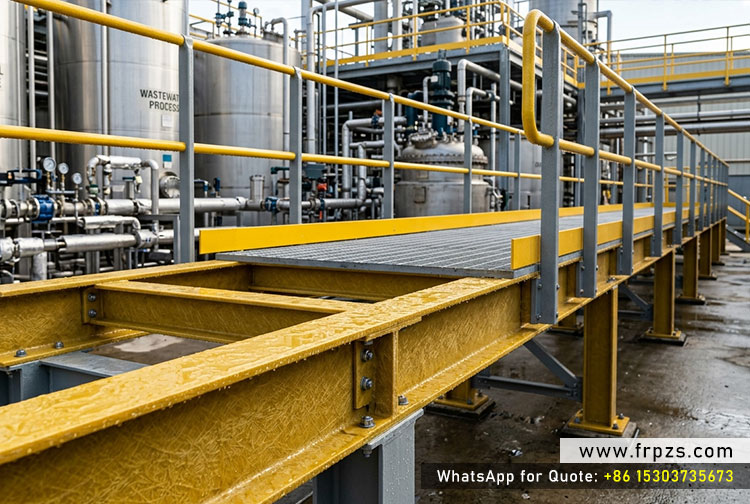
Corrosion resistant yellow FRP structural beams supporting an industrial walkway platform
The Ultimate Guide to Pultruded FRP Channels: High-Performance Structural Fiberglass Profiles
When modern engineering demands materials that combine high strength, lightweight properties, and exceptional durability, pultruded FRP channels emerge as the premier alternative to traditional steel and aluminum. Also known widely as GRP channels or fiberglass channels, these structural components are shifting the paradigm in industrial construction and infrastructure development.
As a dedicated FRP channel manufacturer and supplier, we engineered this comprehensive guide to help international procurement managers, structural engineers, and industrial buyers select the right composite channels for their critical projects.
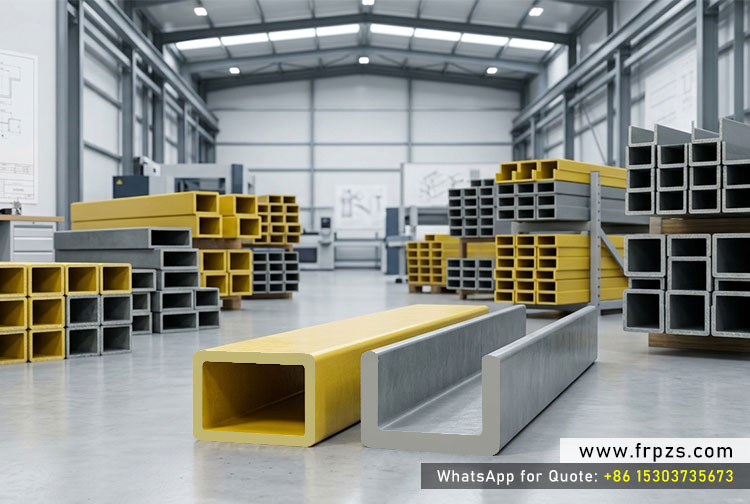
1. What is an FRP Channel? Understanding the Material & Structure
An FRP (Fiber Reinforced Plastic) channel or GRP (Glass Reinforced Plastic) channel is a structural profile manufactured using the continuous pultrusion process. This specialized manufacturing method pulls high-strength fiberglass rovings and mats through a heated resin matrix (such as polyester, vinyl ester, or epoxy), solidifying them into constant cross-sectional shapes.
Common Structural Configurations
Industrial applications typically utilize two primary geometries depending on the load-bearing requirements:
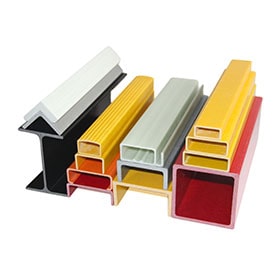
- FRP C-channel: Characterized by its C-shaped cross-section, widely used for structural framing, purlins, and supports.
- FRP U-channel: Featuring parallel flanges with a square base, ideal for tracking, protective edging, and heavy-duty pultruded structural shapes.
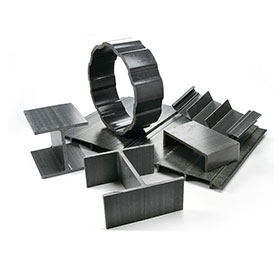
Together with angles, beams, and tubes, these fiberglass structural profiles form the backbone of modern composite engineering.
2. Why Choose Composite Channels Over Traditional Metals?
To understand why global buyers are searching for a reliable fiberglass channel factory, it is essential to analyze the material physics. Below is a direct comparison highlighting why pultruded fiberglass channels outperform steel and aluminum in corrosive environments.
| Performance Metric | Pultruded FRP Channel | Structural Carbon Steel | Stainless Steel / Aluminum |
|---|---|---|---|
| Corrosion Resistance | Excellent (Chemical & Acid Resistant) | Poor (Rusts easily) | Moderate to High (Expensive) |
| Weight-to-Strength Ratio | High (75% lighter than steel) | Low (Heavy) | Moderate |
| Electrical Conductivity | Non-Conductive (Electrical Insulating) | High Conductor | High Conductor |
| Thermal Conductivity | Extremely Low | High | High |
| Maintenance Cost | Virtually Zero Lifecycle Cost | High (Requires Painting/Galvanizing) | Moderate |
3. Key Benefits of Pultruded Fiberglass Channels
Incorporating the right material characteristics ensures structural longevity. When you source high-quality composite channels, you benefit from a unique set of properties:
Corrosion Resistant FRP Channel
Unlike steel, which suffers from oxidation and rust, vinyl ester and polyester-based GRP channels are immune to acids, alkalis, salts, and high-moisture environments. This makes them indispensable in chemical processing plants and offshore marine platforms.
Electrical Insulating GRP Channel
Safety is paramount in power distribution. Fiberglass is inherently non-conductive. Utilizing an electrical insulating GRP channel eliminates the risk of electrical shock and short circuits, making them the standard choice for FRP cable tray channels and utility pole brackets.
Structural Integrity and Dimensional Stability
Despite being incredibly lightweight, pultruded FRP structural shapes deliver excellent longitudinal tensile strength and flexural modulus. They do not warp or deform under extreme UV exposure or sub-zero thermal cycles.
4. Primary Industrial Applications
Where exactly are these advanced fiberglass C-channels and fiberglass U-channels deployed? Our global clients integrate these profiles into several demanding sectors:
- Chemical & Wastewater Treatment: Walkways, handrails, platform supports, and tank framing where chemical splashing occurs.
- Power & Utilities: High-voltage equipment enclosures, transformer fencing, and overhead FRP cable tray channel networks.
- Marine & Coastal Infrastructure: Dock structures, seawall walkways, and offshore oil rig decking supports exposed to saltwater.
- Cooling Towers: Structural framing where constant moisture eliminates the viability of metallic alternatives.
5. Sourcing Guide: Partnering with a Custom FRP Profiles Manufacturer
When searching for wholesale fiberglass channels, finding a vendor that offers more than just standard sizes is crucial for project success.
What to Look for in an FRP Supplier:
- Tailored Formulations: A professional factory should offer custom resin options (e.g., Fire Retardant Polyester, Premium Vinyl Ester for maximum corrosion resistance).
- Precision Engineering: Support for custom FRP profiles with specific wall thicknesses, lengths, and precise tolerances based on your AutoCAD blueprints.
- Strict Quality Control: Adherence to international structural standards (such as ASTM, ISO9001, and CTI for cooling towers).
As a full-chain FRP channel manufacturer, we specialize in providing turnkey solutions—from custom mold design and pultrusion machinery optimization to the mass production of high-grade fiberglass structural profiles.
6. Frequently Asked Questions About Pultruded FRP Channels
Get direct, expert answers to the most common questions searched by global engineers and procurement managers regarding structural fiberglass channels.
Q1: What is the difference between an FRP U-channel and a C-channel?
The primary difference lies in their geometry and load distribution. An FRP U-channel features perfectly parallel flanges with a uniform, square cross-section, making it ideal for tracking, structural edging, and modular framing. An FRP C-channel typically has a slightly tapered or modified flange profile optimized for specific longitudinal load-bearing and purlin applications in industrial construction.
Q2: Is an FRP channel as strong as a steel channel?
Pound for pound, yes. Pultruded fiberglass channels have an exceptional strength-to-weight ratio, offering a structural tensile strength comparable to carbon steel while weighing 75% less. However, because fiberglass has a lower modulus of elasticity than steel, structural designs may occasionally require slightly thicker profiles or additional mid-span supports to manage deflection under heavy load-bearing conditions.
Q3: What types of resin systems are used for manufacturing GRP channels?
The choice of resin determines the channel's environmental resistance. The three mainstream options include:
- Standard Polyester Resin: Ideal for general structural applications with moderate corrosion risk.
- Premium Vinyl Ester Resin: Engineered for highly aggressive environments, providing maximum resistance to acids, alkalis, and harsh chemicals.
- Epoxy Resin: Used for specialized applications requiring superior physical strength and high-temperature tolerance.
Q4: Can pultruded fiberglass channels be used outdoors? Are they UV resistant?
Yes, absolutely. High-quality pultruded structural shapes are engineered for long-term outdoor exposure. During the manufacturing process, a specialized UV-resistant surface veil is integrated into the matrix, and UV inhibitors are added to the resin to prevent solar degradation, fading, and fiber blooming.
Q5: What is the typical lifespan of a corrosion-resistant FRP channel?
In harsh industrial, marine, or chemical processing environments where carbon steel fails within 5 to 10 years, a high-grade corrosion-resistant FRP channel typically delivers a maintenance-free service life exceeding 30 to 50 years, drastically lowering the lifecycle cost of the infrastructure.
Q6: Are fiberglass C-channels and U-channels fire-retardant?
Yes. By utilizing specialized fire-retardant resin formulations, manufactured FRP channels can easily achieve premium fire ratings that comply with international safety standards, such as the ASTM E84 Class 1 flame spread index rating.
Q7: How do you cut and fabricate FRP structural shapes on-site?
Unlike steel, which requires heavy cutting torches and welding equipment, fiberglass structural profiles can be easily fabricated on-site using standard, lightweight hand tools. Contractors can use a standard circular saw or masonry saw equipped with a diamond-grit or fine-tooth carbide blade. For safety, it is essential to wear dust masks and protective eyewear during fabrication.
Q8: Do cut edges of an FRP channel need to be sealed?
Yes. Whenever an FRP channel is field-cut or drilled, the inner fiberglass reinforcements become exposed to the environment. It is highly recommended to seal all raw, exposed cut edges with a compatible polyurethane or acrylic resin coating to prevent moisture absorption and maintain complete chemical resistance.
Q9: Why are GRP channels preferred for electrical and utility infrastructure?
GRP channels are completely non-conductive, serving as an outstanding electrical insulating GRP channel. They eliminate the risk of stray currents and electrical shocks, making them the safest structural support option for substations, high-voltage equipment zones, and overhead FRP cable tray channels.
Q10: Can I order custom sizes and colors from a fiberglass channel factory?
Yes. While standard sizes (such as standard industrial dimensions for web height, flange width, and wall thickness) are always readily available, a full-chain FRP channel manufacturer can develop custom pultrusion molds to match your specific AutoCAD blueprints, custom length restrictions, and specific color-coding requirements (e.g., safety yellow, industrial gray).
Q11: How does the initial cost of FRP channels compare to steel or wood?
The upfront material cost of an FRP channel is typically higher than treated wood or standard structural carbon steel, but comparable to or lower than stainless steel and aluminum. However, when factoring in zero hot-work permit requirements, fast installation using standard tools, zero painting requirements, and an incredibly long lifespan, FRP offers a significantly lower total cost of ownership (TCO).
Contact Our Engineering Team for a Direct Quote
Looking to optimize your project budget with durable, factory-direct pultruded FRP channels? Our technical sales team is ready to provide instant pricing, sample kits, and material data sheets.
- Website: www.frpzs.com
- Contact Person: Jessica Huang (Sales Manager)
Inquire Today for Wholesale Pricing and Custom FRP Solutions!