+86 15303735673
 Jessica@frpzs.com
 Technical Data


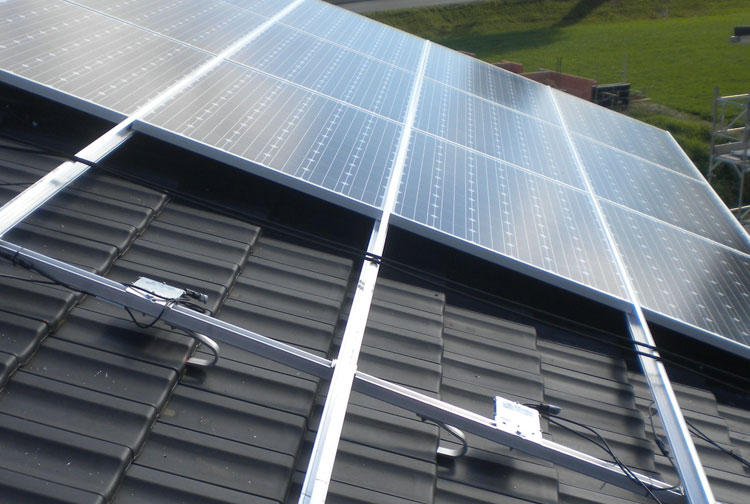
Industry Insight: As the global solar capacity expands into harsher terrains—coastal regions, salt flats, and industrial zones—traditional galvanized steel is failing to meet the 25-year service life requirement. FRP profiles (Fiberglass Reinforced Plastic) have emerged as the premier alternative for solar panel mounting structures. By utilizing advanced pultrusion technology, Henan Zhongsheng engineers fiberglass supports that offer total corrosion immunity and significant weight reduction.
1. The Engineering Failure of Steel in Solar Energy
While structural steel is historically the default material, its limitations in solar applications are becoming critical:
- Accelerated Corrosion: In humid or saline environments, the galvanization layer eventually breaches, leading to structural instability.
- Electrical Conductivity: Steel structures require complex grounding systems to manage lightning strikes and leakage currents.
- Thermal Expansion: Steel’s high coefficient of expansion can cause stress on solar modules during extreme temperature fluctuations.
2. Technical Advantages of FRP Solar Support Systems
FRP profiles address the fundamental weaknesses of metal. By combining a robust polymer matrix with high-strength glass fibers, these structures redefine durability.
A. Total Corrosion Immunity
Unlike steel, fiberglass supports do not undergo electrochemical oxidation. They are immune to salt spray, sulfur dioxide, and the ammonia often found in agricultural solar (Agri-PV) projects. This eliminates the need for periodic anti-rust painting.
B. Dielectric Strength & Safety
FRP is an inherent electrical insulator. This reduces the risk of PID (Potential Induced Degradation) in solar panels and simplifies the system's overall grounding requirements, enhancing safety for maintenance crews.
C. High Strength-to-Weight Ratio
Pultruded FRP is approximately 75% lighter than steel while maintaining comparable structural rigidity. This allows for faster installation on rooftops where weight limits are a concern and reduces transportation costs to remote desert sites.
Structural Benchmarking: FRP vs. Steel Mounting
| Property | Galvanized Steel | Henan Zhongsheng FRP |
|---|---|---|
| Corrosion Resistance | Limited (Vulnerable to salt/acid) | Extreme (Chemical & Salt immune) |
| Electrical Conductivity | Conductive (High grounding cost) | Insulating (Inherent Safety) |
| Installation | Heavy machinery required | Lightweight / Rapid Assembly |
| Maintenance Cycle | 5-10 Years (Recoating) | Zero Maintenance |
| Design Life | 15-20 Years | 30+ Years |
3. Application Zones for FRP Profiles
FRP is not just a niche material; it is becoming the standard for specific high-stress solar applications:
- Floating Solar (FPV): Where constant moisture and water contact make metal structures unfeasible.
- Coastal Solar Farms: Withstanding relentless salt-air exposure.
- Industrial Rooftops: Resistant to corrosive exhaust fumes from manufacturing plants.
4. Lifecycle Cost (LCOE) and Sustainability
While the initial procurement of fiberglass supports may carry a slight premium, the Levelized Cost of Energy (LCOE) is significantly lower. By eliminating maintenance labor, repainting costs, and premature structure replacement, FRP ensures the solar plant remains profitable well beyond its 25th year. Furthermore, the low energy consumption of the pultrusion process supports the carbon-neutral goals of the green energy sector.
Technical FAQ: FRP in Solar Mounting
Q1: Do FRP profiles become brittle in high-heat desert environments?
A: No. At Henan Zhongsheng, we use high Glass Transition Temperature (Tg) resins and UV-stabilized matrices specifically designed to maintain structural integrity even in temperatures exceeding 70°C.
Q2: Can FRP mounting structures withstand high wind loads?
A: Absolutely. Our pultruded channels and beams are engineered for high flexural modulus. We provide custom cross-sections that meet specific wind-load calculations for hurricane-prone areas.
Q3: Is it difficult to mount panels to FRP supports?
A: It is actually easier. FRP can be pre-drilled or easily cut on-site without the risk of creating a new "corrosion edge," a common problem when cutting galvanized steel.
Q4: Why is FRP better for "Agri-PV" (Agriculture-Solar)?
A: Ammonia from livestock and fertilizers is highly corrosive to metal. FRP is completely unaffected by agricultural chemicals, making it the only viable 30-year solution for farm-integrated solar.
Q5: Does Henan Zhongsheng provide custom solar profiles?
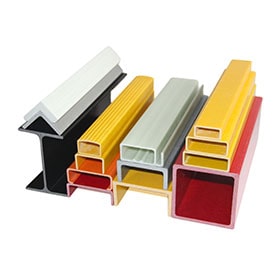
A: Yes. We manufacture a full range of FRP square tubes, C-channels, and L-angles, and can design custom dies for specific mounting bracket requirements.
Q6: How does FRP help with solar plant insurance?
A: Because FRP structures do not rot or rust, they present a lower long-term risk profile, which can lead to more favorable insurance terms and financing for utility-scale projects.
Partner with Henan Zhongsheng for Your Solar Infrastructure
Henan Zhongsheng Composite Materials Co., Ltd. is a global leader in pultruded FRP solutions. With 20+ years of manufacturing expertise, we supply the solar energy industry with structures that are built for the future. Don't let rust compromise your green energy investment.
Contact Jessica Huang for Technical Specs & Project Quotes:
- Email: Jessica@frpzs.com
- WhatsApp: +86 15303735673
- Global Supply: Providing premium fiberglass solar supports to India, MENA regions, Australia, and Europe.