+86 15303735673
 Jessica@frpzs.com
 Technical Data


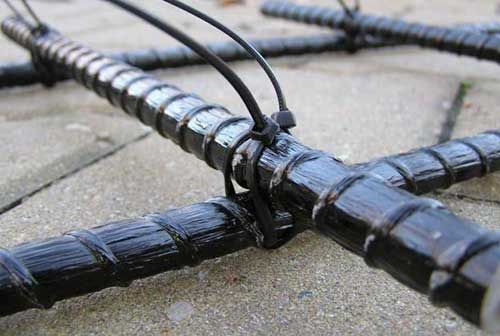
Next-Gen Reinforcement: GFRP rebar driving the longevity of modern concrete infrastructure.
A New Era of Concrete Engineering
In 2026, the global construction industry is facing a critical challenge: the premature degradation of steel-reinforced structures due to salt-induced corrosion. Fiberglass rebar (GFRP) has transitioned from a niche specialty to a mainstream structural trend. By replacing traditional black steel with high-performance fiberglass rebar, engineers are now designing reinforced concrete structures with a maintenance-free service life exceeding 100 years. At Henan Zhongsheng (FRPZS), we provide the composite technology that makes this sustainable future possible.
1. Why Fiberglass Rebar is Dominating the 2026 Market
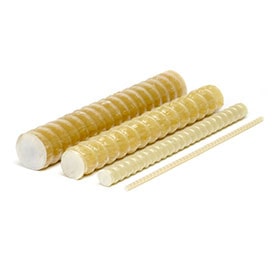
The surge in fiberglass rebar adoption is driven by its unique material science. Composed of high-tenacity glass fibers and a specialized polymer resin, it addresses the fundamental flaws of carbon steel in reinforced concrete.
I. Unparalleled Corrosion Resistance
Steel rusts when exposed to chloride ions (from road salts or seawater) and concrete carbonation, causing internal pressure that leads to cracking and spalling. GFRP is chemically inert—it simply cannot rust. This makes it the only logical choice for seawalls, bridge decks, and chemical plant slabs.
II. Strategic Weight Advantages
At approximately 1/4 the weight of steel, GFRP drastically reduces the energy required for transport and the labor intensity of site placement. For large-scale construction, this translates to faster tie-in cycles and reduced crane requirements, lowering the total project CAPEX.
III. Non-Magnetic & Non-Conductive Integrity
Medical facilities (MRI rooms) and high-speed rail infrastructure require materials that do not interfere with magnetic fields or conduct stray currents. Fiberglass rebar provides the necessary structural reinforcement without compromising sensitive electronic or magnetic environments.
2. Advanced Applications: Where GFRP Excels
| Application | Traditional Problem | GFRP Solution | Key Benefit |
|---|---|---|---|
| Marine Infrastructure | Saltwater corrosion of steel | Inert GFRP Rebar | 100+ year service life |
| Bridge Decks | Road salt de-icing damage | Corrosion-Proof Rebar | Reduced potholes/repairs |
| Tunnels & Rail | Stray current corrosion | Non-Conductive GFRP | Operational safety |
| Medical (MRI) | Magnetic interference | Non-Magnetic Material | Diagnostic accuracy |
3. The Manufacturing Precision of Henan Zhongsheng
With over 20 years of expertise, Henan Zhongsheng utilizes advanced pultrusion technology to create fiberglass rebar that meets and exceeds international ASTM D7957 standards. Our process ensures:
- High-Strength Bonding: Sand-coated or helical-wrap surfaces provide 2.5x the bond strength to concrete compared to smooth steel.
- Customized Profiles: We manufacture a variety of diameters and pre-bent shapes (stirrups/corners) to eliminate the need for on-site bending.
- Consistency: Automated production lines ensure the glass-to-resin ratio is optimized for peak tensile performance.
10 Professional FAQs: Implementing GFRP Rebar
Q1: "Can GFRP rebar be used in load-bearing columns?"
A: Yes, provided the lower Modulus of Elasticity is factored into the deflection and crack-control design by a qualified engineer.
Q2: "Does GFRP rebar require special tie-wire?"
A: We recommend using plastic-coated steel ties or heavy-duty nylon ties to maintain the non-conductive and non-corrosive nature of the cage.
Q3: "How does the price compare to steel in 2026?"
A: While the upfront material cost is slightly higher than black steel, the **Total Lifecycle Cost** is 40% lower when accounting for zero maintenance and faster installation labor.
Q4: "Can I bend the rebar on-site if I need a slight curve?"
A: No. GFRP is a thermoset material and cannot be bent once cured. All bends must be pre-fabricated at our facility based on your project schedule.
Q5: "Is it suitable for seismic-active zones?"
A: Yes. Because GFRP does not permanently deform (it has no yield point), it remains elastic and resilient during repeated seismic loading cycles.
Q6: "Does fiberglass rebar float when vibrating concrete?"
A: Due to its lighter weight, GFRP should be tied at closer intervals (every 4-5 feet) and secured with plastic chairs to prevent shifting during pours.
Q7: "What is the tensile strength of Zhongsheng GFRP rebar?"
A: Our standard GFRP rebar offers tensile strength between 700 MPa and 1100 MPa—significantly higher than Grade 60 steel.
Q8: "Is it fire-rated for building construction?"
A: Concrete provides the fire rating. Our rebar maintains its structural core integrity within the concrete during standard fire-testing durations.
Q9: "Is it environmentally friendly?"
A: Yes. GFRP has a lower carbon footprint during manufacturing than steel and its extreme longevity reduces the need for resource-intensive structural replacements.
Q10: "Can I cut GFRP with a standard saw?"
A: Yes, any standard circular saw with a diamond-grit or abrasive blade will cut GFRP easily and cleanly.
Expert Reinforcement Consulting with Zhongsheng
Partner with Henan Zhongsheng Composite Materials Co., Ltd. for a corrosion-free 2026. From bridge decks to medical facilities, our technical team led by Jessica Huang provides the engineering support and high-capacity supply you need.
Contact our technical specialists today:
- Lead Technical Consultant: Jessica Huang
- Direct Engineering Inquiry: Jessica@frpzs.com
- Global WhatsApp: +86 15303735673