+86 15303735673
 Jessica@frpzs.com
 Technical Data


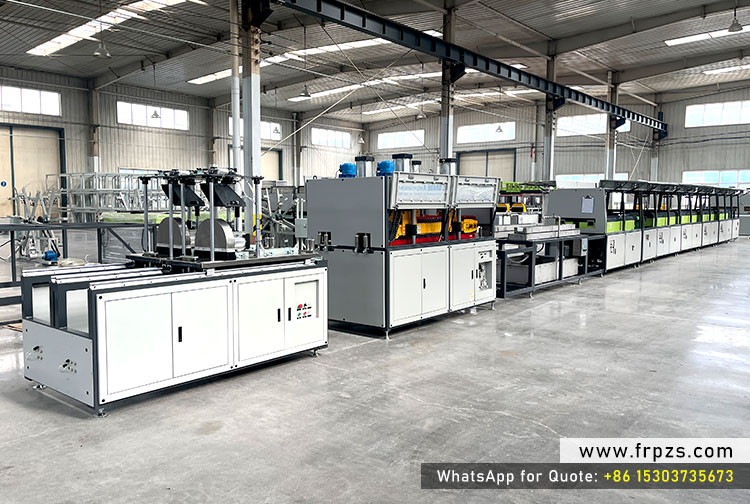
FRP Rebar Production Line for Sale
Complete Guide to Equipment Configuration, Capacity, and Investment
The global construction industry is rapidly shifting toward corrosion-resistant and lightweight reinforcement materials. As a result, FRP rebar has become a preferred alternative to traditional steel rebar in infrastructure, marine, and transportation projects. This growing demand has led many manufacturers and investors to actively search for a reliable FRP rebar production line for sale that can deliver stable quality, scalable output, and long-term profitability.
Unlike conventional steel rebar manufacturing, FRP rebar production relies heavily on composite pultrusion technology. Equipment selection, process control, and technical support directly determine product performance and factory success.
What Is an FRP Rebar Production Line?
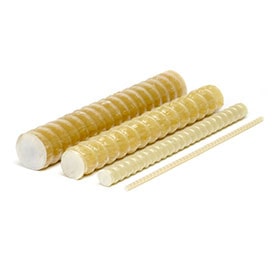
An FRP rebar production line is a continuous pultrusion-based manufacturing system designed to produce fiber-reinforced polymer reinforcing bars with consistent mechanical properties. The process integrates glass fiber reinforcement with thermosetting resin systems to create high-strength, corrosion-resistant rebar.
A standard industrial FRP rebar production line includes:
- Fiber creel and tension control system
- Resin impregnation and wet-out unit
- Heated pultrusion mold for curing and shaping
- Continuous pulling system
- Surface profiling or sand coating unit
- Automatic cutting and stacking system
Each component must work in coordination to ensure stable curing, accurate diameter control, and consistent tensile strength.
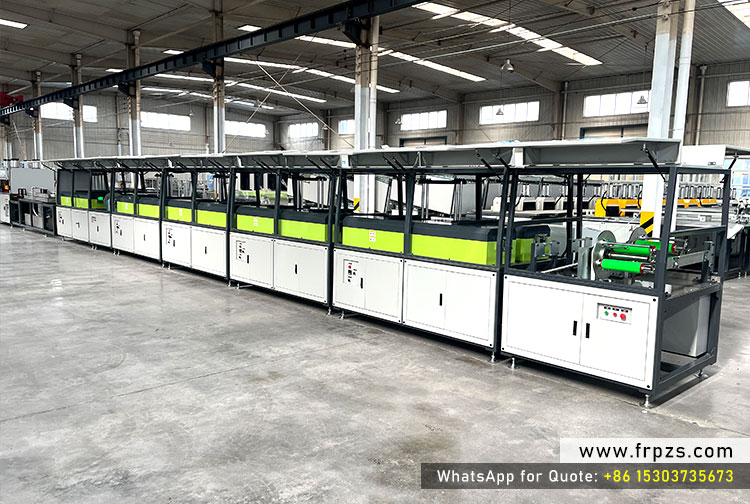
Key Equipment Configuration of an FRP Rebar Production Line
Fiber Creel and Resin Impregnation System
The fiber creel holds multiple rovings and ensures uniform fiber tension throughout the process. Proper fiber alignment is critical for tensile strength and long-term durability.
The resin impregnation system ensures complete wet-out of fibers. Resin formulation, viscosity control, and impregnation time directly affect final product quality.
Pultrusion Mold and Heating System
The pultrusion mold defines the diameter, rib profile, and surface structure of the FRP rebar. Industrial-grade molds are manufactured with high-precision steel and optimized heating zones to ensure uniform curing.
Temperature stability inside the mold is one of the most critical parameters in FRP rebar production. Poor temperature control can lead to under-curing, surface defects, or dimensional instability.
Pulling and Cutting Units
The pulling system determines production speed and stability. Advanced hydraulic or servo-driven pullers allow precise speed adjustment, ensuring synchronization with curing time.
Automatic cutting systems improve production efficiency and allow customized length output according to project requirements.
Typical Production Capacity and Technical Parameters
When evaluating an FRP rebar production line for sale, production capacity is one of the most important considerations.
- Rebar diameter range: 6 mm – 32 mm (customizable)
- Production speed: 0.5 – 2.5 m/min (depending on diameter)
- Daily output: 2 – 8 tons per line
- Labor requirement: 2–3 operators per shift
- Power consumption: Moderate compared to steel rebar lines
A well-designed FRP rebar machine allows manufacturers to switch between different diameters by changing molds, improving flexibility and market adaptability.
For industrial-scale production, selecting a professional FRP rebar machine production line with proven pultrusion technology is essential for long-term stability.
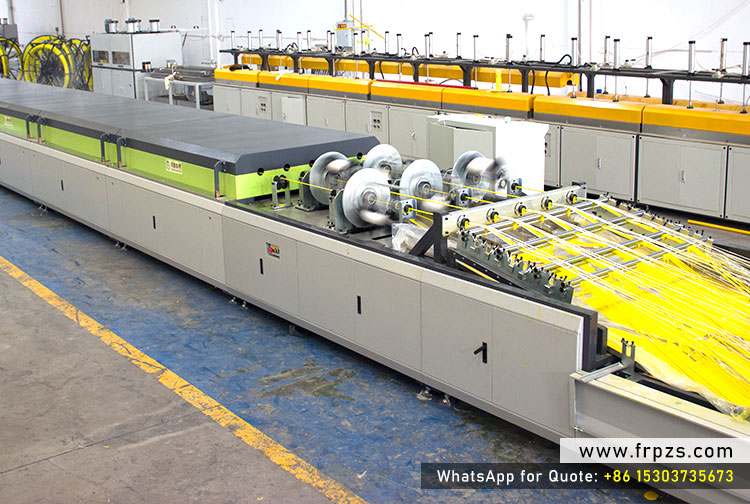
FRP Rebar Machine Production Line
Investment Cost and Return on Investment (ROI)
The investment cost of an FRP rebar production line varies depending on automation level, capacity, and customization requirements.
Main cost components include:
- FRP rebar pultrusion machine
- Molds and surface profiling systems
- Resin handling and storage equipment
- Installation, commissioning, and training
Compared with steel rebar manufacturing, FRP rebar plants require lower energy consumption and fewer workers. With proper market positioning, many manufacturers achieve a relatively short payback period.
Quality Control in FRP Rebar Production
Consistent quality is critical for FRP rebar acceptance in infrastructure projects. A professional production line should support strict quality control at every stage.
- Tensile strength and modulus
- Fiber volume fraction
- Surface bonding performance
- Dimensional tolerance
Advanced FRP rebar machines allow precise control of temperature, pulling speed, and resin impregnation, reducing defect rates and improving yield.
Why Choose a Professional FRP Rebar Machine Manufacturer?
Purchasing an FRP rebar production line is not just an equipment decision—it is a long-term manufacturing partnership. Working with an experienced manufacturer provides advantages beyond the machine itself.
- Customized mold design for different standards
- Process parameter optimization
- Operator training and technical documentation
- Long-term after-sales support
If you are evaluating an FRP rebar production line for sale, partnering with a specialized manufacturer ensures stable production and reduced operational risk.
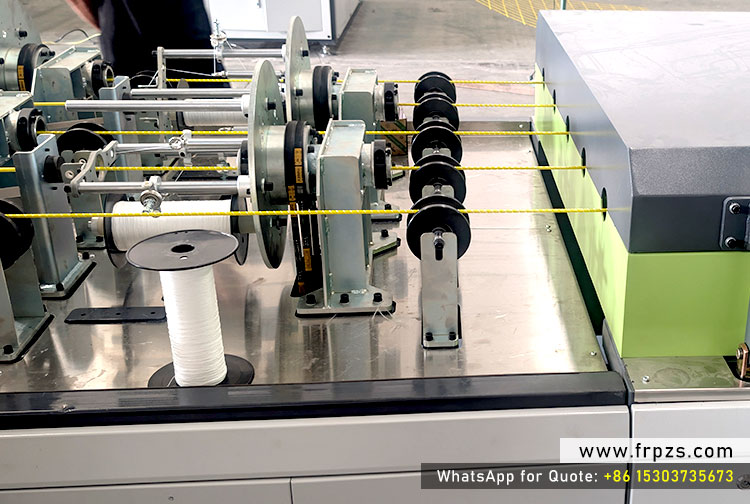
Explore professional FRP rebar pultrusion machines
Frequently Asked Questions About FRP Rebar Production Lines
Q1: Can one FRP rebar production line produce multiple diameters?
Yes. By changing pultrusion molds and adjusting process parameters, one line can produce different diameters.
Q2: How long does it take to install and commission a production line?
Typically 2–4 weeks, depending on site conditions and customization level.
Q3: Is operator experience critical for FRP rebar production?
Basic training is sufficient when supported by a stable machine design and standardized operating procedures.
Final Thoughts
As global demand for corrosion-resistant reinforcement continues to grow, investing in a reliable FRP rebar production line offers strong long-term potential. Equipment quality, technical support, and process stability are the key factors that determine success.