+86 15303735673
 Jessica@frpzs.com
 Technical Data


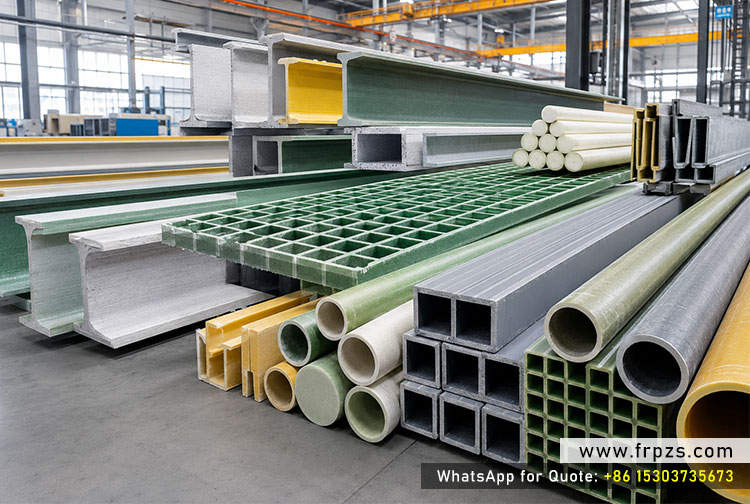
FRP products including fiberglass reinforced polymer profiles, tubes and composite materials
The Ultimate Guide to FRP Products: Types, Manufacturing Process, Applications, Design Guide & Buying Tips
Summary
Fiber Reinforced Plastic (FRP) products are advanced composite materials manufactured by combining high-strength reinforcing fibers with thermosetting resin systems. Compared with traditional materials such as steel, aluminum, wood, and PVC, FRP products offer exceptional corrosion resistance, lightweight construction, high mechanical strength, electrical insulation, weather resistance, and low maintenance requirements.
Today, FRP products are widely used across construction, infrastructure, power transmission, renewable energy, marine engineering, transportation, telecommunications, wastewater treatment, chemical processing, agriculture, and industrial manufacturing. Their long service life and low lifecycle cost make them one of the fastest-growing engineering materials worldwide.
This comprehensive guide explains everything you need to know about FRP products, including manufacturing processes, material selection, product categories, engineering properties, applications, international standards, design considerations, cost analysis, maintenance, customization, and how to choose a reliable FRP manufacturer.
Quick Facts About FRP Products
| Property | Typical Value |
|---|---|
| Material Type | Fiber Reinforced Polymer (Plastic) |
| Main Reinforcement | E-Glass Fiber, S-Glass Fiber, Carbon Fiber, Basalt Fiber |
| Common Resin Systems | Polyester, Vinyl Ester, Epoxy, Polyurethane |
| Manufacturing Methods | Pultrusion, Filament Winding, Compression Molding, RTM, Hand Lay-Up |
| Service Life | 25–50+ Years |
| Corrosion Resistance | Excellent |
| Electrical Conductivity | Non-Conductive |
| Weight Compared with Steel | Approximately 20%–30% |
| Maintenance Requirement | Very Low |
| Main Industries | Construction, Chemical, Marine, Utility, Renewable Energy, Transportation |
Table of Contents
- 1. What Are FRP Products?
- 2. Why Are FRP Products Becoming More Popular?
- 3. Materials Used in FRP Products
- 4. How FRP Products Are Manufactured
- 5. Types of FRP Products
- 6. Advantages of FRP Products
- 7. Applications Across Industries
- 8. FRP vs Traditional Materials
- 9. Design Guide
- 10. Choosing an FRP Manufacturer
- 11. Frequently Asked Questions
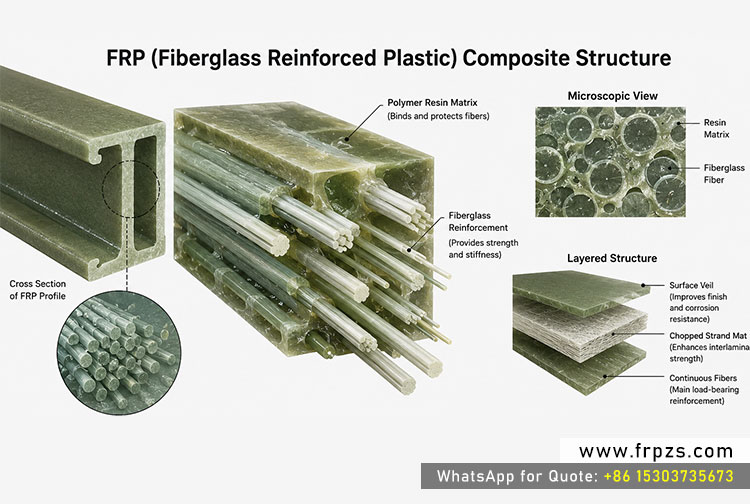
FRP material structure showing fiberglass reinforcement and polymer resin composite
What Are FRP Products?
FRP products are engineered composite components manufactured by reinforcing polymer resin with high-strength fibers. The abbreviation FRP stands for Fiber Reinforced Plastic or Fiber Reinforced Polymer. These composite materials combine the lightweight characteristics of plastics with the exceptional strength of reinforcing fibers, creating products that outperform many traditional engineering materials.
Unlike steel, which may rust over time, or wood, which can rot and deform, FRP products maintain their structural integrity even when exposed to moisture, chemicals, ultraviolet radiation, and harsh environmental conditions. This unique combination of durability and lightweight performance has made FRP one of the most important engineering materials of the twenty-first century.
Modern FRP products are designed for both structural and non-structural applications. They can replace steel, aluminum, concrete, wood, or PVC in numerous industries where corrosion resistance, weight reduction, electrical insulation, or long service life are critical.
Today, thousands of FRP products are manufactured worldwide, ranging from simple fiberglass rods to complex structural systems used in bridges, offshore platforms, electric utilities, and renewable energy projects.
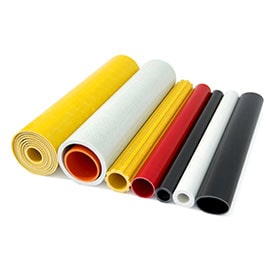
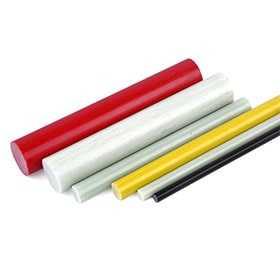
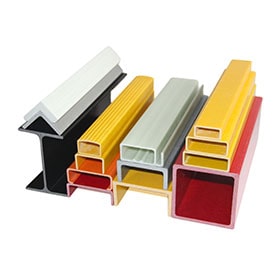
Suggested Image: Various FRP Pultruded Products Display
Image ALT: Various FRP products including fiberglass profiles, square tubes, channels, beams, rods and structural shapes
What Does FRP Stand For?
| Abbreviation | Meaning | Description |
|---|---|---|
| FRP | Fiber Reinforced Plastic | The most commonly used engineering term. |
| FRP | Fiber Reinforced Polymer | Increasingly used in engineering specifications. |
| GFRP | Glass Fiber Reinforced Polymer | The most common type of FRP using glass fibers. |
| CFRP | Carbon Fiber Reinforced Polymer | Premium composite with extremely high strength. |
| BFRP | Basalt Fiber Reinforced Polymer | Excellent heat resistance and durability. |
Main Components of FRP Products
Every FRP product consists of two essential components that work together to achieve superior engineering performance.
1. Reinforcing Fibers
The reinforcing fibers provide tensile strength, stiffness, impact resistance, and overall structural performance. Glass fiber remains the most widely used reinforcement because it offers an excellent balance of strength, durability, and cost-effectiveness.
2. Polymer Resin
The resin binds the fibers together, transfers loads between fibers, protects against moisture and chemicals, and determines many environmental resistance properties. Polyester, vinyl ester, epoxy, and polyurethane are the most commonly used resin systems.
3. Fillers and Additives
Depending on the application, manufacturers may incorporate UV stabilizers, pigments, flame retardants, mineral fillers, anti-static additives, or other performance-enhancing materials to improve durability or meet industry-specific standards.
Why Are FRP Products Becoming More Popular?
The increasing popularity of FRP products is driven by the growing demand for durable, lightweight, corrosion-resistant materials that reduce maintenance costs while improving long-term performance. As infrastructure ages and industrial environments become more demanding, traditional materials often struggle to meet modern engineering requirements.
FRP composites solve many of these challenges by combining mechanical strength with outstanding environmental resistance. Their ability to withstand corrosion, chemicals, moisture, and electrical hazards has made them indispensable across numerous industries.
Key Reasons Engineers Choose FRP Products
- Excellent corrosion resistance
- Lightweight construction for easier transportation and installation
- High strength-to-weight ratio
- Outstanding electrical insulation
- Low thermal conductivity
- Minimal maintenance requirements
- Long design service life
- Customizable shapes and dimensions
- Lower lifecycle cost than traditional materials
- Compatible with automated manufacturing processes
Industry Trend
Governments, infrastructure owners, renewable energy developers, and industrial manufacturers are increasingly replacing conventional materials with advanced composite products. Applications such as utility poles, cable trays, bridge decks, cooling towers, offshore structures, photovoltaic support systems, and wastewater treatment facilities now routinely specify FRP components because they significantly reduce maintenance costs over decades of operation.
Key Takeaways
- FRP products combine reinforcing fibers with polymer resin to create advanced composite materials.
- They provide high strength while remaining significantly lighter than steel.
- Corrosion resistance makes them ideal for harsh environments.
- Electrical insulation allows safe use around high-voltage equipment.
- Low maintenance reduces total ownership cost throughout the product lifecycle.
Expert Insight
From practical manufacturing experience, the long-term performance of an FRP product depends not only on fiber content but also on the proper combination of resin formulation, fiber orientation, curing process, and pultrusion quality control. High-quality production equipment, precision pultrusion dies, controlled curing temperatures, and consistent fiber tension all contribute significantly to final product performance.
For structural applications, choosing an experienced manufacturer with advanced pultrusion technology and strict quality inspection procedures is often more important than simply selecting the lowest-priced supplier.
Raw Materials Used in FRP Products
The outstanding performance of FRP products is achieved through the careful combination of reinforcing fibers, thermosetting resins, fillers, and functional additives. Each material contributes unique mechanical, thermal, electrical, and chemical properties, allowing engineers to tailor composite products for highly demanding applications.
Unlike traditional materials, where the properties are largely fixed, FRP composites can be engineered by adjusting the type, quantity, orientation, and combination of raw materials. This flexibility enables manufacturers to produce custom solutions that satisfy specific structural, environmental, and economic requirements.
Suggested Image: Raw materials for FRP pultrusion including glass fiber roving, resin, fillers, and additives.
Image ALT: Raw materials used in manufacturing fiberglass reinforced plastic FRP products.
The Four Primary Components of FRP Products
| Component | Main Function | Typical Content |
|---|---|---|
| Reinforcing Fibers | Provide strength and stiffness | 50–80% |
| Resin System | Bind fibers and resist chemicals | 20–45% |
| Fillers | Improve surface quality and reduce cost | 0–20% |
| Additives | Enhance UV, fire, color and weather resistance | Less than 5% |
Reinforcing Fibers
Reinforcing fibers form the structural backbone of FRP products. They carry most of the mechanical loads and largely determine tensile strength, flexural strength, fatigue resistance, and stiffness.
The selection of reinforcement depends on the required performance, service environment, manufacturing process, and project budget.
1. E-Glass Fiber
E-Glass (Electrical Grade Glass Fiber) is the most widely used reinforcement in the composite industry. It offers an excellent balance between mechanical strength, corrosion resistance, electrical insulation, and cost.
Most pultruded FRP profiles—including square tubes, C channels, I beams, rods, ladders, cable trays, and structural components—are manufactured using E-Glass fiber.
Advantages- Excellent electrical insulation
- High tensile strength
- Outstanding corrosion resistance
- Cost-effective
- Suitable for most industrial applications
2. S-Glass Fiber
S-Glass fiber provides significantly higher tensile strength and modulus than E-Glass. It is commonly selected for aerospace, military, and high-performance engineering applications where superior mechanical performance is essential.
Typical Applications- Aerospace structures
- Defense equipment
- High-load composite structures
- Premium industrial components
3. Carbon Fiber
Carbon fiber delivers exceptional stiffness and strength while remaining extremely lightweight. Although more expensive than glass fiber, it is ideal for applications where maximum structural performance is required.
Typical Applications- Aircraft components
- Sports equipment
- Automotive racing parts
- Robotics
- Satellite structures
4. Basalt Fiber
Basalt fiber has gained popularity in recent years because of its excellent temperature resistance, corrosion resistance, and environmental sustainability. It performs well in aggressive environments and offers better heat resistance than traditional glass fiber.
Fiber Comparison
| Fiber Type | Strength | Weight | Cost | Typical Applications |
|---|---|---|---|---|
| E-Glass | ★★★★★ | Light | Low | General FRP Products |
| S-Glass | ★★★★★★ | Light | High | High-performance Structures |
| Carbon Fiber | ★★★★★★★ | Very Light | Very High | Aerospace & Automotive |
| Basalt Fiber | ★★★★★ | Light | Medium | Civil Engineering & Marine |
Resin Systems Used in FRP Products
If reinforcing fibers provide the strength, the resin system provides protection, durability, and environmental resistance. The resin surrounds every fiber, transfers loads between fibers, protects against moisture, chemicals, ultraviolet radiation, and mechanical wear.
Choosing the appropriate resin is one of the most important engineering decisions during product design.
Suggested Image: Polyester, Vinyl Ester, Epoxy and Polyurethane resin containers.
Image ALT: Different resin systems used for fiberglass reinforced plastic manufacturing.
Polyester Resin
Polyester resin is the most widely used resin in the pultrusion industry because it combines reliable mechanical performance with excellent processing characteristics and competitive pricing.
Advantages- Economical
- Easy processing
- Good weather resistance
- Suitable for large-scale production
- FRP Profiles
- FRP Grating
- Cable Trays
- Structural Shapes
- Utility Components
Vinyl Ester Resin
Vinyl ester resin provides superior corrosion resistance and chemical durability compared with polyester resin. It is commonly selected for harsh chemical environments and marine applications.
Ideal Applications- Chemical Plants
- Wastewater Treatment
- Marine Engineering
- Acid Storage Areas
- Cooling Towers
Epoxy Resin
Epoxy resin offers exceptional bonding strength, low shrinkage, and excellent fatigue resistance. It is often used in premium structural components requiring high reliability and dimensional stability.
Advantages- Excellent adhesion
- High mechanical strength
- Superior fatigue resistance
- Low water absorption
Polyurethane Resin
Polyurethane resin has become increasingly popular in recent years because it delivers excellent toughness, impact resistance, and fiber bonding efficiency. Modern polyurethane pultrusion technology also enables higher production speeds while maintaining excellent structural performance.
Resin Comparison Table
| Property | Polyester | Vinyl Ester | Epoxy | Polyurethane |
|---|---|---|---|---|
| Cost | ★★★★★ | ★★★★ | ★★★ | ★★★ |
| Corrosion Resistance | ★★★★ | ★★★★★ | ★★★★★ | ★★★★ |
| Mechanical Strength | ★★★★ | ★★★★★ | ★★★★★ | ★★★★★ |
| Production Speed | ★★★★ | ★★★★ | ★★★ | ★★★★★ |
| Typical Applications | General Industry | Chemical Industry | High-end Engineering | Advanced Pultrusion |
Fillers Used in FRP Manufacturing
Fillers are incorporated into resin systems to improve processing performance, reduce production costs, enhance surface quality, increase fire resistance, and optimize dimensional stability.
| Filler | Main Purpose |
|---|---|
| Calcium Carbonate | Cost reduction and dimensional stability |
| Aluminum Hydroxide | Fire retardancy and smoke suppression |
| Silica | Wear resistance |
| Talc | Surface finish improvement |
| Glass Microspheres | Weight reduction |
Functional Additives
Modern FRP products often require additional performance beyond basic structural strength. Manufacturers therefore incorporate specialized additives to improve durability and meet international standards.
- UV Stabilizers
- Flame Retardants
- Pigments
- Anti-static Agents
- Mold Release Agents
- Anti-aging Additives
- Low Smoke Formulations
- Weather-resistant Coatings
Engineering Tip: Material Selection Matters
One of the most common misconceptions is that increasing glass fiber content alone will always improve product quality. In reality, the performance of an FRP product depends on the proper balance between reinforcement, resin chemistry, curing conditions, fiber orientation, and manufacturing precision.
For example, a pultruded profile designed for a chemical processing plant may perform far better with vinyl ester resin and optimized glass content than one with a higher fiber percentage but an unsuitable resin system.
Expert Insight
Professional pultrusion manufacturers carefully evaluate each project before selecting raw materials. Factors such as operating temperature, UV exposure, structural loads, corrosion level, electrical insulation requirements, fire performance, and expected service life all influence material selection.
For custom FRP products, experienced manufacturers typically optimize the complete material system instead of simply increasing fiber content. This engineering approach improves reliability while controlling production costs and ensuring long-term durability.
Key Takeaways
- Glass fiber provides the primary structural strength of FRP products.
- Resin selection largely determines corrosion resistance, durability, and environmental performance.
- Fillers and additives enhance fire resistance, UV stability, appearance, and processing efficiency.
- Proper material selection should be based on the intended application rather than cost alone.
- A well-designed combination of fibers, resin, and manufacturing technology produces the highest-performing FRP products.
How FRP Products Are Manufactured
The manufacturing process of FRP products determines their final mechanical performance, dimensional accuracy, surface quality, durability, and service life. Unlike traditional materials such as steel or aluminum, FRP composites are created through advanced composite manufacturing technologies that combine fibers and resin into a single high-performance structure.
Among all FRP manufacturing methods, pultrusion technology is one of the most important and widely used processes for producing continuous structural FRP products, including fiberglass profiles, FRP tubes, square tubes, channels, I-beams, rods, angles, flat bars, and customized structural shapes.
The selection of manufacturing technology depends on product geometry, production volume, mechanical requirements, surface finish, application environment, and cost considerations.
Suggested Image: Complete FRP product manufacturing process from fiber preparation to finished composite profile.
Image ALT: FRP products manufacturing process including fiber reinforcement, resin impregnation, pultrusion molding and cutting.
Main FRP Manufacturing Methods
| Manufacturing Method | Main Products | Advantages | Typical Applications |
|---|---|---|---|
| Pultrusion | FRP Profiles, Tubes, Beams, Rods | Continuous production, high strength, precise dimensions | Construction, Infrastructure, Energy |
| Filament Winding | Pipes, Tanks, Pressure Vessels | Excellent circumferential strength | Chemical, Oil & Gas |
| Compression Molding | Panels, Covers, Automotive Parts | High production efficiency | Transportation, Industrial Components |
| RTM | Complex Composite Parts | Excellent surface finish | Automotive, Aerospace |
| Hand Lay-up | Large Custom Parts | Low equipment investment | Marine, Small Batch Production |
| Vacuum Infusion | Large Composite Structures | Low void content and high quality | Wind Energy, Marine |
Pultrusion Process: The Most Important Technology for Structural FRP Products
Pultrusion is a continuous manufacturing process used to produce high-strength FRP profiles with constant cross-sections. The word "pultrusion" combines "pull" and "extrusion", meaning that reinforced fibers are continuously pulled through a heated forming die where resin curing creates a rigid composite profile.
Because the fibers remain continuous and aligned along the length direction, pultruded FRP products achieve excellent tensile strength, dimensional accuracy, and structural consistency.
Pultrusion is especially suitable for manufacturing products such as:
- FRP Square Tubes
- FRP Rectangular Tubes
- FRP Round Tubes
- FRP I Beams
- FRP C Channels
- FRP Angles
- FRP Flat Bars
- FRP Rebar
- FRP Ladder Profiles
- Custom Structural Profiles
Step-by-Step FRP Pultrusion Manufacturing Process
Step 1: Fiber Payoff and Preparation
Continuous glass fiber rovings, mats, fabrics, or other reinforcement materials are arranged according to the product design requirements.
The fiber arrangement determines the final mechanical properties of the FRP product. For example, longitudinal fibers provide high tensile strength, while transverse reinforcement improves dimensional stability and impact resistance.
Step 2: Resin Impregnation
The reinforcement fibers pass through a resin bath where they are completely saturated with a carefully formulated resin mixture.
During this stage, the resin system penetrates between individual fibers, ensuring strong bonding and eliminating weak points.
Common resin systems include:
- Unsaturated Polyester Resin
- Vinyl Ester Resin
- Epoxy Resin
- Polyurethane Resin
Step 3: Pre-forming Process
After resin impregnation, the wet fibers pass through pre-forming guides that remove excess resin and organize the reinforcement into the approximate shape of the final profile.
This step is essential for achieving:
- Uniform fiber distribution
- Stable dimensions
- Reduced resin waste
- Better surface quality
Step 4: Heated Pultrusion Die
The impregnated fibers enter a precision-designed heated die. Inside the die, controlled temperature zones initiate resin curing and transform the liquid composite into a rigid structural profile.
The pultrusion die is one of the most critical components of the entire production line. Its design directly affects:
- Profile dimensions
- Surface smoothness
- Internal stress distribution
- Curing quality
- Production efficiency
Professional FRP manufacturers invest heavily in precision mold design and temperature control technology to ensure stable production quality.
Suggested Image: FRP pultrusion machine with heated die and pulling system.
Image ALT: Industrial FRP pultrusion machine manufacturing fiberglass reinforced plastic profiles.
Step 5: Pulling System
After curing, the hardened FRP profile is continuously pulled by a hydraulic or crawler pulling system.
The pulling force must be precisely controlled because excessive force may damage fibers, while insufficient force may reduce production stability.
Modern pultrusion equipment uses automated control systems to maintain:
- Stable pulling speed
- Consistent product dimensions
- Reduced production defects
- Higher efficiency
Step 6: Cutting and Finishing
The continuous FRP profile is cut into required lengths according to customer specifications.
Additional processing may include:
- Drilling
- Machining
- Sanding
- Surface coating
- Assembly
- Custom fabrication
Complete FRP Pultrusion Process Flow
| Process Stage | Description |
|---|---|
| 1. Fiber Loading | Glass fibers are arranged according to structural requirements. |
| 2. Resin Mixing | Resin, curing agents, fillers and additives are prepared. |
| 3. Fiber Impregnation | Fibers absorb resin completely. |
| 4. Pre-forming | Fibers are shaped before entering the die. |
| 5. Die Curing | Heat transforms liquid composite into solid FRP profile. |
| 6. Pulling | Continuous pulling system moves the profile forward. |
| 7. Cutting | Finished products are cut to required lengths. |
| 8. Inspection | Products are tested for quality and performance. |
Why Pultrusion Produces High-Performance FRP Products
Pultrusion provides several advantages compared with traditional composite manufacturing methods because the fibers remain continuous throughout the product length.
| Performance Factor | Pultruded FRP Advantage |
|---|---|
| Fiber Alignment | Continuous fibers provide maximum longitudinal strength |
| Production Stability | Automated continuous process ensures consistent quality |
| Dimensional Accuracy | Precision dies create stable profiles |
| Surface Quality | Smooth and uniform external surface |
| Production Efficiency | Suitable for large-volume manufacturing |
| Customization | Almost unlimited cross-section designs |
Quality Control During FRP Manufacturing
High-quality FRP products require strict control throughout the entire manufacturing process. Professional manufacturers monitor raw materials, production parameters, finished dimensions, mechanical properties, and surface quality.
Important Quality Inspection Items
- Fiber content testing
- Resin ratio inspection
- Dimensional accuracy measurement
- Tensile strength testing
- Flexural strength testing
- Impact resistance testing
- Water absorption testing
- Heat resistance testing
- Surface defect inspection
Expert Insight
In FRP manufacturing, equipment precision and process control are equally important as raw materials. A high-quality resin system cannot compensate for poor mold design, unstable temperature control, or incorrect pulling parameters.
Advanced FRP manufacturers combine professional pultrusion equipment, precision-designed molds, experienced engineers, and strict quality inspection systems to deliver reliable composite products for demanding industrial applications.
Key Takeaways
- Pultrusion is the leading technology for producing continuous FRP structural products.
- The manufacturing process directly affects product strength, durability, and dimensional accuracy.
- Precision pultrusion dies are critical for achieving stable product quality.
- Automated production improves consistency and reduces defects.
- Quality inspection ensures FRP products meet engineering requirements.
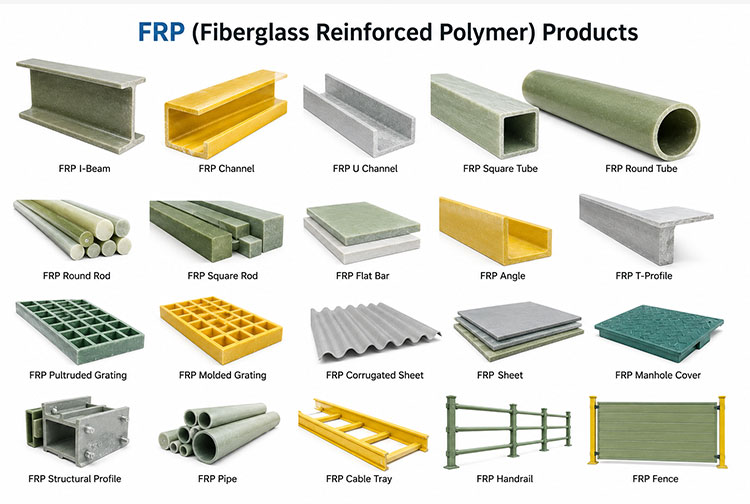
Different types of FRP products including fiberglass profiles tubes beams and rebar
Types of FRP Products: Complete Classification Guide
FRP products cover a wide range of composite components designed for different engineering, industrial, construction, and infrastructure applications. Thanks to the flexibility of composite material design and advanced manufacturing technologies such as pultrusion, FRP manufacturers can produce almost unlimited shapes, sizes, and performance combinations.
Among all FRP product categories, pultruded FRP products represent one of the fastest-growing segments because they provide excellent structural performance, corrosion resistance, lightweight construction, and long service life.
This section introduces the major categories of FRP products, their characteristics, applications, and advantages.
Suggested Image: Complete range of FRP products including fiberglass tubes, beams, channels, rods and profiles.
Image ALT: Different types of FRP products including pultruded fiberglass structural profiles.
Major Categories of FRP Products
| FRP Product Category | Main Features | Common Applications |
|---|---|---|
| FRP Profiles | High strength, lightweight structural shapes | Construction, platforms, frames |
| FRP Tubes | Excellent stiffness and corrosion resistance | Structures, handrails, supports |
| FRP Rebar | Non-corrosive reinforcement alternative | Concrete reinforcement |
| FRP Grating | Slip-resistant and chemical resistant | Walkways, platforms, industrial flooring |
| FRP Cable Trays | Electrical insulation and durability | Power systems and utilities |
| FRP Structural Shapes | Custom engineering components | Industrial and infrastructure projects |
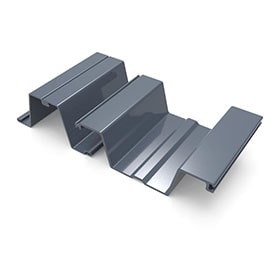
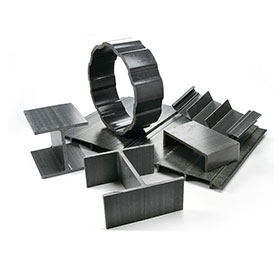
1. FRP Profiles
FRP profiles are one of the most important categories of composite products. Manufactured mainly through pultrusion technology, they include various structural shapes designed to replace traditional steel, aluminum, and wood components.
Because of their high strength-to-weight ratio and excellent corrosion resistance, FRP profiles are widely used in harsh environments where traditional materials experience premature failure.
Common FRP Profile Shapes
- FRP I Beams
- FRP H Beams
- FRP C Channels
- FRP Angles
- FRP Square Tubes
- FRP Rectangular Tubes
- FRP Round Tubes
- FRP Flat Bars
- FRP Rods
- Custom FRP Structural Profiles
Applications of FRP Profiles
- Industrial platforms
- Walkways and bridges
- Solar mounting structures
- Wind power equipment
- Electrical insulation structures
- Chemical processing facilities
- Marine structures
- Transportation equipment
2. FRP Square Tubes
FRP square tubes are hollow structural sections manufactured using continuous pultrusion technology. They provide excellent bending strength, dimensional stability, and corrosion resistance while maintaining a lightweight design.
Compared with steel square tubes, fiberglass square tubes offer significant advantages in environments where corrosion, electrical conductivity, or weight limitations are major concerns.
Advantages of FRP Square Tubes
- Lightweight and easy installation
- High corrosion resistance
- Non-conductive and non-magnetic
- Excellent weather resistance
- Low maintenance requirement
- Custom sizes available
| Property | FRP Square Tube | Steel Square Tube |
|---|---|---|
| Weight | Approximately 25–30% of steel | Heavy |
| Corrosion Resistance | Excellent | Requires coating |
| Electrical Conductivity | Insulating | Conductive |
| Maintenance | Very Low | Higher |
3. FRP Rectangular Tubes
FRP rectangular tubes provide higher moment of inertia compared with square tubes and are often selected for structural applications requiring improved bending performance.
They are commonly used as support beams, frames, protective structures, and lightweight construction components.
Typical Applications:- Equipment frames
- Access platforms
- Architectural structures
- Industrial supports
- Transportation components
4. FRP Round Tubes
FRP round tubes offer excellent axial strength, torsional performance, and corrosion resistance. Their smooth external surface makes them suitable for applications requiring easy cleaning and low maintenance.
They are frequently used in chemical plants, marine facilities, electrical systems, and structural support applications.
Common Uses:- Handrails
- Guardrails
- Structural columns
- Insulation supports
- Marine components
5. FRP I Beams
FRP I beams are structural composite beams designed to provide high load-bearing capability with significantly lower weight compared with traditional steel beams.
They are widely used where corrosion resistance and lightweight structures are essential.
Benefits of FRP I Beams
- High bending strength
- Excellent corrosion resistance
- Easy transportation
- Simple installation
- Long service life
- FRP bridges
- Industrial platforms
- Offshore structures
- Wastewater facilities
- Solar structures
6. FRP C Channels
FRP C channels are lightweight structural components commonly used for framing, support systems, cable management, and equipment structures.
Their open channel design provides excellent flexibility for assembly while maintaining strong mechanical performance.
Applications:- Support frames
- Electrical equipment structures
- Industrial racks
- Solar mounting systems
- Cable support systems
7. FRP Angles
FRP angles are L-shaped structural profiles manufactured through pultrusion. They provide excellent reinforcement capability and are often used for connections, brackets, and lightweight frames.
Compared with metal angles, FRP angles eliminate rust problems and reduce maintenance requirements.
8. FRP Flat Bars
FRP flat bars are simple but highly versatile composite products used in reinforcement, support structures, electrical applications, and fabrication projects.
Advantages:- Easy machining
- Excellent insulation
- Corrosion resistant
- Lightweight
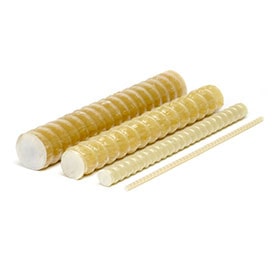
9. FRP Rebar
FRP rebar, also known as GFRP rebar or fiberglass rebar, is an innovative reinforcement material designed to replace traditional steel reinforcement in concrete structures.
Because it does not rust, FRP rebar is especially suitable for bridges, marine structures, tunnels, highways, wastewater plants, and chemical facilities.
Main Advantages of FRP Rebar
- Zero corrosion
- High tensile strength
- Lightweight transportation
- Longer service life
- Non-magnetic
- Electromagnetic transparency
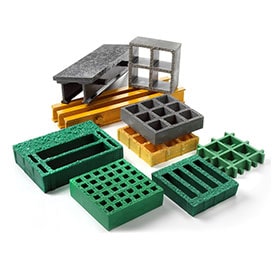
10. FRP Grating
FRP grating is a molded or pultruded composite flooring product designed for industrial environments requiring corrosion resistance, slip resistance, and long-term durability.
Applications:- Chemical plants
- Offshore platforms
- Wastewater treatment plants
- Factories
- Marine facilities
11. FRP Cable Trays
FRP cable trays provide safe and durable cable management solutions for electrical and industrial systems.
Their excellent insulation properties make them ideal for power plants, substations, chemical facilities, and renewable energy projects.
12. Custom FRP Products
One of the biggest advantages of composite materials is customization. Unlike traditional materials that require complex fabrication, FRP products can be engineered according to specific project requirements.
Professional FRP manufacturers can customize:
- Cross-section shape
- Dimensions
- Fiber orientation
- Resin system
- Surface finish
- Color
- Mechanical performance
- Length and cutting requirements
Expert Insight
For industrial customers, selecting the correct FRP product type is only the first step. The final performance depends on matching the profile design, resin system, fiber structure, and manufacturing process with the actual working environment.
Experienced FRP manufacturers can provide engineering support from product design and mold development to production optimization and final application guidance.
Key Takeaways
- FRP products include profiles, tubes, beams, rebar, grating, cable trays, and custom structures.
- Pultruded FRP products are ideal for continuous structural applications.
- FRP square tubes, I beams, and channels are widely replacing traditional metal structures.
- FRP rebar provides a corrosion-free alternative for concrete reinforcement.
- Custom FRP solutions can be designed for specific engineering requirements.
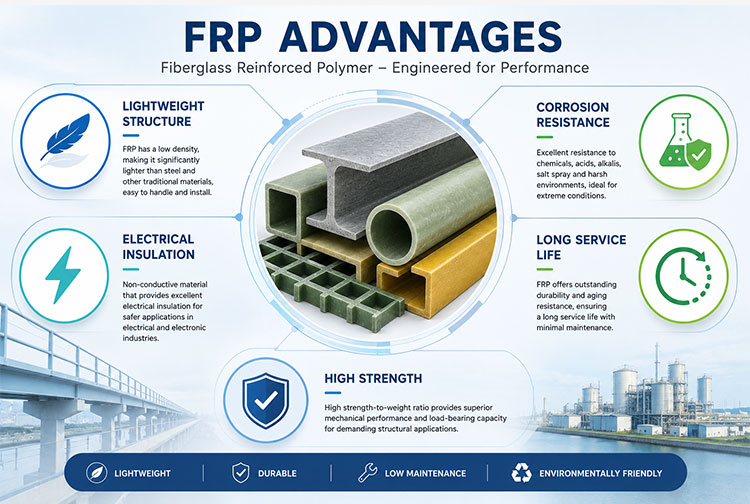
Advantages of FRP products including lightweight corrosion resistance and durability
Advantages of FRP Products: Why Choose Fiber Reinforced Polymer?
FRP products have become increasingly important in modern engineering because they solve many problems associated with traditional materials. Steel, aluminum, wood, and concrete each have limitations related to corrosion, weight, maintenance, installation difficulty, or environmental durability.
Fiber Reinforced Polymer (FRP) products combine the advantages of high-strength fibers and advanced polymer technology, creating materials with an exceptional balance of strength, durability, lightweight performance, and resistance to harsh environments.
For engineers, architects, contractors, and industrial users, the decision to choose FRP products is usually based on long-term performance rather than initial material cost alone.
Suggested Image: FRP products installed in industrial, construction, and infrastructure applications.
Image ALT: Advantages of FRP products including corrosion resistance, lightweight design and long service life.
Top Advantages of FRP Products
| Advantage | Description |
|---|---|
| Excellent Corrosion Resistance | FRP does not rust and performs well in chemical, marine and humid environments. |
| High Strength-to-Weight Ratio | Provides structural strength while significantly reducing weight. |
| Long Service Life | Maintains performance for decades with minimal maintenance. |
| Electrical Insulation | Non-conductive properties improve safety around electrical systems. |
| Low Maintenance | Reduces repair, replacement and operational costs. |
| Design Flexibility | Can be customized into various shapes and sizes. |
| Weather Resistance | Performs under UV exposure, moisture and temperature changes. |
1. Superior Corrosion Resistance
Corrosion resistance is one of the most important reasons industries choose FRP products instead of traditional metal materials.
Steel structures exposed to moisture, salt water, chemicals, or industrial environments often require protective coatings, painting, galvanizing, or regular maintenance. Over time, corrosion can reduce structural strength and increase operating costs.
FRP products naturally resist corrosion because the polymer matrix protects the reinforcing fibers from environmental attack.
FRP Performance in Corrosive Environments
| Environment | Steel Performance | FRP Performance |
|---|---|---|
| Salt Water / Marine | Requires protection and maintenance | Excellent resistance |
| Chemical Plants | May corrode depending on chemicals | Excellent with proper resin selection |
| Wastewater Facilities | Susceptible to corrosion | Long-term durability |
| Outdoor Infrastructure | Requires coatings | Low maintenance |
Common Corrosive Applications Using FRP Products
- Chemical processing facilities
- Wastewater treatment plants
- Coastal infrastructure
- Offshore platforms
- Cooling towers
- Electroplating facilities
- Mining environments
2. High Strength-to-Weight Ratio
One of the defining characteristics of FRP products is their excellent strength-to-weight ratio. Although FRP components are much lighter than steel, they can provide comparable or even superior performance in many applications.
The lightweight nature of FRP reduces transportation costs, simplifies installation, lowers structural loads, and improves worker safety.
| Material | Relative Weight | Strength Characteristics |
|---|---|---|
| FRP | Low | High strength-to-weight ratio |
| Steel | High | High strength but heavy |
| Aluminum | Medium | Good but lower stiffness |
| Wood | Medium | Variable performance |
Benefits of Lightweight FRP Products
- Lower transportation expenses
- Faster installation
- Reduced need for heavy equipment
- Improved worker safety
- Lower foundation requirements
- Easier maintenance and replacement
3. Long Service Life
FRP products are designed for long-term performance. Unlike materials that gradually degrade because of rust, corrosion, or biological damage, FRP maintains its structural properties over extended periods.
With proper material selection and manufacturing quality, FRP components can achieve service lives of 25, 50, or even more years depending on application conditions.
Factors Affecting FRP Service Life
- Resin selection
- Fiber quality
- Manufacturing process
- Environmental exposure
- Mechanical loading
- Surface protection
- Installation quality
4. Excellent Electrical Insulation
FRP products are naturally non-conductive and provide excellent electrical insulation properties. This makes them particularly valuable in power generation, electrical infrastructure, telecommunications, and high-voltage environments.
Applications Requiring Electrical Insulation
- Power transmission structures
- Substation platforms
- Cable support systems
- Electrical equipment frames
- Railway systems
- Telecommunication towers
5. Low Thermal Conductivity
Compared with metals, FRP has significantly lower thermal conductivity. This property helps reduce heat transfer and improves safety in applications involving temperature changes.
Applications:- Cooling towers
- Industrial insulation structures
- Energy facilities
- Building components
6. Excellent Chemical Resistance
FRP products can be engineered to resist many aggressive chemicals by selecting appropriate resin systems such as vinyl ester or epoxy.
| Chemical Environment | Recommended Resin |
|---|---|
| General Industrial Environment | Polyester |
| Acid and Chemical Exposure | Vinyl Ester |
| High Performance Structural Applications | Epoxy |
| Advanced Pultrusion Applications | Polyurethane |
7. UV and Weather Resistance
Outdoor structures must withstand sunlight, temperature fluctuations, humidity, and weather changes. FRP products can be formulated with UV stabilizers and surface protection systems to maintain long-term outdoor performance.
Applications include:
- Solar mounting structures
- Outdoor platforms
- Bridge components
- Utility structures
- Marine equipment
8. Low Maintenance Requirements
One of the greatest economic benefits of FRP products is reduced maintenance.
Traditional materials often require:
- Painting
- Anti-corrosion treatment
- Surface repair
- Regular inspection
- Replacement due to rust
FRP products significantly reduce these requirements, creating lower lifecycle costs.
9. Custom Design Capability
FRP manufacturing allows engineers to create customized solutions based on project requirements.
Manufacturers can adjust:
- Cross-section design
- Fiber direction
- Resin system
- Mechanical strength
- Color
- Surface texture
- Dimensions
This flexibility makes FRP suitable for projects where standard materials cannot meet performance requirements.
FRP Products Lifecycle Cost Advantage
Although the initial purchase price of FRP may sometimes be higher than traditional materials, the total lifecycle cost is often lower because of reduced maintenance, longer service life, and lower installation expenses.
| Cost Factor | FRP | Traditional Materials |
|---|---|---|
| Initial Cost | Medium | Low to Medium |
| Installation Cost | Lower due to lightweight | Higher |
| Maintenance | Very Low | Regular Maintenance Required |
| Corrosion Protection | Usually Not Required | Required |
| Long-Term Cost | Lower | Higher |
Expert Insight
When evaluating FRP products, engineers should consider total lifecycle value rather than only the initial material price. In many applications, the real advantage of FRP appears after years of operation when traditional materials require repeated maintenance, coating, and replacement.
For industries such as chemical processing, renewable energy, marine engineering, and infrastructure, the combination of corrosion resistance, lightweight design, and long service life makes FRP one of the most cost-effective engineering solutions available.
Key Takeaways
- FRP products provide excellent corrosion resistance compared with steel and other metals.
- The high strength-to-weight ratio reduces transportation and installation costs.
- Long service life lowers total ownership expenses.
- Electrical insulation makes FRP ideal for power-related applications.
- Custom manufacturing allows FRP solutions for specialized engineering requirements.
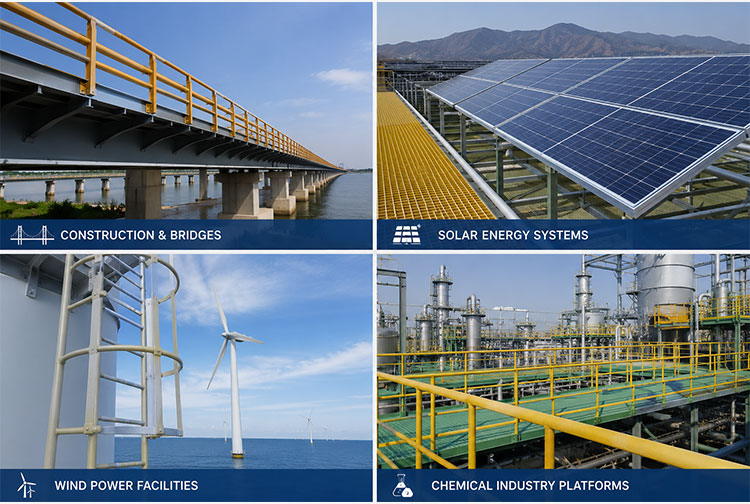
FRP products applications in construction renewable energy marine and industrial industries
Applications of FRP Products Across Industries
The excellent combination of lightweight performance, corrosion resistance, mechanical strength, electrical insulation, and long service life has allowed FRP products to become essential materials across many industries worldwide.
From large infrastructure projects and renewable energy systems to chemical plants and marine engineering, FRP composites provide reliable alternatives to traditional materials such as steel, aluminum, wood, and concrete.
As industries continue to demand longer service life, lower maintenance costs, and more sustainable construction solutions, the application range of FRP products continues to expand rapidly.
Suggested Image: FRP products used in construction, energy, marine and industrial applications.
Image ALT: Industrial applications of FRP products including infrastructure, solar, chemical and marine industries.
Main Industries Using FRP Products
| Industry | Common FRP Products | Main Benefits |
|---|---|---|
| Construction | FRP beams, tubes, rebar, grating | Lightweight, corrosion resistance, long service life |
| Renewable Energy | Solar structures, wind components | Low maintenance and weather resistance |
| Electrical Power | Cable trays, insulation structures | Non-conductive and safe |
| Chemical Industry | Platforms, pipes, grating | Chemical resistance |
| Marine Engineering | Decks, handrails, structural profiles | Saltwater resistance |
| Transportation | Vehicle components, bridge systems | Weight reduction |
1. FRP Products in Construction Industry
Construction is one of the largest application areas for FRP products. Modern buildings and infrastructure projects increasingly require materials that can provide durability, reduced maintenance, and improved performance in challenging environments.
FRP structural components are widely used as alternatives to steel and concrete reinforcement because they do not suffer from corrosion problems and significantly reduce structural weight.
Common FRP Construction Products
- FRP Structural Profiles
- FRP Beams
- FRP Columns
- FRP Square Tubes
- FRP Handrails
- FRP Walkways
- FRP Grating
- FRP Rebar
- FRP Bridge Components
Construction Applications
| Application | Why FRP Is Used |
|---|---|
| Bridges | Prevents corrosion caused by water and deicing chemicals |
| Parking Structures | Reduces reinforcement corrosion |
| Buildings | Provides lightweight structural solutions |
| Tunnels | Provides durability in humid environments |
| Industrial Buildings | Low maintenance and chemical resistance |
2. FRP Products for Renewable Energy Industry
The rapid growth of renewable energy has created new demand for advanced composite materials. Solar power plants and wind energy facilities require materials that can withstand outdoor exposure for decades while minimizing maintenance.
FRP Applications in Solar Energy
- Solar panel support structures
- PV mounting components
- Cable management systems
- Equipment platforms
- Maintenance walkways
Compared with traditional steel structures, FRP solar components provide excellent corrosion resistance, especially in coastal, desert, and high-humidity environments.
FRP Applications in Wind Power
Wind energy systems operate in demanding environments where lightweight and durable materials are essential.
FRP products are used in:
- Wind turbine components
- Cable support systems
- Access platforms
- Safety structures
- Maintenance equipment
3. FRP Products for Chemical Industry
Chemical processing environments are among the most challenging applications for traditional materials. Exposure to acids, alkalis, solvents, and corrosive gases can rapidly damage metal structures.
FRP products provide reliable solutions because resin systems can be customized according to chemical resistance requirements.
Common Chemical Industry FRP Applications
- FRP platforms
- FRP walkways
- FRP ladders
- FRP handrails
- FRP structural frames
- FRP tanks and pipes
- FRP grating
4. FRP Products in Marine Applications
Marine environments are extremely aggressive because of saltwater, humidity, and continuous exposure to weather conditions.
FRP products are widely preferred for marine applications because they resist salt corrosion and require minimal maintenance.
Marine FRP Applications
- Boat structures
- Marine platforms
- Dock systems
- Offshore walkways
- Handrails
- Ladders
- Structural supports
5. FRP Products for Electrical and Power Industry
Electrical systems require materials that provide safety, reliability, and insulation performance. FRP products are ideal because they are naturally non-conductive and non-magnetic.
Electrical Applications
- FRP cable trays
- Electrical equipment supports
- Substation platforms
- Insulation structures
- Transformer supports
- Power transmission components
| Property | Benefit for Electrical Applications |
|---|---|
| Non-Conductive | Improves electrical safety |
| Non-Magnetic | Suitable for sensitive environments |
| Corrosion Resistant | Reliable outdoor performance |
| Lightweight | Easier installation |
6. FRP Products for Wastewater Treatment
Wastewater treatment facilities contain moisture, chemicals, and corrosive gases that accelerate metal deterioration.
FRP products have become widely used because they maintain performance under continuous exposure to harsh conditions.
Applications
- FRP walkways
- FRP platforms
- FRP ladders
- FRP grating
- FRP handrails
- Equipment supports
7. FRP Products in Transportation Industry
Transportation industries continuously seek lightweight materials to improve efficiency and reduce energy consumption.
FRP composites provide excellent weight reduction while maintaining structural performance.
Transportation Applications
- Railway components
- Vehicle structures
- Truck components
- Bridge systems
- Road safety structures
8. FRP Products for Agriculture and Farming
Agricultural environments often contain moisture, fertilizers, chemicals, and outdoor exposure. Traditional metal components may corrode quickly under these conditions.
Agricultural Applications
- Greenhouse structures
- Support frames
- Irrigation components
- Livestock facilities
- Equipment supports
9. FRP Products for Telecommunications
The telecommunications industry uses FRP materials because of their lightweight characteristics and excellent electromagnetic properties.
Applications Include:
- Antenna supports
- Cable supports
- Tower components
- Communication infrastructure
Future Growth Areas of FRP Products
The demand for FRP products is expected to continue growing due to several global trends:
- Infrastructure modernization
- Renewable energy expansion
- Demand for corrosion-free materials
- Lightweight transportation development
- Longer infrastructure service requirements
- Reduction of maintenance costs
Expert Insight
Different industries require different FRP solutions. A successful FRP application depends on selecting the correct combination of fiber type, resin system, profile design, and manufacturing technology.
For example, a solar support structure may prioritize UV resistance and lightweight performance, while a chemical plant platform may require vinyl ester resin and superior corrosion resistance. Professional FRP manufacturers provide application-based engineering solutions rather than simply supplying standard products.
Key Takeaways
- FRP products are used across construction, energy, chemical, marine, electrical and transportation industries.
- Corrosion resistance makes FRP ideal for harsh environments.
- Renewable energy growth is creating new demand for composite materials.
- FRP improves safety and reduces maintenance costs.
- Custom FRP solutions allow engineers to solve specialized challenges.
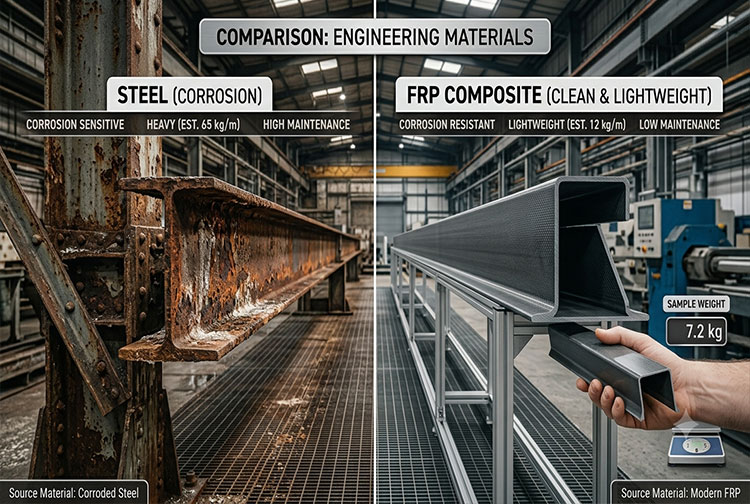
Comparison between FRP products and steel showing lightweight corrosion resistant advantages
FRP Products vs Traditional Materials: Complete Comparison Guide
When selecting engineering materials, companies and engineers usually compare performance, durability, installation requirements, maintenance costs, and total lifecycle value rather than focusing only on initial purchase price.
For decades, steel, aluminum, wood, and PVC have been widely used in construction and industrial applications. However, increasing requirements for corrosion resistance, lightweight structures, sustainability, and long service life have encouraged many industries to adopt FRP products as an alternative solution.
This section provides a detailed comparison between FRP products and traditional materials to help engineers, buyers, and project owners understand when FRP is the better choice.
Suggested Image: Comparison between FRP products and steel, aluminum, wood materials.
Image ALT: FRP products comparison with traditional construction materials including steel and aluminum.
FRP Products vs Steel
Steel has been one of the most commonly used structural materials worldwide because of its high strength and availability. However, steel has significant limitations, especially in corrosive environments.
FRP products provide a lightweight, corrosion-resistant alternative that can significantly reduce maintenance requirements and extend service life.
FRP vs Steel Comparison Table
| Property | FRP Products | Steel |
|---|---|---|
| Weight | Approximately 20–30% of steel weight | Heavy |
| Corrosion Resistance | Excellent, does not rust | Requires coating and maintenance |
| Electrical Conductivity | Non-conductive | Conductive |
| Magnetic Properties | Non-magnetic | Magnetic |
| Maintenance | Very Low | High in corrosive environments |
| Installation | Easy due to lightweight | Requires heavy equipment |
| Service Life | 25–50+ Years | Depends on protection system |
Why Replace Steel with FRP?
- Projects located near oceans or chemical environments
- Structures requiring lightweight installation
- Applications requiring electrical insulation
- Projects with high maintenance costs
- Infrastructure requiring extended service life
FRP Products vs Aluminum
Aluminum is known for being lightweight and corrosion resistant compared with steel. However, FRP products provide several advantages in areas where electrical insulation, chemical resistance, and structural customization are important.
| Property | FRP | Aluminum |
|---|---|---|
| Weight | Very Lightweight | Lightweight |
| Corrosion Resistance | Excellent | Good but affected by certain environments |
| Electrical Insulation | Excellent | Conductive |
| Thermal Conductivity | Low | High |
| Customization | Highly Flexible | Limited by extrusion methods |
Advantages of FRP Over Aluminum
- Better electrical insulation
- Lower thermal conductivity
- Higher chemical resistance
- More customized structural designs
- Lower maintenance in aggressive environments
FRP Products vs PVC
PVC is widely used for pipes, profiles, and lightweight applications because of its low cost and chemical resistance. However, PVC generally has lower mechanical strength compared with structural FRP products.
| Property | FRP | PVC |
|---|---|---|
| Mechanical Strength | High | Medium to Low |
| Structural Applications | Excellent | Limited |
| Temperature Resistance | Higher | Lower |
| Load Bearing | Suitable | Limited |
| Service Life | Long | Moderate |
FRP Products vs Wood
Wood has been used for thousands of years because of its availability and appearance. However, wood is vulnerable to moisture, insects, biological damage, and dimensional changes.
| Property | FRP | Wood |
|---|---|---|
| Moisture Resistance | Excellent | Limited |
| Rot Resistance | Excellent | Requires Treatment |
| Dimensional Stability | Very Good | Changes with humidity |
| Maintenance | Low | Regular Maintenance |
| Design Life | Long | Depends on Environment |
FRP Products vs Stainless Steel
Stainless steel provides excellent corrosion resistance and high strength, but it is significantly heavier and more expensive than FRP in many applications.
| Property | FRP | Stainless Steel |
|---|---|---|
| Weight | Much Lower | High |
| Material Cost | Generally Lower | Higher |
| Installation | Easy | Requires More Labor |
| Chemical Resistance | Excellent with proper resin | Depends on Grade |
Overall Material Comparison Summary
| Feature | FRP | Steel | Aluminum | Wood | PVC |
|---|---|---|---|---|---|
| Lightweight | ★★★★★ | ★★ | ★★★★ | ★★★ | ★★★★ |
| Corrosion Resistance | ★★★★★ | ★★ | ★★★★ | ★ | ★★★★ |
| Strength | ★★★★★ | ★★★★★ | ★★★ | ★★ | ★★ |
| Electrical Insulation | ★★★★★ | ★ | ★ | ★★★ | ★★★★ |
| Maintenance | ★★★★★ | ★★ | ★★★ | ★ | ★★★★ |
| Long-Term Value | ★★★★★ | ★★★ | ★★★ | ★★ | ★★★ |
When Should You Choose FRP Products?
FRP products are particularly suitable when one or more of the following conditions exist:
- The environment is highly corrosive
- Weight reduction is important
- Maintenance access is difficult
- Electrical insulation is required
- Long service life is expected
- Installation speed is important
- Custom structural shapes are needed
- Total lifecycle cost matters
Lifecycle Cost Analysis: FRP vs Traditional Materials
A common mistake during material selection is comparing only initial purchase price. Engineering decisions should consider the complete lifecycle cost, including installation, maintenance, downtime, replacement, and operational expenses.
| Cost Category | FRP | Traditional Materials |
|---|---|---|
| Purchase Cost | Medium | Low to Medium |
| Transportation | Lower | Higher |
| Installation | Lower | Higher |
| Maintenance | Minimal | Regular |
| Replacement Risk | Low | Higher |
| Total Lifetime Cost | Lower | Higher |
Expert Insight
Material selection should always consider the complete operating environment. FRP is not designed to replace every traditional material in every situation, but it provides significant advantages when corrosion resistance, lightweight construction, insulation, and durability are critical requirements.
Many successful engineering projects combine FRP products with other materials to achieve the best balance between performance, cost, and design requirements.
Key Takeaways
- FRP products outperform many traditional materials in corrosion resistance and durability.
- Compared with steel, FRP offers significant weight reduction and lower maintenance.
- Compared with aluminum, FRP provides better insulation and chemical resistance.
- Compared with wood and PVC, FRP offers higher structural performance.
- Total lifecycle cost often makes FRP the more economical solution.
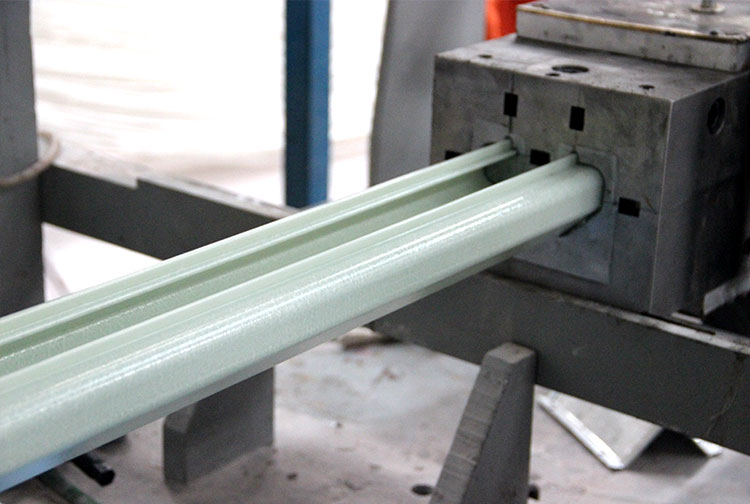
FRP pultrusion manufacturing process producing fiberglass reinforced polymer profiles
FRP Product Design Guide: Engineering Considerations for High-Performance Composite Products
Designing high-performance FRP products requires a comprehensive understanding of composite material behavior, environmental conditions, loading requirements, manufacturing methods, and long-term performance expectations.
Unlike traditional isotropic materials such as steel and aluminum, FRP composites are anisotropic materials. This means their mechanical properties vary depending on fiber direction, resin system, fiber percentage, and manufacturing process.
A successful FRP design is not simply about choosing a strong material. It requires optimizing the entire composite system to achieve the best combination of strength, durability, weight, and cost.
Suggested Image: FRP profile design engineering drawing showing fiber orientation and structural dimensions.
Image ALT: Engineering design considerations for FRP composite products including fiber direction and structural analysis.
Key Factors in FRP Product Design
| Design Factor | Importance |
|---|---|
| Fiber Orientation | Determines directional strength and stiffness |
| Resin Selection | Controls corrosion, chemical and temperature resistance |
| Profile Geometry | Affects load capacity and structural performance |
| Environmental Conditions | Determines long-term durability requirements |
| Manufacturing Process | Influences consistency and product quality |
| Safety Factor | Ensures reliable operation under actual loads |
FRP Mechanical Properties
The mechanical performance of FRP products depends on fiber type, resin system, fiber content, manufacturing technology, and product geometry.
For pultruded FRP products, continuous fibers aligned in the longitudinal direction provide excellent tensile strength and stiffness.
Typical Mechanical Properties of Pultruded FRP Products
| Property | Typical Range |
|---|---|
| Tensile Strength | 300–1000 MPa |
| Flexural Strength | 300–900 MPa |
| Compressive Strength | 200–500 MPa |
| Elastic Modulus | 20–50 GPa |
| Density | 1.6–2.0 g/cm³ |
| Water Absorption | Very Low |
Actual values depend on the product structure, reinforcement design, resin formulation, and manufacturing process.
1. Fiber Orientation and Structural Performance
Fiber orientation is one of the most important factors affecting FRP product performance.
Because fibers carry most of the mechanical loads, aligning fibers in the primary load direction significantly improves strength and stiffness.
Common Fiber Arrangements
| Fiber Arrangement | Performance Characteristics | Applications |
|---|---|---|
| Longitudinal Fiber | High tensile strength | FRP beams, rods, tubes |
| Transverse Fiber | Improves dimensional stability | Structural profiles |
| Random Fiber Mat | Improves surface quality | Panels and covers |
| Multi-directional Reinforcement | Balanced mechanical performance | Complex structures |
2. Resin Selection for FRP Products
The resin system determines many important characteristics, including chemical resistance, temperature performance, weather durability, and long-term stability.
Resin Selection Guide
| Application Environment | Recommended Resin |
|---|---|
| General Industrial Applications | Polyester Resin |
| Strong Chemical Exposure | Vinyl Ester Resin |
| High Strength Structural Applications | Epoxy Resin |
| High-Speed Pultrusion | Polyurethane Resin |
3. FRP Profile Geometry Design
The shape of an FRP product strongly affects its load-bearing capability.
Engineers select different profile geometries according to the required strength, bending resistance, installation method, and space limitations.
Common Structural FRP Shapes
- I Beams for high bending loads
- C Channels for support structures
- Square Tubes for frames and columns
- Round Tubes for axial loading
- Angles for connections and reinforcement
- Flat Bars for fabrication applications
4. Environmental Considerations in FRP Design
FRP products are often selected for demanding environments. Engineers must consider all possible environmental conditions before selecting materials.
Important Environmental Factors
- Temperature variation
- UV exposure
- Humidity
- Chemical contact
- Saltwater exposure
- Mechanical vibration
- Fire requirements
Temperature Resistance of FRP Products
The operating temperature capability of FRP depends mainly on the resin system.
| Resin Type | Approximate Temperature Performance |
|---|---|
| Polyester | General temperature applications |
| Vinyl Ester | Higher temperature and chemical resistance |
| Epoxy | Excellent high-performance applications |
| Polyurethane | Advanced composite applications |
UV Resistance and Outdoor FRP Applications
Long-term outdoor exposure requires proper UV protection. Although FRP itself has excellent weather resistance, surface protection and formulation improvements further extend service life.
Methods to Improve UV Resistance
- UV stabilizer additives
- Pigmented resin systems
- Protective surface veils
- External coatings
- Proper resin selection
Fire Performance of FRP Products
For applications in buildings, transportation, tunnels, and industrial facilities, fire performance may be an important design requirement.
FRP products can be engineered with flame-retardant additives and special resin systems to improve fire resistance and reduce smoke generation.
Fire Performance Factors
- Resin formulation
- Flame retardant additives
- Fiber content
- Surface treatment
- Application environment
FRP Product Standards and Testing
Professional FRP manufacturers follow international standards and testing procedures to ensure product reliability and consistency.
Common Standards Related to FRP Products
| Standard | Application |
|---|---|
| ASTM Standards | Composite material testing and specifications |
| ISO Standards | Quality management and material requirements |
| EN Standards | European engineering applications |
| AASHTO Guidelines | Infrastructure and transportation projects |
FRP Product Testing Methods
- Tensile strength testing
- Flexural strength testing
- Compression testing
- Impact resistance testing
- Water absorption testing
- Thermal aging testing
- Chemical resistance testing
- Dimensional inspection
FRP Design Mistakes to Avoid
| Mistake | Result |
|---|---|
| Selecting material only by price | May reduce long-term performance |
| Ignoring environmental conditions | Incorrect resin selection |
| Using incorrect fiber orientation | Reduced structural strength |
| Ignoring installation requirements | Possible performance issues |
| No professional engineering evaluation | Higher project risk |
Expert Insight
FRP product design is a combination of material science, structural engineering, and manufacturing technology. The best results come from designing the material system together with the production process.
Experienced FRP manufacturers can optimize fiber architecture, resin formulation, profile geometry, and production parameters to create products that meet specific customer requirements rather than simply producing standard profiles.
Key Takeaways
- FRP design requires consideration of fibers, resin, geometry, and environment.
- Fiber orientation determines directional strength.
- Resin selection controls corrosion and temperature resistance.
- International testing standards ensure reliable performance.
- Professional engineering support improves FRP product success.
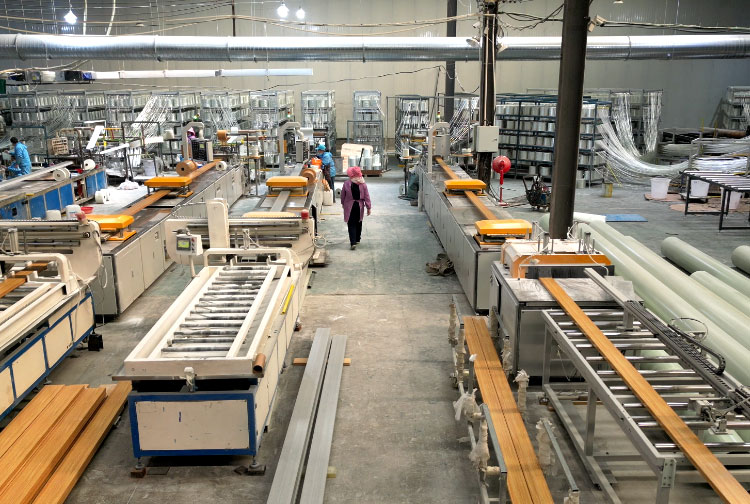
Professional FRP manufacturer factory with pultrusion production lines
How to Choose a Reliable FRP Manufacturer and Supplier
Selecting the right FRP manufacturer is one of the most important decisions for any project involving composite materials. While many companies can supply standard FRP products, only experienced manufacturers can provide consistent quality, engineering support, customized solutions, and reliable long-term cooperation.
For international buyers, choosing an FRP supplier is not only about comparing product prices. The real value comes from manufacturing capability, technical expertise, quality control systems, customization ability, delivery reliability, and after-sales support.
A professional FRP manufacturer should be able to support the complete process from material selection, product design, mold development, prototype testing, mass production, and final delivery.
Suggested Image: Modern FRP manufacturing factory with pultrusion production lines and quality inspection equipment.
Image ALT: Professional FRP manufacturer factory producing fiberglass pultruded products.
What Makes a Professional FRP Manufacturer?
| Capability | Why It Matters |
|---|---|
| Advanced Production Equipment | Ensures stable quality and production efficiency |
| Professional Mold Design | Determines product accuracy and performance |
| Material Engineering | Provides correct fiber and resin selection |
| Quality Control System | Ensures consistent product performance |
| Customization Ability | Supports special project requirements |
| Export Experience | Ensures smooth international cooperation |
1. Evaluate FRP Manufacturing Experience
Experience is one of the strongest indicators of manufacturing capability. FRP production involves complex knowledge of composite materials, resin chemistry, fiber arrangement, curing processes, and equipment control.
An experienced manufacturer understands how different variables influence final product performance.
Important Experience Factors
- Years of FRP manufacturing experience
- Number of production lines
- Range of FRP products produced
- Industries served
- Export market experience
- Engineering team capability
2. Check FRP Production Equipment and Capacity
The quality of FRP products is closely related to production equipment. Advanced automated equipment provides better control over fiber tension, resin ratio, curing temperature, pulling speed, and dimensional accuracy.
Important Production Equipment
- FRP Pultrusion Machines
- Precision Pultrusion Dies
- Resin Mixing Systems
- Cutting Equipment
- Machining Equipment
- Testing Equipment
A manufacturer with modern production facilities can provide more stable quality and faster delivery for large-volume projects.
3. Mold Design and Development Capability
For pultruded FRP products, the mold is one of the most critical components of the manufacturing process.
A precision-designed pultrusion die directly affects:
- Product dimensions
- Surface finish
- Internal stress
- Curing quality
- Production efficiency
Manufacturers with in-house mold design capabilities can respond faster to custom product requirements and optimize profiles according to engineering needs.
Suggested Image: FRP pultrusion mold manufacturing and precision machining process.
Image ALT: Custom FRP pultrusion mold design and manufacturing process.
4. Review Quality Control Procedures
Quality control is essential because FRP products are often used in safety-critical applications such as bridges, power systems, chemical plants, and industrial structures.
Professional FRP Quality Inspection Includes:
| Inspection Item | Purpose |
|---|---|
| Raw Material Inspection | Verify fiber and resin quality |
| Fiber Content Testing | Ensure mechanical performance |
| Dimensional Measurement | Confirm design accuracy |
| Tensile Testing | Evaluate structural strength |
| Surface Inspection | Check appearance and defects |
| Final Product Inspection | Ensure delivery quality |
5. Ability to Provide Custom FRP Products
Many engineering projects require customized FRP solutions rather than standard products.
A capable FRP manufacturer should provide customization services including:
- Custom profile shapes
- Special dimensions
- Different resin systems
- Different fiber configurations
- Special colors
- Surface treatments
- Special mechanical requirements
Custom FRP manufacturing allows customers to optimize product performance for specific operating conditions.
6. Evaluate Engineering and Technical Support
FRP products are engineering materials. Technical support is especially important for customers who are replacing traditional materials or developing new applications.
Professional Technical Support May Include:
- Material selection advice
- Structural recommendations
- Profile design assistance
- Installation guidance
- Application optimization
- Prototype development
7. Check Export and International Experience
For overseas buyers, international export experience is an important factor when selecting an FRP supplier.
Experienced exporters understand:
- International packaging requirements
- Shipping methods
- Documentation requirements
- Different market standards
- Customer communication expectations
FRP Manufacturer Selection Checklist
| Question | What to Look For |
|---|---|
| Does the supplier have a factory? | Real manufacturing capability |
| Can they make custom profiles? | Engineering and mold capability |
| Do they have testing equipment? | Quality assurance ability |
| Can they provide samples? | Product verification |
| Do they export internationally? | Reliable global cooperation |
| Can they support technical questions? | Professional engineering service |
Questions to Ask Before Purchasing FRP Products
- What type of resin system is used?
- What is the fiberglass content?
- What standards are followed?
- Can you provide mechanical test data?
- Can the product be customized?
- What is the expected service life?
- How do you control production quality?
- Can you provide technical drawings?
- What is your production capacity?
- Do you provide installation guidance?
Why Choose a Professional FRP Manufacturer from China?
China has become one of the world's major manufacturing centers for composite materials. Professional Chinese FRP manufacturers provide competitive advantages through advanced equipment, complete supply chains, experienced engineers, and large-scale production capabilities.
Advantages of Working with Experienced Chinese FRP Suppliers
- Competitive manufacturing costs
- Complete composite material supply chain
- Advanced pultrusion technology
- Custom mold development capability
- Large production capacity
- Global export experience
Example of Professional FRP Manufacturing Capability
A leading FRP manufacturer should integrate multiple capabilities, including:
- Composite material research and development
- FRP product design
- Pultrusion mold manufacturing
- Automated production
- Product testing
- Technical consultation
- International delivery service
This integrated approach allows customers to receive complete solutions instead of purchasing isolated products.
Expert Insight
The best FRP supplier is not necessarily the one offering the lowest quotation. Long-term project success depends on product consistency, engineering support, communication efficiency, and the ability to solve technical challenges.
For industrial FRP applications, selecting a manufacturer with complete capabilities—from mold design to finished product delivery—can significantly reduce project risks and improve final performance.
Key Takeaways
- Choose FRP manufacturers based on capability, not only price.
- Production equipment and mold technology directly influence product quality.
- Custom FRP projects require engineering support.
- Quality inspection ensures reliable long-term performance.
- Experienced international suppliers provide smoother cooperation.
FRP Products Cost Analysis: Pricing Factors and Complete Buying Guide
Understanding FRP product costs is an important step for engineers, contractors, distributors, and industrial buyers when planning composite material projects.
Unlike traditional materials with relatively simple pricing structures, FRP products are customized composite solutions. Their final price depends on multiple factors, including raw materials, product design, manufacturing process, tooling requirements, order quantity, and application requirements.
A professional FRP manufacturer evaluates the complete project requirement before providing a quotation to ensure the selected product delivers the best balance between performance and cost.
Suggested Image: FRP product manufacturing process showing raw materials, molds and finished profiles.
Image ALT: Factors affecting FRP products cost including materials, molds and manufacturing process.
Main Factors Affecting FRP Products Cost
| Cost Factor | Impact on FRP Price |
|---|---|
| Raw Materials | Fiber type and resin system determine material cost |
| Product Design | Complex structures require more engineering |
| Mold Cost | Custom profiles require precision tooling |
| Production Volume | Larger orders reduce unit cost |
| Mechanical Requirements | Higher performance increases material requirements |
| Surface Treatment | Special finishes may increase cost |
| Packaging and Shipping | Influences final delivered cost |
1. Raw Material Cost of FRP Products
FRP products are mainly composed of reinforcing fibers and polymer resin. The selection of these materials has a direct impact on product cost and performance.
Main Raw Materials
- Fiberglass reinforcement
- Carbon fiber reinforcement (for special applications)
- Polyester resin
- Vinyl ester resin
- Epoxy resin
- Polyurethane resin
- Surface mats and protective layers
Resin Selection and Cost Impact
| Resin Type | Performance | Relative Cost Level |
|---|---|---|
| Polyester Resin | General applications, good performance | Low |
| Vinyl Ester Resin | Excellent chemical and corrosion resistance | Medium |
| Epoxy Resin | High mechanical performance | High |
| Polyurethane Resin | Advanced pultrusion performance | Medium to High |
2. Fiberglass Content and Product Performance
The fiberglass content significantly affects the mechanical properties and cost of FRP products.
Higher fiber content usually improves:
- Tensile strength
- Flexural strength
- Structural stiffness
- Load-bearing capacity
However, increasing reinforcement content also increases material cost and may require more advanced manufacturing control.
3. Custom FRP Mold Cost
For standard FRP products, existing molds can be used directly. However, custom FRP profiles require new pultrusion dies.
The mold cost depends on:
- Profile complexity
- Cross-section size
- Precision requirements
- Steel material selection
- Machining technology
- Surface finishing requirements
Why FRP Mold Quality Matters
A high-quality pultrusion mold improves:
- Dimensional accuracy
- Surface quality
- Production stability
- Material efficiency
- Product consistency
4. Product Size and Structural Design
The size and geometry of FRP products influence both material consumption and production difficulty.
For example:
- Larger FRP beams require more reinforcement materials.
- Complex hollow profiles require precise mold design.
- Special shapes may require customized production parameters.
5. Production Quantity and Unit Price
Order quantity is one of the most important factors affecting FRP product pricing.
| Order Type | Cost Characteristics |
|---|---|
| Prototype / Small Quantity | Higher unit cost due to setup expenses |
| Medium Volume | Balanced production cost |
| Large Volume Production | Lower unit cost due to efficiency |
6. Surface Treatment and Additional Processing
Additional processing requirements can influence FRP product prices.
Common Additional Services
- Cutting to length
- Drilling holes
- CNC machining
- Painting or coating
- Assembly
- Custom packaging
Professional FRP suppliers can provide finished products according to customer drawings, reducing additional processing after delivery.
7. FRP Product Transportation Cost
Although FRP products are lightweight, their length and dimensions can affect transportation methods.
Shipping Cost Factors
- Product length
- Total volume
- Packaging method
- Shipping distance
- Container utilization
- International freight rates
Experienced exporters optimize packaging and loading methods to reduce transportation costs.
FRP Products Price Comparison by Category
| FRP Product | Cost Level | Main Price Factors |
|---|---|---|
| FRP Square Tubes | Medium | Size, wall thickness, resin system |
| FRP I Beams | Medium to High | Dimensions and reinforcement design |
| FRP Rebar | Medium | Diameter, fiberglass content, production volume |
| FRP Grating | Medium | Thickness, surface type, resin selection |
| Custom FRP Profiles | Variable | Mold cost and design complexity |
How to Reduce FRP Product Purchasing Costs
1. Optimize Product Design
A professional manufacturer can help optimize profile geometry and material usage without reducing required performance.
2. Choose the Correct Material System
Using the right resin and reinforcement system avoids unnecessary material upgrades and controls cost.
3. Increase Order Quantity
For long-term projects, larger production batches usually provide better unit pricing.
4. Work Directly with Manufacturers
Purchasing directly from an experienced FRP factory reduces additional supplier costs and improves technical communication.
5. Plan Production Early
Early planning allows manufacturers to optimize production schedules, tooling preparation, and shipping arrangements.
FRP Products: Initial Cost vs Long-Term Value
The cheapest material is not always the most economical solution. FRP products often provide greater value because of reduced maintenance, longer service life, and lower replacement frequency.
| Cost Consideration | FRP Advantage |
|---|---|
| Maintenance | Minimal maintenance requirements |
| Replacement | Long service life reduces replacement frequency |
| Installation | Lower labor requirements |
| Downtime | Improved operational reliability |
| Total Ownership Cost | Often lower over the project lifecycle |
How to Request an Accurate FRP Product Quotation
To receive an accurate quotation from an FRP manufacturer, customers should provide the following information:
- Product drawings or specifications
- Required dimensions
- Application environment
- Mechanical requirements
- Required quantity
- Material preferences
- Surface requirements
- Delivery location
Expert Insight
FRP product pricing is the result of engineering decisions rather than a simple material calculation. The most reliable quotation comes from manufacturers who understand the application requirements and can optimize the complete solution.
Choosing the correct FRP product design, resin system, production method, and supplier can significantly improve project performance while controlling long-term costs.
Key Takeaways
- FRP product prices depend on materials, design, quantity, and processing requirements.
- Custom FRP profiles require professional mold development.
- Larger production volumes usually reduce unit costs.
- Total lifecycle cost is more important than initial purchase price.
- Working directly with experienced FRP manufacturers improves value.
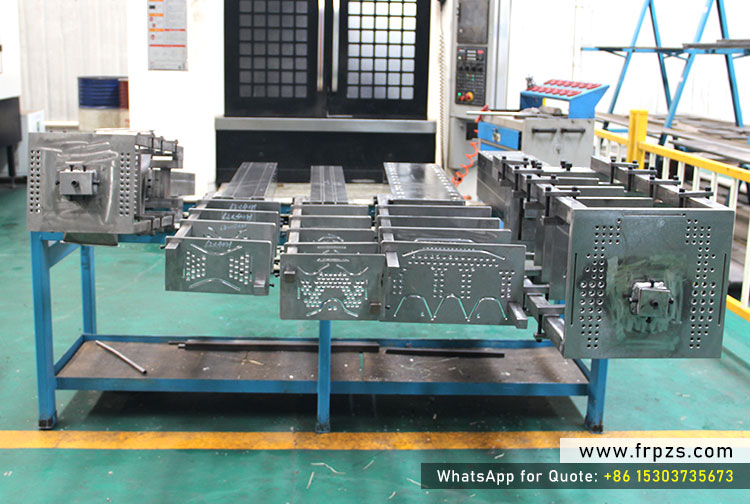
Precision FRP pultrusion mold manufacturing for custom composite profiles
Future Trends of FRP Products: Why Composite Materials Are the Future
The global demand for advanced composite materials is increasing rapidly as industries search for solutions that combine durability, lightweight performance, sustainability, and lower lifecycle costs.
FRP products are becoming increasingly important in modern engineering because they overcome many limitations of traditional materials. From renewable energy infrastructure and smart transportation systems to advanced construction and industrial applications, composite materials are playing a critical role in the future of global development.
As manufacturing technology continues to improve, FRP products will become more efficient, affordable, and widely adopted across different industries.
Suggested Image: Future composite material applications including renewable energy, smart manufacturing and advanced infrastructure.
Image ALT: Future development trends of FRP products and composite material technology.
Major Future Trends of FRP Products
| Trend | Impact on FRP Industry |
|---|---|
| Replacement of Traditional Materials | More steel and aluminum applications will shift toward composites |
| Renewable Energy Growth | Increasing demand for lightweight and corrosion-resistant structures |
| Smart Manufacturing | Improved production efficiency and quality control |
| Customized Composite Solutions | More application-specific FRP designs |
| Sustainable Engineering | Growing demand for durable and low-maintenance materials |
1. Increasing Replacement of Steel by FRP Products
For many decades, steel has been the dominant material for infrastructure and industrial construction. However, increasing maintenance costs, corrosion problems, and environmental concerns are encouraging engineers to explore alternative materials.
FRP products are gradually replacing steel in applications where lightweight performance, corrosion resistance, and long service life provide significant advantages.
Industries Replacing Steel with FRP
- Bridge construction
- Solar support structures
- Electrical infrastructure
- Chemical facilities
- Marine engineering
- Industrial platforms
The future of material selection will focus increasingly on lifecycle performance rather than only initial material cost.
2. Growth of FRP Products in Renewable Energy
The global transition toward renewable energy is creating new opportunities for composite materials.
Solar farms, wind power systems, and energy storage facilities require materials that can operate reliably for decades under challenging environmental conditions.
Future FRP Applications in Renewable Energy
- FRP solar mounting structures
- Composite support frames
- Wind turbine components
- Energy infrastructure platforms
- Cable management systems
The combination of corrosion resistance, lightweight design, and low maintenance makes FRP an ideal material for renewable energy projects.
3. Development of Advanced Pultrusion Technology
Pultrusion is one of the most important manufacturing technologies for producing continuous FRP profiles.
Future improvements in pultrusion technology will focus on:
- Higher production speed
- Improved dimensional accuracy
- Automated quality inspection
- Advanced resin systems
- Lower production energy consumption
- More complex profile designs
Advanced pultrusion equipment will allow manufacturers to produce stronger, lighter, and more cost-effective FRP products.
4. Smart Manufacturing and Automation in FRP Production
Digital manufacturing technologies are transforming the composite materials industry.
Modern FRP factories are increasingly adopting automation, sensors, data monitoring, and intelligent production systems.
Smart FRP Manufacturing Technologies
- Automated production control
- Real-time temperature monitoring
- Digital process management
- Automatic defect detection
- Intelligent equipment adjustment
- Production data analysis
These technologies improve product consistency, reduce waste, and increase production efficiency.
5. Customized FRP Solutions Will Become More Important
Future engineering projects increasingly require materials designed for specific applications rather than standard products.
FRP technology provides excellent customization flexibility because manufacturers can adjust:
- Profile geometry
- Fiber arrangement
- Resin formulation
- Mechanical performance
- Surface characteristics
- Installation requirements
Customized FRP solutions allow engineers to achieve optimized performance while reducing unnecessary material usage.
6. Sustainable Advantages of FRP Products
Sustainability is becoming a key consideration in global engineering projects. Although composite materials have challenges related to recycling, their long service life and reduced maintenance requirements provide significant environmental benefits.
Environmental Benefits of FRP
- Longer replacement cycles
- Lower maintenance consumption
- Reduced transportation energy due to lightweight design
- Lower corrosion-related waste
- Improved infrastructure durability
Future developments in recyclable composites and bio-based resins will further improve the sustainability of FRP products.
7. Expansion of FRP Rebar Applications
FRP rebar is expected to become increasingly important in modern construction because reinforced concrete structures worldwide face serious corrosion challenges.
Traditional steel reinforcement can deteriorate due to moisture, salt, and chemical exposure, leading to expensive repairs.
Future FRP Rebar Applications
- Highway bridges
- Marine structures
- Tunnels
- Parking facilities
- Water treatment plants
- Coastal infrastructure
8. Expansion of FRP Products in Electric and New Energy Industries
The growth of electric vehicles, battery manufacturing, and new energy systems is creating new demand for lightweight, insulating, and corrosion-resistant materials.
Potential Applications
- Battery facility structures
- Electrical insulation components
- Equipment support systems
- Energy storage structures
- Factory platforms
9. Advanced Composite Materials Development
Future FRP products will benefit from continuous innovation in composite material science.
Future Material Improvements
- Higher-performance fibers
- Improved resin chemistry
- Better fire resistance
- Enhanced recyclability
- Improved impact resistance
- Smart composite monitoring systems
Why FRP Products Are a Long-Term Engineering Solution
The future of engineering requires materials that are stronger, lighter, more durable, and more sustainable. FRP products meet these requirements by combining advanced composite technology with practical industrial performance.
| Future Requirement | FRP Solution |
|---|---|
| Longer Infrastructure Life | Excellent corrosion resistance |
| Lower Maintenance Cost | Minimal maintenance requirements |
| Energy Efficiency | Lightweight construction |
| Safety Improvement | Electrical insulation and chemical resistance |
| Flexible Design | Custom composite manufacturing |
Future Outlook of the FRP Industry
The FRP industry is expected to continue expanding as more industries recognize the advantages of composite materials.
Future growth will be driven by:
- Infrastructure upgrades
- Renewable energy development
- Demand for corrosion-free materials
- Advanced manufacturing technologies
- Global sustainability goals
- Need for lower lifecycle costs
Expert Insight
FRP products represent a major transition from traditional material engineering toward performance-based composite solutions. The future will not simply be about replacing steel or other materials, but about designing smarter structures with optimized materials.
Manufacturers with strong research capability, advanced production equipment, and complete engineering services will play an important role in accelerating the adoption of FRP products worldwide.
Key Takeaways
- FRP products will continue replacing traditional materials in many industries.
- Renewable energy and infrastructure will drive future demand.
- Advanced pultrusion technology will improve FRP production efficiency.
- Smart manufacturing will enhance product quality.
- Customized composite solutions will become increasingly important.
- FRP represents a long-term solution for durable and sustainable engineering.
Frequently Asked Questions About FRP Products (FRP Products FAQ)
To help engineers, buyers, contractors, and project managers better understand FRP products, we have answered the most common questions about fiberglass reinforced polymer materials, applications, manufacturing, performance, and purchasing.
These frequently asked questions cover the key information users usually search for when evaluating FRP products and composite material solutions.
What Are FRP Products?
FRP products are composite materials made by combining high-strength reinforcing fibers, usually fiberglass, with polymer resin. The fibers provide mechanical strength, while the resin protects the reinforcement and provides corrosion resistance, durability, and environmental protection.
Common FRP products include FRP profiles, FRP tubes, FRP beams, FRP channels, FRP grating, FRP cable trays, FRP rebar, and customized fiberglass structural components.
FRP products are widely used in construction, renewable energy, chemical industries, marine engineering, electrical systems, transportation, and infrastructure projects.
What Does FRP Stand For?
FRP stands for Fiber Reinforced Polymer. It is also commonly called fiberglass reinforced plastic because fiberglass is one of the most widely used reinforcing materials in FRP manufacturing.
Depending on the reinforcement type, FRP can include:
- GFRP – Glass Fiber Reinforced Polymer
- CFRP – Carbon Fiber Reinforced Polymer
- AFRP – Aramid Fiber Reinforced Polymer
Among these materials, GFRP products are the most widely used because they provide excellent performance at a competitive cost.
What Are FRP Products Used For?
FRP products are used in applications where lightweight construction, corrosion resistance, durability, and low maintenance are required.
Major applications include:
- Construction structures
- Bridges and infrastructure
- Solar mounting systems
- Wind power facilities
- Chemical plants
- Wastewater treatment facilities
- Marine structures
- Electrical systems
- Transportation equipment
- Industrial platforms and walkways
Are FRP Products Better Than Steel?
FRP products are not designed to replace steel in every application, but they provide significant advantages in environments where corrosion resistance, lightweight performance, and low maintenance are important.
| Comparison | FRP Products | Steel |
|---|---|---|
| Weight | Much lighter | Heavy |
| Corrosion Resistance | Excellent | Requires protection |
| Maintenance | Low | Higher |
| Electrical Insulation | Excellent | Conductive |
For corrosive environments, offshore applications, chemical facilities, and electrical systems, FRP often provides better long-term value than steel.
How Long Do FRP Products Last?
The service life of FRP products depends on product design, resin selection, manufacturing quality, environmental conditions, and maintenance requirements.
High-quality FRP products can typically provide decades of service life, with many applications achieving 25–50 years or more under suitable conditions.
Factors affecting FRP service life include:
- UV exposure
- Chemical environment
- Temperature conditions
- Mechanical loading
- Material selection
- Installation quality
Are FRP Products Corrosion Resistant?
Yes. Corrosion resistance is one of the biggest advantages of FRP products.
Unlike steel, FRP does not rust because the polymer resin protects the reinforcing fibers from moisture, chemicals, and environmental exposure.
FRP products are especially suitable for:
- Coastal areas
- Marine environments
- Chemical plants
- Wastewater facilities
- Salt exposure environments
Are FRP Products Waterproof?
FRP products have very low water absorption and excellent resistance to moisture. They are widely used in applications exposed to water, humidity, and marine conditions.
Proper resin selection and manufacturing quality further improve waterproof performance.
Are FRP Products Strong Enough for Structural Applications?
Yes. FRP structural products can provide excellent mechanical performance when properly designed.
Pultruded FRP products use continuous fiberglass reinforcement aligned along the length of the profile, providing high tensile strength and stiffness.
Common structural FRP applications include:
- FRP beams
- FRP columns
- FRP tubes
- FRP bridges
- Industrial platforms
- Support structures
How Are FRP Products Manufactured?
FRP products can be manufactured using different composite manufacturing processes. The most common method for continuous structural profiles is pultrusion.
FRP Pultrusion Process Steps:
- Fiberglass reinforcement preparation
- Fiber impregnation with resin
- Material forming through precision mold
- Heating and curing
- Continuous pulling
- Cutting into required lengths
- Final inspection
Pultrusion allows manufacturers to produce high-strength FRP profiles with consistent dimensions and excellent mechanical properties.
Can FRP Products Be Customized?
Yes. One of the major advantages of FRP technology is customization capability.
Manufacturers can customize:
- Profile shape
- Dimensions
- Color
- Surface finish
- Fiber configuration
- Resin system
- Mechanical performance
Custom FRP products are widely used for special engineering projects requiring unique performance characteristics.
How Much Do FRP Products Cost?
The cost of FRP products depends on several factors:
- Product type
- Size and dimensions
- Material composition
- Resin selection
- Order quantity
- Customization requirements
- Processing requirements
Although FRP products may have a higher initial cost compared with some traditional materials, their low maintenance and long service life often provide better total lifecycle value.
Where Can I Buy FRP Products?
FRP products can be purchased from professional composite material manufacturers, FRP factories, and specialized suppliers.
When selecting a supplier, buyers should consider:
- Manufacturing experience
- Production capacity
- Product quality control
- Customization capability
- Engineering support
- Export experience
What Is the Difference Between FRP and Fiberglass?
Fiberglass refers to the reinforcing glass fibers used inside composite materials, while FRP refers to the complete composite product made from fibers and polymer resin.
In simple terms:
- Fiberglass = reinforcement material
- FRP = finished composite material system
Can FRP Products Replace Traditional Building Materials?
In many applications, FRP products can replace steel, aluminum, wood, and other traditional materials.
The decision depends on:
- Structural requirements
- Environmental conditions
- Project budget
- Maintenance expectations
- Design requirements
Why Are More Industries Choosing FRP Products?
More industries are adopting FRP products because they provide:
- Long service life
- Reduced maintenance costs
- Excellent corrosion resistance
- Lightweight installation
- Electrical insulation
- Design flexibility
- Improved sustainability
FRP Products Summary: The Future of Advanced Composite Materials
FRP products have become an important engineering solution for industries requiring durable, lightweight, and corrosion-resistant materials.
From structural profiles and FRP rebar to custom composite components, FRP technology provides alternatives to traditional materials while improving performance and reducing lifecycle costs.
With continued development in pultrusion technology, smart manufacturing, and composite material science, FRP products will continue expanding into new industries and applications worldwide.
Why Choose Professional FRP Solutions?
- Advanced composite manufacturing technology
- Customized FRP product development
- Professional mold design capability
- Strict quality control
- Engineering support
- Global project experience
Final Conclusion
FRP products represent the next generation of engineering materials. Their combination of strength, lightweight performance, corrosion resistance, and durability makes them an ideal choice for modern infrastructure, renewable energy, industrial, and construction applications.
As global industries continue moving toward longer-lasting and more sustainable solutions, FRP products will play an increasingly important role in building the future.