+86 15303735673
 Jessica@frpzs.com

 Technical Data



1. Next-Generation FRP Manufacturing: Precision Dosing & Hydraulic Traction Synergy
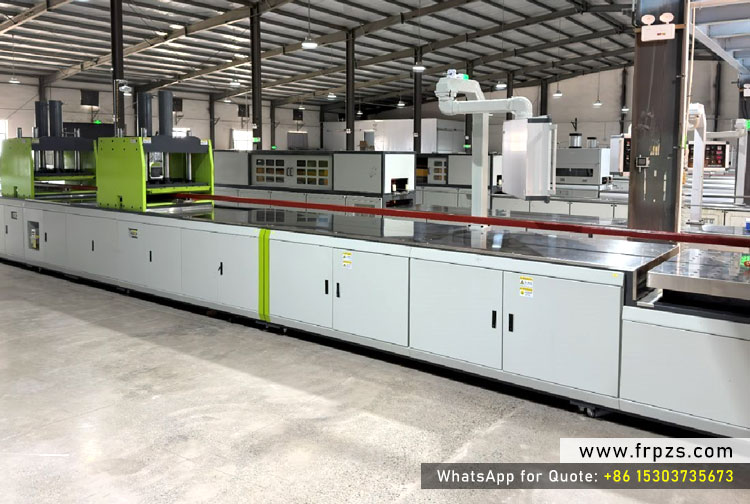
In modern composite manufacturing, traditional open-bath dipping and mechanical tractor systems are increasingly reaching their environmental and mechanical limits. Open resin baths expose operators to high styrene VOC emissions, cause resin waste through bath degradation, and struggle to achieve uniform resin saturation in dense, multi-layer fiber packages. Meanwhile, light-duty pullers often suffer from slippage when pulling large-scale, thick-walled structural profiles.
Building a high-efficiency automated FRP pultrusion line requires a fundamental technological shift: pairing closed-mold precision resin dosing systems with heavy-duty hydraulic reciprocating pultrusion pullers. As an integrated turnkey manufacturer of pultrusion machinery, precision dies, and composite profiles, Henan Zhongsheng Composite Material Co., Ltd. provides global manufacturers with complete, production-ready automated line solutions engineered for maximum yield, minimal waste, and flawless structural integrity.
2. Precision Resin Dosing & Closed-Mold Injection Systems
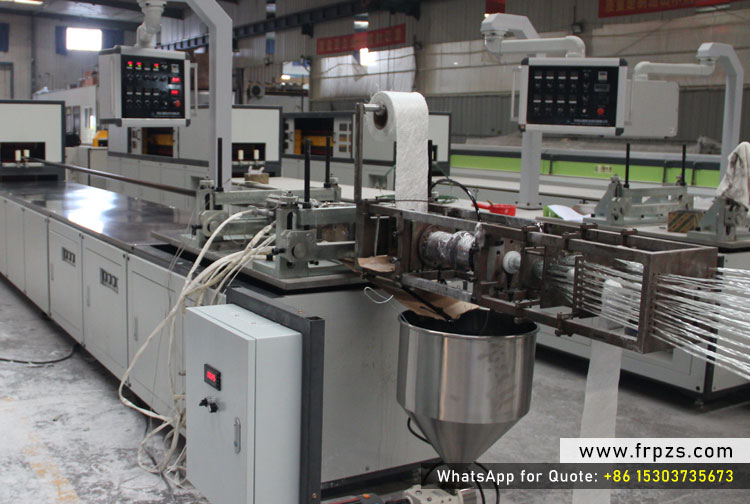
Rather than pulling glass rovings through an open atmospheric resin tray, modern automated lines utilize an inline metering pump connected directly to a sealed resin injection chamber situated prior to the curing die cavity. This closed-loop system delivers transformational advantages for high-performance composite production:
1. Complete Fiber Impregnation & Void Reduction
High-pressure injection forces thermosetting resin (epoxy, vinyl ester, or polyurethane) directly into the core of dense fiber bundles. This guarantees thorough wet-out saturation, eliminating internal air entrapment and micro-voids to significantly enhance interlaminar shear strength (ILSS) and dielectric breakdown resistance.
2. Resin Material Utilization Above 95%
Conventional open baths result in significant resin loss due to bath pot-life expiration, premature gelation, and continuous surface evaporation. A closed-loop precision resin meter dosing pultrusion system delivers exact resin-to-catalyst stoichiometry on demand, achieving material utilization rates exceeding 95% while drastically reducing raw material costs.
3. Environmental Compliance & Zero VOC Emissions
By sealing volatile monomers inside closed mixing chambers and injection dies, styrene and solvent emissions are reduced by up to 90%. This creates a clean, odorless factory floor that complies with stringent global environmental standards without requiring massive air-scrubbing exhaust systems.
4. Heavy-Duty Hydraulic Reciprocating Traction & Line Integration
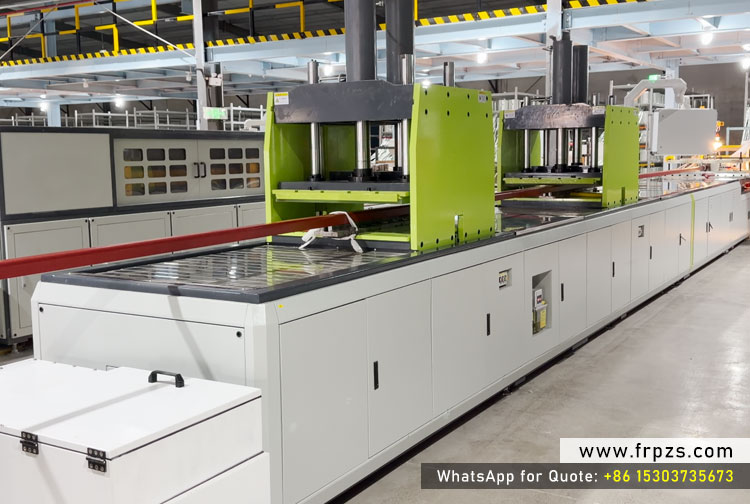
Once fiber packages are thoroughly impregnated and heat-cured inside the steel die, reliable line speed and steady pulling force become vital. While caterpillar track pullers excel for thin-walled hollow tubes, heavy-duty structural shapes require a heavy duty hydraulic reciprocating pultrusion machine:
- Unmatched Pulling Power: Hydraulic cylinders generate high pulling tonnages (ranging from 10 to 50+ tons), enabling smooth, continuous extraction of thick-walled I-beams, heavy rebar, hollow decking, and multi-cavity profiles without motor stalling.
- Non-Damaging High Clamping Force: Dual reciprocating clamping hand units utilize long, custom-contoured rubber or polyurethane pads. This distributes high clamping pressure over a wide contact area, preventing profile crushing or surface scuffing during intense pulling strokes.
- PLC Synchronized Motion: Advanced Xinjie or Siemens PLC systems coordinate hand-over-hand reciprocating strokes, ensuring continuous movement without sudden acceleration spikes that could crack curing resins inside the die.
Turnkey Equipment & Tooling Integration by Zhongsheng
Henan Zhongsheng Composite Material Co., Ltd. manufactures complete automated FRP profile manufacturing equipment packages under one roof. By synchronizing in-house die cavity polishing (HRC 55+ laser hardening), precision dosing pumps, hydraulic pullers, and automated inline flying-blade cutoff saws, Zhongsheng eliminates equipment-tooling mismatch to ensure zero debugging downtime for global client factories.
Technical Summary & Engineering Data
4. Technical Comparison: Open-Bath Caterpillar Lines vs. Precision Dosing Hydraulic Lines
The comparative matrix below outlines the performance differences between traditional open-bath pultrusion setups and modern automated lines featuring precision resin dosing and hydraulic reciprocating pullers:
| Performance Characteristic | Traditional Open-Bath Caterpillar Line | Automated Dosing + Hydraulic Puller Line | Engineering Advantage |
|---|---|---|---|
| Resin Impregnation Method | Atmospheric open dipping bath | High-pressure closed injection box | Zero internal void porosity & superior fiber-resin bonding |
| Resin Utilization Efficiency | 70% - 80% (High bath waste & gelation) | > 95% (Exact stoichiometric dosing) | Drastically reduces chemical waste & raw material costs |
| VOC & Styrene Emissions | High worker exposure & strong odor | Fully enclosed (> 90% emission reduction) | Complies with strict workplace health & safety codes |
| Pulling Capacity / Tonnage | Light to medium (1 - 5 tons average) | Heavy structural (10 - 50+ tons) | Extracted heavy thick-walled profiles without belt slippage |
| Suitable Profile Geometries | Thin-walled rods, small tubes, light strips | Heavy I-beams, large channels, thick rebar, decking | Expands product portfolio to high-value structural components |
| Control & Automation Level | Manual valve adjusting & simple drive speed | Integrated PLC touchscreen with remote diagnostics | High batch-to-batch consistency & automated recipe storage |
Engineering Q&A
5. Frequently Asked Questions (FAQ): Automated FRP Pultrusion Lines
Q1: Why is closed-mold resin injection superior to traditional open resin baths in FRP pultrusion?
A: Closed-mold injection uses automated meter dosing pumps to inject resin under pressure directly into the pre-forming die. This forces resin into dense fiber bundles to eliminate internal air voids, raises material utilization above 95%, and prevents volatile styrene emissions on the factory floor.
Q2: When should a manufacturer choose a Hydraulic Reciprocating Puller over a Caterpillar Track Puller?
A: Hydraulic reciprocating pullers are essential when pulling large-scale, heavy structural profiles (such as thick-walled I-beams, hollow bridge decking, or high-diameter solid rebar) that require high pulling tonnage (10 to 50+ tons) and high surface clamping force without belt slippage.
Q3: Can epoxy resin systems be used with precision resin dosing pultrusion equipment?
A: Yes. Epoxy resins have short pot-life windows once mixed with hardeners. An automated precision dosing unit mixes components in exact ratios immediately prior to injection into the heated die, preventing premature gelation in bulk tanks and enabling continuous high-strength epoxy profile production.
Q4: How does Henan Zhongsheng ensure synergy between pultrusion machinery and steel dies?
A: Henan Zhongsheng manufactures both automated pultrusion machines and precision chrome-plated steel dies in-house. Our engineering team designs the injection box ports, heating zone gradients, and hydraulic clamping jaws concurrently, eliminating equipment-tooling mismatch and reducing setup debugging times.
Q5: How can I request a customized quotation for a complete automated FRP pultrusion line?
A: Contact Sales Director Jessica via Email at Jessica@frpzs.com or WhatsApp at +86 15303735673. Provide your target profile drawings, output capacity requirements, and material preferences to receive a comprehensive technical proposal and direct factory quote.