+86 15303735673
 Jessica@frpzs.com

 Technical Data



1. The Shifting Landscape: Are Composite Frames Replacing Aluminum in Solar PV?
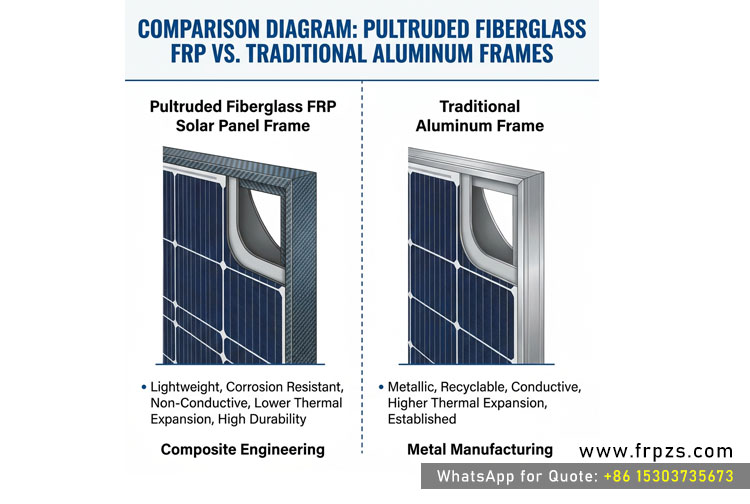
For over three decades, anodized aluminum has been the undisputed standard for framing photovoltaic (PV) modules and structural mounting racks. However, as the global solar market expands aggressively into harsh marine environments, floating PV farms, coastal salt-spray zones, and high-chemical industrial roofs, traditional metal framing is encountering severe performance bottlenecks. Aluminum frames suffer from high carbon footprints, micro-cracking caused by thermal expansion mismatches, and Potential-Induced Degradation (PID) due to electrical conductivity.
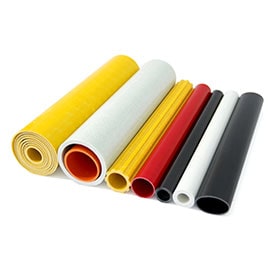
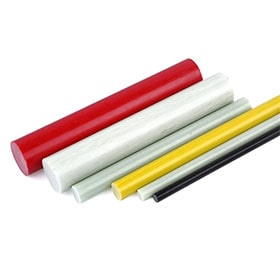
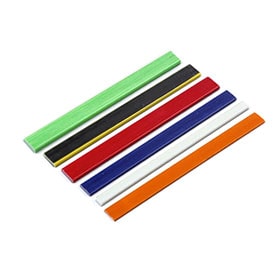
Enter pultruded fiberglass reinforced polymer (FRP) profiles. Engineered through precision continuous molding, composite solar panel frames are rapidly emerging as the superior alternative. As an integrated manufacturer specializing in custom FRP profiles, precision tooling dies, and continuous pultrusion machinery, Henan Zhongsheng Composite Material Co., Ltd. is at the forefront of this industrial transformation, supplying global PV module manufacturers and EPC contractors with next-generation composite framing solutions.
2. Technical Deep Dive: Why FRP Profiles Are Exploding in Solar Energy
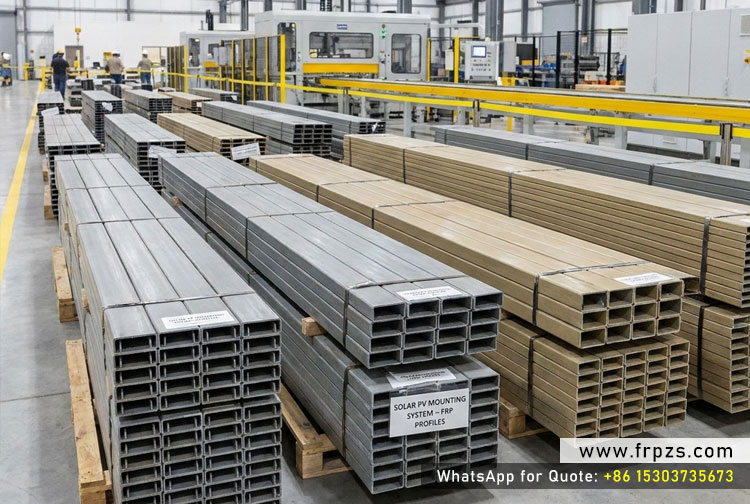
The explosive adoption of FRP profiles in solar energy is driven by five breakthrough mechanical and material advantages that traditional metal frames cannot match:
1. Eliminating Potential-Induced Degradation (PID) & Grounding Risks
Aluminum is an electrical conductor, requiring complex grounding wires and clip assemblies across thousands of solar panels. Furthermore, current leakage along metallic frames triggers PID, causing up to 30% power output losses over time. FRP composite frames possess exceptional dielectric strength (non-conductive), completely insulating the PV laminate. This eliminates electrical leakage paths, prevents PID, and reduces balance-of-system (BOS) grounding hardware costs.
2. Superior Corrosion Resistance in Coastal & Offshore Environments
In floating solar arrays (FPV) and coastal salt-fog environments, aluminum frames suffer from galvanic pitting corrosion, while steel mounting racks rust rapidly. Formulated with polyurethane, vinyl ester, or high-grade isophthalic polyester resin, corrosion resistant FRP solar mounting profiles resist salt spray, acidic rain, and chemical vapors without requiring sacrificial anodizing or galvanizing treatments.
3. Perfect Thermal Expansion Coefficient (CTE) Matching
Aluminum expands and contracts at a rate nearly double that of solar module glass under daily thermal cycling. This coefficient mismatch creates severe mechanical stress, leading to solar cell micro-cracks and seal degradation. Pultruded fiberglass profiles feature a Coefficient of Thermal Expansion (CTE) that closely matches silicon glass, dramatically reducing thermal stress and extending PV module service life beyond 30 years.
4. High Strength-to-Weight Ratio & Snow/Wind Load Resistance
Through continuous E-glass roving and multi-axial reinforcement mats, pultruded composite profiles achieve flexural strength exceeding 400 MPa—higher than standard 6063-T6 aluminum. This enables composite frames to withstand extreme typhoon wind uplift forces and heavy snow loads while remaining 25% lighter than aluminum counterparts.
5. Lower Carbon Footprint & Eco-Friendly Manufacturing
Smelting aluminum is an energy-intensive process emitting significant greenhouse gases. In contrast, the pultrusion manufacturing process operates with vastly lower embodied energy, aligning perfectly with global carbon neutrality and ESG sustainability targets for green energy projects.
3. Applications Across Solar Projects & OEM Customization by Zhongsheng
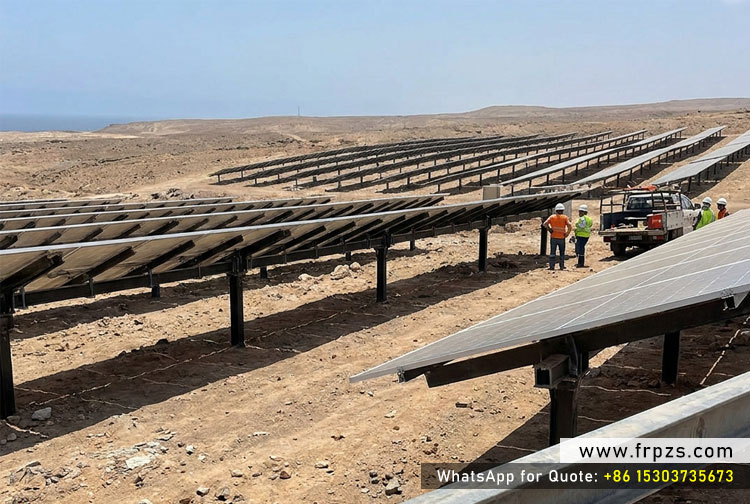
Key Solar Application Scenarios
Pultruded composite profiles are specified across demanding solar infrastructure segments:
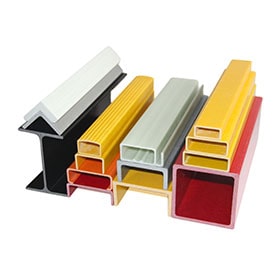
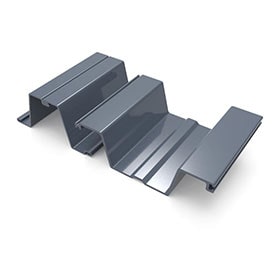
- PV Module Edge Framing: Custom-designed hollow or C-profile snap-on frames replacing aluminum borders on N-type TOPCon and HJT solar modules.
- Floating Photovoltaic (FPV) Mounting Racks: Main structural beams, walkways, and float connectors immune to continuous water immersion.
- Utility-Scale Solar Tracking Systems: Lightweight torque tubes, purlins, and diagonal bracing profiles that reduce motor actuator load on single-axis trackers.
- Industrial & Chemical Roof Arrays: Framing components that withstand aggressive chemical exhaust fumes on industrial plant roofs.
Why Partner with Henan Zhongsheng Composite Material Co., Ltd.?
As a leading composite PV module framing supplier, Zhongsheng provides end-to-end industrial chain integration:
- In-House Tooling & Die Fabrication: We design, laser-harden (HRC 55+), and polish high-precision pultrusion dies to deliver tight profile tolerances (±0.15 mm).
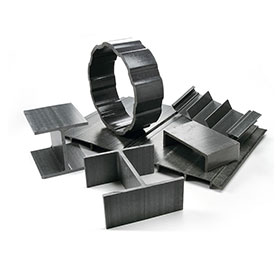
- Custom Section Geometries: From thin-walled module frames to heavy structural C-channels and square tubes, we customize fiber layups and resin matrices to your CAD drawings.
- High Production Capacity: Operating over 50 automated continuous pultrusion lines equipped with crawler traction to ensure defect-free, mirror-smooth profile surfaces.
Contact Sales Director Jessica for Custom Solar Profile Engineering & Quotes:
Technical Summary & Engineering Data
4. Engineering Comparison Matrix: FRP Composite Frames vs. Aluminum Frames
The comparative table below details the performance parameters between pultruded FRP composite frames and traditional anodized aluminum frames based on Zhongsheng engineering data:
| Engineering Parameter | Pultruded FRP Composite Frame | Anodized Aluminum Frame (6063-T6) | Advantage of FRP Composite |
|---|---|---|---|
| Electrical Conductivity | Non-Conductive (Dielectric strength > 20 kV/mm) | Highly Conductive | Eliminates PID effect & reduces grounding hardware costs |
| Corrosion & Salt Spray Resistance | Permanent immunity to salt fog, acid rain & chemicals | Prone to galvanic pitting & anodizing layer degradation | |
| Thermal Expansion (CTE) | 6 - 8 × 10⁻⁶ / K (Matches solar glass) | 23 × 10⁻⁶ / K (2.5× higher than glass) | Prevents solar cell micro-cracks during day/night thermal cycling |
| Flexural Strength | ≥ 400 MPa (Tailored roving layout) | ~ 200 - 240 MPa | Higher wind and snow load resistance with less deflection |
| Density / Weight Ratio | 1.8 - 2.0 g/cm³ | 2.7 g/cm³ | 25% Lighter; eases manual handling and roof load |
| Embodied Energy & Carbon Footprint | Low continuous curing energy | High energy smelting process | Significantly lower carbon footprint for green energy compliance |
| Customization Flexibility | Custom resin matrix & fiber volume ratio | Fixed alloy properties | Tailored for chemical, floating, or high-altitude environments |
Engineering Q&A
5. Frequently Asked Questions (FAQ): FRP Solar Frames
Q1: Are composite frames really replacing aluminum in the solar energy sector?
A: Yes, rapidly. Driven by the expansion of offshore floating solar, high-humidity coastal farms, and high-efficiency N-type modules, composite solar panel frames are replacing aluminum due to their superior corrosion resistance, zero grounding requirement, non-conductivity (preventing PID), and thermal expansion compatibility with solar glass.
Q2: How do FRP solar frames prevent Potential-Induced Degradation (PID)?
A: Unlike metallic aluminum which conducts current, pultruded fiberglass is an electrical insulator with high dielectric strength. By eliminating electrical current leakage paths between the module circuit and the external structure, FRP frames effectively eliminate PID losses without needing expensive grounding hardware.
Q3: Why are FRP solar profiles better suited for floating solar (FPV) and coastal arrays?
A: Moisture, salt spray, and water treatment chemicals cause rapid pitting corrosion on anodized aluminum and rust on steel racks. Formulated with polyurethane or vinyl ester resin, corrosion resistant FRP solar mounting profiles provide lifetime resistance against saltwater and chemical splash without surface degradation.
Q4: How does the Coefficient of Thermal Expansion (CTE) of FRP compare to solar module glass?
A: Aluminum expands at a rate 2.5 times faster than silicon glass under temperature swings, causing mechanical stress, seal breakdown, and micro-cracking in solar cells. Pultruded fiberglass has a CTE (6-8 × 10⁻⁶ / K) that closely matches glass, maintaining structural integrity across extreme day-to-night temperature cycles.
Q5: Can Henan Zhongsheng produce custom FRP profiles to match existing PV module designs?
A: Yes. Henan Zhongsheng Composite Material Co., Ltd. operates an in-house tooling mold design center and high-precision CNC machining workshop. We can design and manufacture custom pultrusion dies based on your 2D/3D CAD drawings, tailored wall thicknesses, and specified resin systems.