+86 15303735673
 Jessica@frpzs.com
 Technical Data


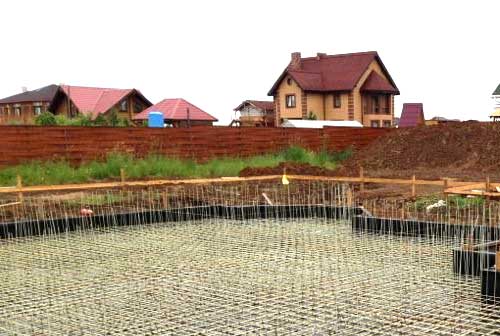
Zhongsheng GFRP Rebar: Engineering the next generation of rust-proof concrete structures.
The End of Concrete Spalling: Why GFRP is the Future
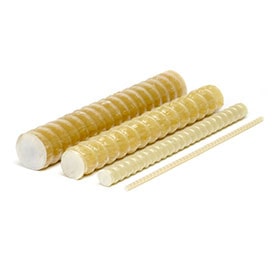
In the world of civil engineering, steel corrosion is the primary cause of premature structural failure, costing billions in annual repairs. Fiberglass Rebar (GFRP), also known as Glass Fiber Reinforced Polymer rebar, has emerged as the definitive solution. At Henan Zhongsheng (FRPZS), we engineer our FRP rebar to eliminate the "rust-expansion-crack" cycle, providing a service life for concrete infrastructure that exceeds 100 years, even in high-salinity coastal zones.
1. Strategic Pros: The Mechanical Edge of Fiberglass Rebar
Modern fiberglass rebar offers mechanical and chemical properties that far surpass traditional black steel or epoxy-coated alternatives:
I. Exceptional Tensile Strength
Contrary to older data, high-quality Zhongsheng FRP rebar provides a longitudinal tensile strength exceeding 100,000 to 150,000 psi (700-1000+ MPa), which is 2 to 3 times the strength of Grade 60 steel. This allows for superior load-bearing capacity in tension-heavy applications.
II. Total Corrosion & Chemical Immunity
GFRP is intrinsically non-reactive. It is immune to chloride ion attack (from road salts or seawater) and concrete carbonation. This makes it the only viable choice for seawalls, bridge decks, and chemical plant flooring where steel would disintegrate within decades.
III. Non-Conductive & Non-Magnetic
For sensitive infrastructure like MRI rooms, data centers, and toll-collection zones, GFRP’s electromagnetic neutrality is vital. It eliminates eddy currents and electrical interference, ensuring the integrity of nearby sensitive equipment.
IV. Rapid Installation & Logistics
At 1/4 the weight of steel, a single worker can carry bundles of fiberglass rebar that would typically require a crane for steel. This 75% weight reduction slashes shipping costs and speeds up the "tie-in" process on site, reducing labor CAPEX.
2. Engineering Cons: Designing for Composite Limits
A transparent engineering approach requires addressing the specific design hurdles of GFRP to ensure structural safety:
- Lower Modulus of Elasticity: GFRP has a lower modulus than steel (~40-60 GPa vs 200 GPa). Design Fix: Structural designers typically focus on crack control and deflection rather than ultimate strength when sizing GFRP reinforcement.
- No On-Site Bending: Because the resin is thermoset, GFRP cannot be bent or re-shaped after pultrusion. Design Fix: All bends (stirrups, corners) must be pre-ordered and factory-manufactured to specific radii.
- Linear Elastic Failure: GFRP does not "yield" before failure. Engineering Solution: Designers use higher safety factors (reduction factors) to ensure the concrete fails before the reinforcement reaches its ultimate limit.
3. Performance Benchmark: GFRP vs. Steel (2026 Standards)
| Property | Standard Steel Rebar | Zhongsheng GFRP Rebar | Engineering Impact |
|---|---|---|---|
| Tensile Strength | ~420 MPa (Grade 60) | 700 - 1100+ MPa | 2-3x Strength Advantage |
| Modulus of Elasticity | 200 GPa | 45 - 60 GPa | Deflection-governed design |
| Corrosion Resistance | None (Rusts) | Absolute (Chemical Inert) | 100-year design life |
| Weight Density | 7.85 g/cm³ | 1.9 - 2.1 g/cm³ | 75% lighter; lower labor cost |
| Conductivity | High (Conductive) | Zero (Insulative) | Ideal for MRI/Substations |
4. Why Choose Zhongsheng FRP Rebar?
With over 20 years of manufacturing excellence, Henan Zhongsheng Composite Materials produces GFRP rebar that exceeds ASTM D7957 standards. We specialize in:
- High-Bond Surface: Sand-coated or helical-wrap textures for maximum mechanical interlocking with concrete.
- Custom Bend Fabrication: Precision-molded stirrups and 90° bends for complex reinforcement cages.
- Sustainable Manufacturing: Low-energy pultrusion processes that support green building certifications.
10 Technical FAQs: Mastering Fiberglass Rebar
Q1: "Is fiberglass rebar fire-resistant?"
A: Concrete provides the primary fire protection. However, our rebar maintains its strength better than most plastics and will not melt within the concrete during standard fire cycles.
Q2: "Can I cut GFRP rebar on site?"
A: Yes. It is easily cut with a standard circular saw or abrasive blade. No specialized heavy-duty shears are needed.
Q3: "Does UV exposure during construction weaken the rebar?"
A: Surface UV exposure during the construction phase (weeks/months) does not affect the structural core. However, we recommend covering stockpiles if stored for over 6 months.
Q4: "How does the bond strength compare to steel?"
A: Due to our sand-coating technology, the bond strength to concrete is equivalent to or higher than deformed steel rebar.
Q5: "Why is GFRP better for bridge decks?"
A: Bridge decks are exposed to road salts. GFRP prevents the "internal expansion" caused by rusting steel, which is the #1 cause of bridge deck potholes and delamination.
Q6: "Is it more expensive per project?"
A: While the material cost per pound is higher, the **Total Installed Cost** is often lower due to weight savings, and the **Lifecycle Cost** is drastically lower because repairs are eliminated.
Q7: "Is there a specific tie-wire for GFRP?"
A: We recommend using plastic-coated wire or plastic cable ties to maintain the non-corrosive and non-conductive integrity of the cage.
Q8: "Does GFRP float in concrete during vibration?"
A: Since it is lighter, it requires proper chairing and securing. Our technical guides provide specific spacing recommendations to ensure stable placement.
Q9: "Can GFRP rebar be used in pre-stressed applications?"
A: Yes, specialized high-modulus GFRP or Carbon FRP (CFRP) tendons are available for pre-stressing and post-tensioning projects.
Q10: "Can it be used for seismic-resistant design?"
A: Yes. Because it does not permanently deform (it remains elastic), it can provide unique resilience in seismic zones where "memory" and energy absorption are required.
Expert Reinforcement Solutions with Zhongsheng
Partner with Henan Zhongsheng Composite Materials Co., Ltd. for your next infrastructure project. Our team, led by Jessica Huang, provides technical engineering support, custom bend scheduling, and global logistics for high-performance fiberglass rebar.
Consult with our structural specialists today:
- Lead Technical Consultant: Jessica Huang
- Direct Inquiry: Jessica@frpzs.com
- Global WhatsApp: +86 15303735673