+86 15303735673
 Jessica@frpzs.com

 Technical Data



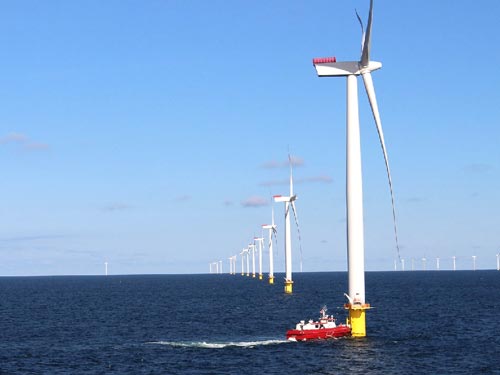
Offshore wind power is a rapidly growing renewable energy source that can provide clean and reliable electricity to millions of people. However, offshore wind turbines face harsh environmental conditions, such as strong winds, waves, saltwater corrosion, and marine fouling. These factors can affect the performance and lifespan of the turbines, especially the rotor blades, which are exposed to high stresses and fatigue loads. Therefore, regular inspection and maintenance of the rotor blades are essential to ensure the safety and efficiency of offshore wind farms.
However, conventional methods of blade maintenance, such as using cranes, helicopters, or rope access, are costly, time-consuming, and risky. Moreover, they are highly dependent on weather conditions and sea states, which can limit the availability and accessibility of the turbines. Therefore, there is a need for a more innovative and cost-effective solution for offshore blade maintenance.
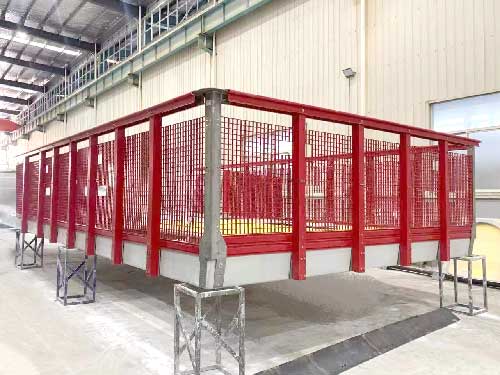
One such solution is the FRP (Fiber Reinforced Polymer) working platform, which is a lightweight and modular structure that can be attached to the turbine tower and provide a stable and safe working environment for technicians. The FRP working platform consists of several components, such as:
A platform body, which is made of FRP composite materials that have high strength-to-weight ratio, corrosion resistance, and durability. The platform body can be customized to fit different turbine models and sizes.
A lifting system, which is used to raise and lower the platform body along the turbine tower. The lifting system can be powered by hydraulic or electric motors, and controlled by a remote or onboard operator.
A locking system, which is used to secure the platform body to the turbine tower at different heights. The locking system can be mechanical or magnetic, and designed to withstand high loads and vibrations.
A rotating system, which is used to rotate the platform body around the turbine tower to align with different blade positions. The rotating system can be manual or automatic, and equipped with sensors and cameras to monitor the blade condition. A safety system, which is used to protect the technicians and equipment on the platform body. The safety system can include railings, harnesses, nets, fire extinguishers, emergency buttons, etc.
The FRP working platform has several advantages over conventional methods of blade maintenance, such as:
It can reduce the cost and time of blade maintenance by eliminating the need for cranes, helicopters, or rope access.
It can increase the availability and accessibility of the turbines by allowing blade maintenance in a wider range of weather conditions and sea states.
It can improve the quality and accuracy of blade inspection and repair by providing a closer and clearer view of the blade surface.
It can enhance the safety and comfort of the technicians by providing a stable and spacious working environment.
The FRP working platform has been successfully demonstrated on several offshore wind turbines in different countries. The results have shown that the FRP working platform can perform blade maintenance tasks efficiently and effectively, with minimal impact on the turbine operation. The FRP working platform is expected to become a novel solution for offshore wind power maintenance in the near future.
Frequently Asked Questions
Q: What is an FRP Working Platform for offshore wind power?
A: An FRP Working Platform is a fiberglass reinforced composite platform system designed for maintenance access on offshore wind turbines. It provides a lightweight, corrosion-resistant work surface that withstands harsh marine environments better than traditional steel platforms.
Q: Why is FRP preferred over steel for offshore wind maintenance platforms?
A: FRP does not corrode in saltwater environments, eliminating the constant maintenance and recoating required for steel platforms. It is also lighter, reducing structural loads on the turbine foundation, and non-conductive, adding safety during electrical maintenance work.
Q: What components make up an FRP offshore working platform?
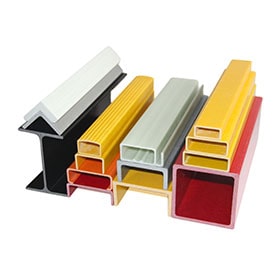
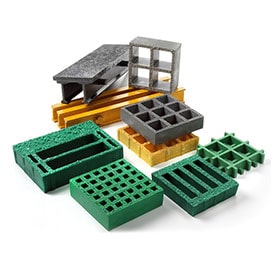
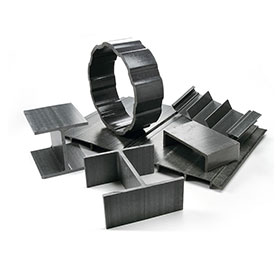
A: Typical components include pultruded structural beams and columns, FRP grating or deck panels for the walking surface, handrail systems, and connection hardware. All elements are engineered for marine exposure and dynamic loading from waves and wind.
Q: How do FRP platforms handle the dynamic loads of offshore environments?
A: FRP platforms are designed with consideration for wave impact, wind loads, and turbine vibration. The material's fatigue resistance and the structural design account for cyclic loading. Proper connection detailing ensures long-term performance under offshore conditions.
Q: What is the maintenance requirement for FRP working platforms offshore?
A: FRP platforms require minimal maintenance compared to steel. Periodic visual inspection and cleaning are typically sufficient. There is no need for rust treatment or protective coating renewal, significantly reducing maintenance costs and downtime for offshore wind operators.