+86 15303735673
 Jessica@frpzs.com
 Technical Data


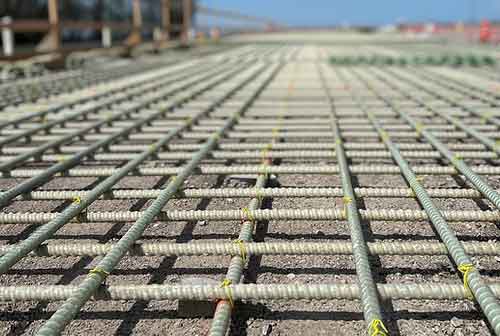
Advanced GFRP Reinforcement: Engineering Structural Longevity in High-Salinity Environments.
The Structural Revolution: Why Steel is No Longer the Standard
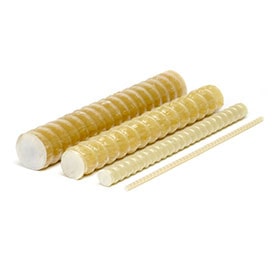
In 2026, the focus of civil engineering has shifted from "initial build cost" to "Total Life-Cycle Value." Fiberglass rebar (GFRP) stands at the forefront of this movement. Unlike traditional steel, which initiates an expansive oxidation process (Concrete Cancer) the moment it meets chloride ions, GFRP is a chemically inert composite. By combining high-purity E-glass fibers with an advanced Vinyl Ester resin matrix, we produce a reinforcement bar that is not only 1/4 the weight of steel but offers a tensile strength nearly double that of Grade 60 rebar.
1. Technical Deep Dive: The Science of GFRP Performance
At Henan Zhongsheng Composite Materials Co., Ltd., our pultrusion process is optimized to ensure a fiber-volume fraction that exceeds 70%. This density is critical for maintaining mechanical integrity under long-term environmental stress.
A. Tensile Strength and Modulus Management
Standard carbon steel offers a yield strength of ~420 MPa. In contrast, our GFRP rebar achieves 600 to 1100 MPa. While GFRP has a lower Modulus of Elasticity ($E_f \approx 45-60$ GPa), modern design codes like ACI 440.1R provide clear guidelines for managing deflection and crack widths, allowing engineers to leverage the material's immense strength-to-weight ratio safely.
B. Non-Conductivity & Magnetic Neutrality
In specialized sectors such as MRI room construction, high-voltage substations, and aluminum smelters, metallic reinforcement is a liability. GFRP is an electrical insulator and is magnetically transparent, preventing inductive heating and signal interference that can compromise sensitive equipment.
2. B2B Financial Analysis: Life-Cycle Cost (LCC) Model
For B2B procurement managers, the decision to use fiberglass rebar is increasingly driven by financial data rather than just material preference:
| Factor | Traditional Black Steel | Zhongsheng GFRP Solution |
|---|---|---|
| Logistics Cost | High (Heavy machinery required) | Low (1/4 weight of steel) |
| Installation Speed | Standard | 30-50% Faster (Manual handling) |
| Corrosion Maintenance | Required every 10-15 years | Zero Maintenance required |
| Total Service Life | 20 - 40 Years | 80 - 100+ Years |
Most Frequently Asked Engineering Questions
Q1: "How do I handle corners and stirrups if GFRP cannot be bent on-site?"
A: This is a vital procurement step. GFRP is a thermoset material and cannot be field-bent. At Henan Zhongsheng, we custom-manufacture all L-bars, U-bars, and stirrups during the pultrusion and molding process. By providing a detailed bar schedule early in the project, we ensure that every factory-made bend arrives on-site with 100% structural fiber continuity.
Q2: "Does fiberglass rebar float during concrete vibration?"
A: Because GFRP is much lighter than steel, it can be buoyant in high-slump concrete. To prevent "rebar float," we recommend securing the cage every 1.5 meters using plastic cable ties and heavy-duty plastic chairs tied directly to the formwork. This keeps the reinforcement perfectly positioned during the pour.
Q3: "Can I use GFRP rebar in cold-climate regions with heavy freeze-thaw cycles?"
A: Absolutely. GFRP has a Coefficient of Thermal Expansion (CTE) that closely matches concrete in the longitudinal direction. This ensures the bond remains intact even as the concrete expands and contracts in harsh Australian winters or Northern European freezes, preventing internal stress cracking.
Q4: "Is GFRP rebar resistant to the highly alkaline environment of fresh concrete?"
A: Yes. We use Alkali-Resistant (AR) glass fibers and specialized Vinyl Ester resins. These resins act as a molecular shield, protecting the structural fibers from high pH levels. Long-term durability tests show 90%+ strength retention over a 100-year design life.
Q5: "What tools are needed to cut the rebar on a job site?"
A: You don't need heavy cutters. A standard circular saw with a diamond or masonry blade works perfectly. It’s faster than cutting steel, creates no sparks, and won't damage your tools, making it safer for industrial sites.
Q6: "How do I ensure a proper bond strength between the rebar and concrete?"
A: Our GFRP rebar features a specialized sand-coated surface. This technology provides a mechanical interlock that often exceeds the bond performance of deformed steel bars, ensuring a rock-solid transfer of loads (complying with ASTM D7913).
Partner with Henan Zhongsheng for Certified Excellence
As a premier industrial manufacturing firm based in Xinxiang, Henan, Henan Zhongsheng Composite Materials Co., Ltd. is dedicated to delivering world-class FRP solutions. Whether you are building a coastal seawall, a chemical plant, or an MRI facility, our expertise in pultrusion and composite engineering ensures your project’s success.
Consult with Jessica Huang for Technical Data & Global Quotes:
- Technical Contact: Jessica Huang
- Email: Jessica@frpzs.com
- WhatsApp: +86 15303735673
- Full Company Name: Henan Zhongsheng Composite Materials Co., Ltd.
- Available Resources: Load-deflection tables, custom CAD drawings, and ISO-9001 certification documents.