+86 15303735673
 Jessica@frpzs.com
 Technical Data


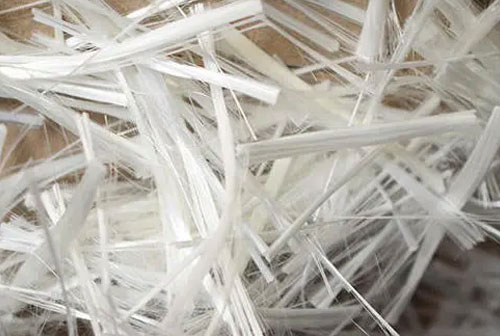
High-tenacity glass fiber rovings: The primary load-bearing component of GFRP composites.
The Synergy of Strength: How GFRP Redefines Performance
In the world of composite engineering, Glass Fiber Reinforced Plastics (GFRP) are not merely a mixture of materials; they are a synergistic achievement. The exceptional strength of GFRP—which allows it to replace steel in bridges and aircraft—is governed by the complex interplay between high-modulus fibers, a protective polymer matrix, and the critical molecular bond at their interface. Understanding these determinants is essential for specifying the right composite for 2026's infrastructure challenges.
1. The Mechanical Foundations: Four Pillars of Strength
A. Fiber Properties (The Reinforcing Skeleton)
Glass fibers are the backbone of the composite. Their tensile strength is significantly higher than bulk glass because the pultrusion process minimizes surface defects. Whether using E-glass for standard applications or S-glass for high-stress aerospace components, the inherent strength of the fiber determines the maximum load capacity of the final profile.
B. Matrix Properties (The Stress Distributor)
While the fibers carry the load, the matrix—typically Epoxy, Polyester, or Vinyl Ester resin—serves as the medium that transfers stress between them. A high-performance matrix protects fibers from abrasion and environmental degradation, ensuring that localized fiber failures do not lead to catastrophic structural collapse.
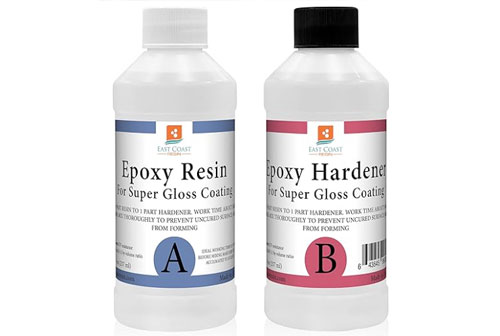
Thermoset Resin Matrix: Critical for stress distribution and chemical resistance in GFRP.
C. The Fiber-Matrix Interface (The Molecular Bridge)
The "Interface" is where structural integrity is won or lost. In 2026, we utilize advanced silane coupling agents to create a chemical bond between the inorganic glass and organic resin. This optimizes the Interfacial Shear Strength (IFSS), ensuring that the two materials act as a single unit under stress.
D. Manufacturing Precision (The Pultrusion Factor)
At Henan Zhongsheng, we utilize advanced pultrusion techniques. This allows us to control fiber orientation with mathematical precision. By aligning fibers in a unidirectional or cross-ply arrangement, we can "tune" the strength of the GFRP component to match the specific directional loads of a project.
2. Critical Factors Governing Tensile & Flexural Strength
To achieve the highest quality GFRP, we monitor several technical variables:
- Fiber Volume Fraction ($V_f$): Increasing the fiber-to-resin ratio generally increases strength, though there is a "sweet spot" (typically 60-70%) beyond which the resin cannot effectively wet the fibers.
- Void Content Control: Micro-bubbles or voids act as stress concentrators. Our vacuum-assisted manufacturing minimizes voids to below 1%, drastically improving fatigue resistance.
- Fiber Aspect Ratio: Longer, continuous fibers provide far superior stress transfer compared to short-chopped fibers, which is why pultruded profiles are favored for structural beams.
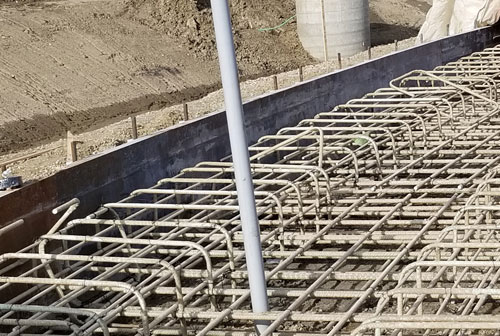
GFRP in Infrastructure: Utilizing high strength-to-weight ratios for sustainable construction.
In-Depth GFRP Engineering FAQ (Gemini User Insights)
Q1: "How does fiber orientation affect the anisotropy of GFRP?"
A: GFRP is inherently anisotropic. Unidirectional (0°) profiles offer maximum tensile strength along the axis, while 90° transverse strength is significantly lower. For complex loading, we utilize multi-axial mats (0°/90°/±45°) to create quasi-isotropic performance.
Q2: "What is the impact of moisture on the fiber-matrix bond over time?"
A: Moisture can infiltrate the interface via capillary action, potentially leading to delamination. At Henan Zhongsheng, we use Vinyl Ester resins with superior hydrolytic stability to prevent this, ensuring long-term strength in coastal or subsea environments.
Q3: "Can GFRP maintain its strength at high temperatures?"
A: Strength is maintained up to the Glass Transition Temperature ($T_g$) of the resin. For high-heat applications, we specify specialized phenolic or high-$T_g$ epoxy resins that extend the safe operating window to over 180°C.
Q4: "Does the thickness of the glass fiber (filament diameter) affect strength?"
A: Yes. Thinner filaments provide more surface area for bonding and have fewer internal flaws, resulting in higher localized strength. We typically use filaments in the 13-24 micron range for optimal pultrusion performance.
Q5: "How do you calculate the expected strength of a custom GFRP profile?"
A: We use the Rule of Mixtures: $\sigma_c = \sigma_f V_f + \sigma_m V_m$. By adjusting the volume of fiber ($\sigma_f$) and matrix ($\sigma_m$), we can predict the composite's longitudinal strength with high accuracy during the design phase.
Q6: "How does Henan Zhongsheng minimize 'Voids' during manufacturing?"
A: We utilize precision-controlled resin injection and optimized pultrusion speeds. By maintaining constant tension and temperature in the die, air is forced out, resulting in a dense, high-integrity cross-section.
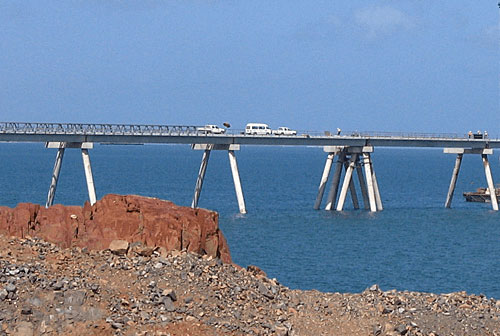
Marine Engineering: GFRP’s chemical stability makes it the only viable choice for saltwater exposure.
Expert GFRP Manufacturing by Henan Zhongsheng
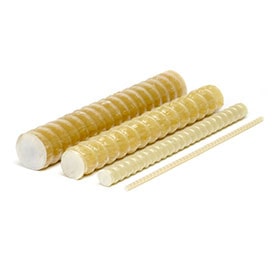
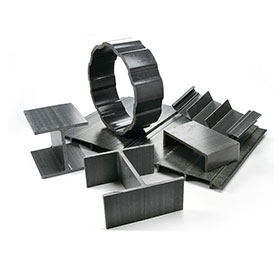
As an industrial manufacturing firm based in Xinxiang, Henan, Henan Zhongsheng Composite Materials Co., Ltd. is at the forefront of composite material innovation. Our technical team ensures that every pultruded profile—from rebar to custom beams—meets the highest mechanical standards for strength and durability.
Consult with Jessica Huang for Technical Specs & Global Quotes:
- Technical Contact: Jessica Huang
- Email: Jessica@frpzs.com
- WhatsApp: +86 15303735673
- Full Company Name: Henan Zhongsheng Composite Materials Co., Ltd.
- Available Resources: Chemical resistance guides, tensile test reports, and custom design consulting.