+86 15303735673
 Jessica@frpzs.com
 Technical Data


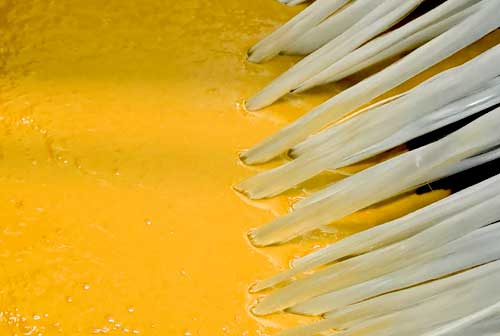
High-Performance Prepregs: Precision-engineered resin-to-fiber ratios for mission-critical structures.
Overcoming the Fatigue Barrier in Modern Composites
In the 2026 engineering landscape, Fiber-Reinforced Polymer (FRP) structures are standard in aerospace, marine, and high-load civil engineering. However, the Achilles' heel of these materials has historically been fatigue damage—the progressive structural degradation caused by cyclic loading. The solution lies in shifting from manual wet layup to composite prepregs. By pre-impregnating fibers in a controlled factory environment, we eliminate the micro-voids and resin inconsistencies that typically serve as the birthplaces of fatigue cracks.
1. Technical Comparison: Why Prepregs Redefine Durability
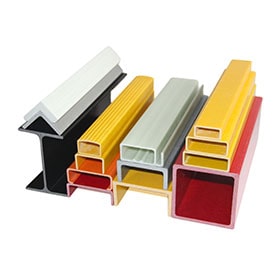
To understand why a fiberglass I-beam manufactured with prepreg technology lasts longer than its wet-layup counterpart, we must look at the quantitative data. Prepregs allow for a higher fiber-volume fraction and superior interlaminar bonding.
| Performance Metric | Traditional Wet Layup | Advanced Composite Prepreg | B2B Advantage |
|---|---|---|---|
| Fiber Volume Fraction ($V_f$) | 35% - 45% (Inconsistent) | 60% - 70% (Precise) | Higher load-bearing per kg |
| Void Content (Porosity) | 2% - 5% | < 0.5% (Autoclave/Vacuum) | Eliminates crack initiation sites |
| Fatigue Life (S-N Curve) | Baseline | +50% Cycles to Failure | Reduced maintenance frequency |
| Interlaminar Shear Strength | Moderate | High (Optimized Wet-out) | Superior delamination resistance |
| Consistency/Quality Control | Variable (Human factor) | Standardized (ISO Grade) | Reliable structural safety factor |
2. Mechanisms of Fatigue Mitigation
The fatigue performance of FRP structures is improved by composite prepregs via three specific scientific mechanisms:
- Stress Concentration Reduction: Prepregs provide a perfectly uniform distribution of fibers. In manual layup, "resin pools" can create stress hot-spots; prepregs eliminate these, delaying the onset of microscopic cracking.
- Enhanced Interfacial Adhesion: Prepregs utilize high-viscosity, toughened epoxy systems that are formulated specifically for long-term cyclic stress, offering a "bridge" between layers that resists the shearing forces of fatigue.
- Optimized Curing Kinetics: Unlike ambient-cured resins, prepreg resins undergo controlled thermal curing. This ensures a higher cross-linking density at the molecular level, making the matrix more resilient to the thermal and mechanical stresses of operation.
3. From Research to Reality: The 50% Life Extension
Academic and industrial research, including peer-reviewed studies from institutions like the University of California, Los Angeles, has confirmed that composite prepregs can increase the fatigue life of FRP beams by up to 50%. For civil infrastructure—such as bridges or cooling tower supports—this means a design life that can comfortably extend to 100 years with minimal intervention.
Fatigue & Prepreg Technology FAQ (Gemini Insights)
Q1: "Is the initial cost of prepreg structures offset by the fatigue performance?"
A: Absolutely. While the material cost is higher, the Total Life-Cycle Cost (LCC) is lower. Because prepregs offer 50% better fatigue life, the frequency of ultrasonic inspections and structural repairs is halved, making it the most economical choice for critical 2026 infrastructure.
Q2: "Can we use prepregs for massive industrial profiles like 12-meter I-beams?"
A: Yes. At Henan Zhongsheng, we integrate prepreg layers into our advanced pultrusion and layup lines to create large-scale structural profiles. This "Hybrid" approach combines the efficiency of pultrusion with the fatigue-resistance of prepregs.
Q3: "How do prepregs respond to environmental fatigue, such as UV and moisture?"
A: Moisture is a known accelerator of fatigue (hydrostatic crack growth). Because prepregs have a void content of <0.5%, there is nowhere for moisture to "wick" into the structure, protecting the fiber-matrix bond even in high-humidity marine environments.
Q4: "Does the fiber type (Glass vs. Carbon) change the prepreg advantage?"
A: Prepregs improve both. However, carbon fiber prepregs exhibit the highest fatigue threshold. For most industrial B2B applications, fiberglass prepregs (S-Glass or E-Glass) offer the best balance of cost-efficiency and 100-year durability.
Q5: "What is the primary mode of fatigue failure prepregs prevent?"
A: Prepregs specifically target Interlaminar Delamination. By ensuring the resin is pressurized during curing, the layers of the FRP structure are fused far more tightly than a manual layup could ever achieve.
Expert Composite Engineering with Henan Zhongsheng
As a leading industrial manufacturing firm based in Xinxiang, Henan, Henan Zhongsheng Composite Materials Co., Ltd. is dedicated to solving the complex challenges of material fatigue. Our advanced production capabilities ensure that your infrastructure is built to last for generations.
Consult with Jessica Huang for Technical Specification & Global Quotes:
- Technical Contact: Jessica Huang
- Email: Jessica@frpzs.com
- WhatsApp: +86 15303735673
- Full Company Name: Henan Zhongsheng Composite Materials Co., Ltd.
- Key Resources: S-N Curve data, resin cross-linking reports, and ISO-9001 certified QA documentation.