+86 15303735673
 Jessica@frpzs.com
 Technical Data


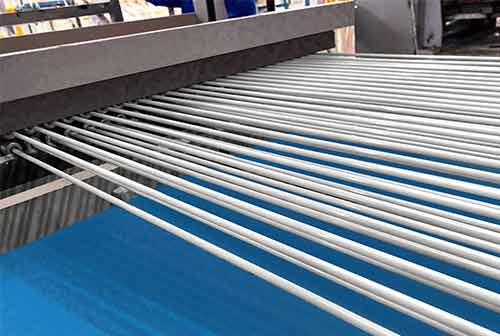
Precision Precision Engineering: A multi-cavity pultrusion die designed for high-speed FRP profile manufacturing.
The Foundation of Composite Quality: Precision Pultrusion Moulds
In the pultrusion process, the mould (or shaping die) is the heartbeat of production. It is not merely a tool; it is a high-pressure thermal reactor where liquid resin and continuous fibers transform into high-strength structural profiles. At Henan Zhongsheng Composite Material Co., Ltd. (FRPZS), we understand that a difference of 0.01mm in mould precision can determine the structural integrity of the final FRP C-channel or Carbon Fiber Rod.
1. Technical Benchmarking: Why Mould Material Matters
A reliable pultrusion mould manufacturer must prioritize steel grade and surface finish. Our moulds are engineered to withstand the constant abrasive force of glass fibers while maintaining a mirror-smooth finish to prevent resin accumulation.
| Mould Property | Standard Industrial Moulds | Zhongsheng Precision Moulds | Production Impact |
|---|---|---|---|
| Base Material | Standard Carbon Steel | P20 / H13 / 4Cr5MoSiV1 Steel | Higher thermal stability; no warping |
| Surface Treatment | Flash Chrome / None | Hard Chrome Plated (HRC 65+) | Reduced friction; 50% longer life |
| Surface Roughness | Ra 0.4 - 0.8 | Ra 0.02 - 0.1 (Mirror Finish) | Smooth profiles; lower pull force |
| Internal Heating Design | Uniform heating strips | Multi-Zone Thermal Control | Eliminates internal residual stress |
| Tolerance Precision | ±0.1 mm | Up to ±0.01 mm | Exact dimensions for assembly |
2. Strategic Advantages of Our Pultrusion Dies
Choosing the right die architecture from FRPZS provides several mechanical benefits:
- High Fiber-Volume Optimization: Our die designs allow for up to 80% fiber content, maximizing the Specific Strength of the finished profile.
- Thermal Gradient Engineering: We design multi-stage heating zones within the mould to ensure the resin cures from the inside out, preventing surface cracks and internal delamination.
- Wear Resistance: By utilizing high-hardness tool steels and thick chrome plating, our moulds resist the "sawing" effect of glass and carbon fibers, maintaining dimensional accuracy over hundreds of kilometers of production.
3. Manufacturing Prowess: Henan Zhongsheng’s Capability
With over 20 years in the industry, our facility in Xinxiang, Henan, is equipped with 35 sets of precision CNC machining centers. This allows us to manufacture complex geometries, including:
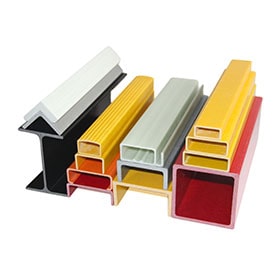
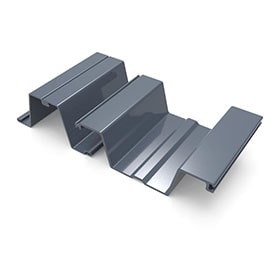
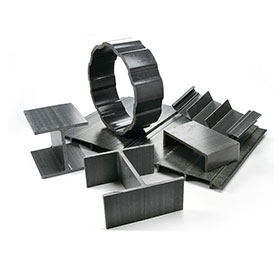
- Structural Profiles (I-Beams, H-Beams, C-Channels)
- Radomes and Telecommunication Profiles
- Custom Grooved and Multi-Cavity Dies
- Insulated Ladder Rungs and Utility Poles
10 Critical FAQs for Pultrusion Mould Procurement
Q1: "What is the typical lifespan of a Zhongsheng hard-chrome plated mould?"
A: Depending on the abrasive nature of the fiber (Glass vs. Carbon), our moulds typically last for 50,000 to 150,000 meters of production before requiring a re-chrome treatment.
Q2: "How does mould length affect the pultrusion speed?"
A: Longer moulds (typically 900mm to 1200mm) allow for higher production speeds because they provide a longer "residence time" for the resin to cure at high velocities.
Q3: "Can your moulds handle different resin systems like Epoxy and Phenolic?"
A: Yes. We customize the taper and internal clearance of the die to account for the specific shrinkage rates of Polyester, Vinyl Ester, Epoxy, or Phenolic resins.
Q4: "Why is a 'mirror finish' (Ra 0.05) essential for pultrusion moulds?"
A: A mirror finish reduces the pulling force required. High friction can lead to "sloughing" (resin buildup) which ruins the surface of the profile and increases energy consumption.
Q5: "How do you ensure uniform heating across a complex C-channel die?"
A: We use computer simulations to place cartridge heaters strategically, ensuring a temperature variance of less than ±2°C across the entire cross-section.
Q6: "What steel grade is best for Carbon Fiber pultrusion?"
A: We recommend H13 or DC53 tool steel for carbon fiber. Carbon fiber is highly conductive and abrasive; these steels offer the superior thermal and wear resistance required.
Q7: "Do you provide mould design services based on our CAD drawings?"
A: Yes. Our R&D team can optimize your profile design for pultrusion, suggesting radius adjustments or wall thickness tweaks to improve manufacturability.
Q8: "What is the turnaround time for a custom pultrusion die?"
A: Standard profiles take 15-20 days, while complex, multi-cavity, or large-scale structural dies typically require 30-45 days for machining and heat treatment.
Q9: "How do you prevent 'Internal Cracking' through mould design?"
A: We engineer a specific cooling zone at the entrance and a controlled heating curve. This prevents the resin from "flashing" or curing too rapidly on the surface before the core is set.
Q10: "Are Zhongsheng moulds compatible with European or American pultrusion machines?"
A: Absolutely. Our moulds are designed to be machine-agnostic. We can customize the mounting plates and heating connections to fit any global pultrusion line equipment.
Secure Your Production Efficiency with Henan Zhongsheng
As a professional industrial manufacturing firm based in Xinxiang, Henan, Henan Zhongsheng Composite Material Co., Ltd. provides end-to-end tooling and FRP solutions. With ISO9001 certification and a global export footprint, we are your partner in high-precision composite manufacturing.
Consult with Jessica Huang for Technical Drawings & Quotes:
- Technical Contact: Jessica Huang
- Email: Jessica@frpzs.com
- WhatsApp: +86 15303735673
- Digital Presence: Follow us on YouTube for real-time manufacturing updates.