+86 15303735673
 Jessica@frpzs.com
 Technical Data



Pultruded FRP Square Tube Manufacturing Process: Technology, Control, and Performance
The pultruded FRP square tube manufacturing process represents one of the most efficient and technically mature methods for producing constant cross-section composite profiles. Widely adopted in structural, industrial, and infrastructure applications, pultrusion ensures dimensional consistency, predictable mechanical properties, and scalable production for square hollow sections.
Overview of the Pultrusion Process
Pultrusion is a continuous manufacturing process in which fiber reinforcements are pulled through a resin impregnation system and then guided into a heated steel mold. Unlike extrusion, the pulling force defines the process stability, allowing precise control over fiber alignment and resin distribution.
This method is particularly suitable for FRP square tubes because it enables uniform wall thickness, sharp internal corners, and high fiber volume content—all critical factors in load-bearing applications.
Fiber Reinforcement Architecture
The structural performance of a pultruded FRP square tube is largely determined by its fiber architecture. Continuous glass fibers are primarily aligned in the longitudinal direction to maximize axial strength and stiffness. Additional mats or stitched fabrics are introduced to enhance transverse strength, impact resistance, and dimensional stability.
By adjusting fiber ratios and orientation, manufacturers can engineer square tubes optimized for bending, compression, or combined loading conditions.
Resin Systems and Material Selection
Resin selection directly influences chemical resistance, fire performance, and long-term durability. Common resin systems used in FRP square tube pultrusion include polyester, vinyl ester, and epoxy.
- Polyester resins are cost-effective and suitable for general structural applications.
- Vinyl ester resins offer superior corrosion resistance for chemical and marine environments.
- Epoxy systems provide enhanced mechanical performance for high-load or precision structures.
Additives such as fire retardants, UV inhibitors, and pigments can be integrated directly into the resin matrix during production.
Precision Mold Design and Thermal Control
The pultrusion mold defines the final geometry and surface quality of the square tube. High-precision steel molds maintain tight dimensional tolerances while ensuring uniform heat distribution during curing.
Temperature control inside the mold is critical. Insufficient heat may lead to under-curing, while excessive heat can cause internal stresses or surface defects. Advanced pultrusion lines monitor and regulate thermal zones to achieve stable polymerization.
Pulling Mechanism and Production Stability
The pulling system provides continuous traction, drawing the composite profile through the mold at a controlled speed. Pulling speed directly affects fiber wet-out, resin curing, and surface finish.
Optimized pulling parameters ensure consistent mechanical properties across long production runs, which is essential for large-scale infrastructure and industrial projects.
Quality Control and Testing Standards
Quality assurance in FRP square tube manufacturing involves both inline monitoring and post-production testing. Key inspection criteria include dimensional accuracy, fiber distribution, surface integrity, and mechanical performance.
Mechanical tests such as flexural strength, compressive strength, and interlaminar shear are commonly conducted to verify compliance with project specifications and international standards.
Customization Capabilities in Pultruded Square Tubes
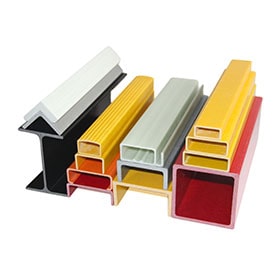
Pultrusion enables a high degree of customization without compromising production efficiency. Square tube dimensions, wall thickness, resin formulation, and surface texture can all be tailored to meet specific engineering requirements.
This flexibility allows FRP square tubes to be integrated seamlessly into steel-replacement strategies, modular construction systems, and electrically insulated structures.
Performance Advantages in Structural Applications
Pultruded FRP square tubes combine lightweight design with high strength, corrosion resistance, and low maintenance demands. Their predictable behavior and long service life make them an increasingly preferred solution in aggressive environments where traditional materials fall short.
Conclusion
The pultruded FRP square tube manufacturing process is not merely a production technique, but a controlled engineering system that balances materials science, thermal management, and mechanical design. Understanding this process enables engineers and procurement teams to make informed decisions when selecting composite square tube solutions.
For advanced pultrusion capabilities, custom mold development, and engineered FRP square tube solutions, visit www.frpzs.com to connect with experienced composite manufacturing specialists.