+86 15303735673
 Jessica@frpzs.com
 Technical Data


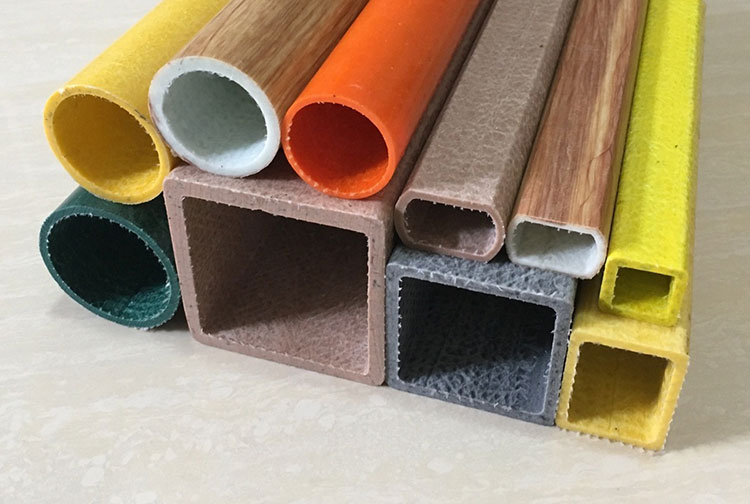
Selection Strategy: Choosing the right FRP profile (Fiberglass Reinforced Plastic) is a multi-dimensional engineering decision. It is not merely about shape and size, but about matching the chemical, thermal, and mechanical properties of the composite to the specific stressors of the environment. Henan Zhongsheng, with over 20 years of manufacturing experience, provides this comprehensive framework to ensure your infrastructure investment is optimized for performance and longevity.
1. Analyzing the Environment: The First Step
Before selecting a profile shape, you must define the "aggression level" of the installation site. Pultruded profiles can be custom-formulated to thrive where steel and aluminum fail.
- Chemical Exposure: Will the profiles encounter sulfuric acid, caustic soda, or saltwater? This dictates the Resin System (see Section 2).
- UV Intensity: For outdoor installations in high-exposure areas like deserts or tropical coasts, a Synthetic Surface Veil and UV stabilizers are mandatory to prevent fiber blooming.
- Temperature Extremes: Does the project involve cryogenic storage or high-heat industrial processing? The Glass Transition Temperature (Tg) of the resin must exceed the peak operating temperature.
2. Decoding Resin Systems: The Matrix Selection
The resin protects the glass fibers and determines the profile's environmental resistance. Selecting the wrong resin is the most common cause of premature failure.
| Resin Type | Performance Profile | Best Application |
|---|---|---|
| Isophthalic Polyester | Good industrial corrosion resistance; cost-effective. | Standard structural supports, walkways. |
| Vinyl Ester | Superior chemical resistance and higher toughness. | Chemical plants, saltwater piers, acid tanks. |
| Phenolic | Excellent fire resistance, low smoke, and toxicity (FST). | Tunnels, offshore oil rigs, subways. |
3. Mechanical Loading: Beyond Dimensions
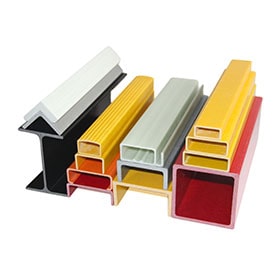
While the cross-sectional shape (I-Beam, Channel, Square Tube) provides the moment of inertia, the internal fiber architecture provides the strength. When evaluating FRP profiles, consider:
- Span-to-Deflection Ratio: FRP is more flexible than steel. Designers must check the deflection limits, not just the ultimate breaking strength.
- Anisotropic Properties: Pultruded profiles are strongest along the longitudinal axis. For localized high-torque connections, ensure the profile has sufficient transverse reinforcement.
4. Shape Selection for Structural Efficiency
The choice of profile shape significantly impacts the project's efficiency and cost:
- I-Beams & H-Beams: Best for long-span horizontal loads (floor joists, platform supports).
- Channels & Angles: Ideal for framing, bracing, and support structures for secondary equipment.
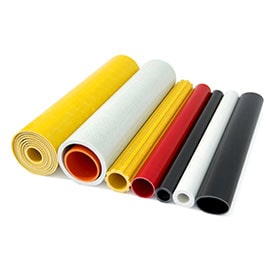
- Square & Round Tubes: Preferred for columns and handrails where multi-directional stiffness is required.
Technical FAQ: FRP Profile Selection
Q1: How do I know if I need Vinyl Ester or Polyester resin?
A: If your project involves constant exposure to strong acids or high-temperature corrosive fluids, Vinyl Ester is required. For standard outdoor structural use, Isophthalic Polyester offers the best value.
Q2: Can I paint FRP profiles if I need a specific color?
A: Yes, but it's better to have the color pigmented into the resin during manufacturing. This ensures the color remains consistent even if the surface is scratched.
Q3: Is FRP "fireproof"?
A: Composites are not inherently fireproof, but they can be Fire Retardant. We can add specific minerals (like Alumina Trihydrate) to meet ASTM E-84 Class A flame spread ratings.
Q4: Why should I choose Henan Zhongsheng for custom profiles?
A: We don't just "pull" profiles; we engineer them. With 20+ years of pultrusion technology expertise, we can customize the glass fiber content and resin chemistry to meet specific ASTM or ISO standards for your project.
Q5: How do I handle thermal expansion in long runs of FRP?
A: While FRP has a lower expansion coefficient than aluminum, it is higher than concrete. We recommend using slotted holes in connections to allow for thermal movement without buckling.
Q6: Does a thicker wall always mean a stronger profile?
A: Not necessarily. The fiber-to-resin ratio and the orientation of the fiberglass mats are more critical than pure thickness. A well-engineered 5mm wall can outperform a poorly made 8mm wall.
Expert Consultation for Your Next Composite Project
Henan Zhongsheng Composite Materials Co., Ltd. is committed to helping you navigate the complexities of fiberglass reinforced plastic. From technical drawings to final pultrusion, our team ensures you get the right profile for the job—delivered on time and within budget.
Contact Jessica Huang for an Engineering Review & Quote:
- Email: Jessica@frpzs.com
- WhatsApp: +86 15303735673
- Global Supply: Providing engineered FRP profiles to major infrastructure projects in India, USA, Europe, and the Middle East.