+86 15303735673
 Jessica@frpzs.com
 Technical Data


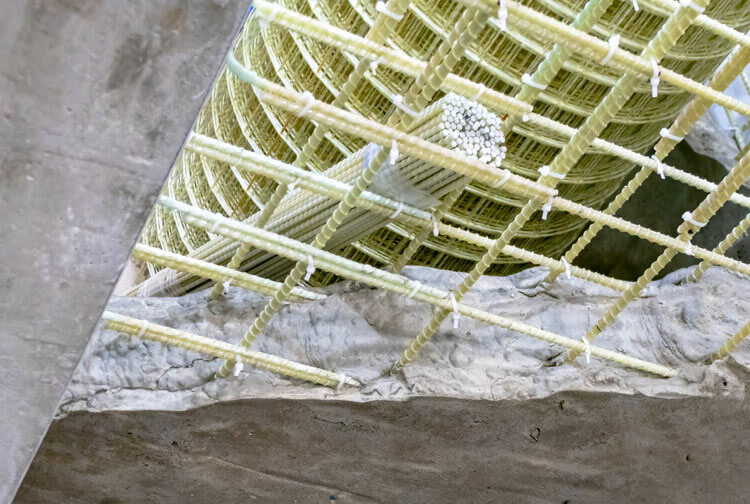
The Evolution of Reinforcement: Decoding GFRP Bars
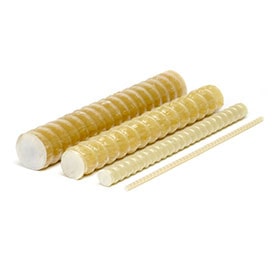
In the contemporary engineering landscape, Glass Fiber-Reinforced Polymer (GFRP) bars represent a paradigm shift in structural durability. By unifying high-strength E-glass or E-CR glass fibers with a resilient thermosetting polymer matrix (typically Vinyl Ester), gfrp rebar creates a reinforcement medium that is fundamentally immune to the oxidation issues that plague traditional carbon steel. At Henan Zhongsheng (FRPZS), we engineer our GFRP solutions to solve the "corrosion-spalling-repair" cycle that costs the global construction industry billions annually.
1. Mechanical Superiority & Material Science
Understanding Glass Fiber-Reinforced Polymer Bars requires a look at their anisotropic nature. Unlike steel, which is isotropic, GFRP offers targeted strength in the longitudinal direction, making it ideal for tension-heavy concrete reinforcement.
Key Technical Advantages
- High Tensile Strength: GFRP bars typically exhibit a tensile strength of 600 - 1200 MPa, significantly exceeding Grade 60 steel.
- Low Density (Weight Reduction): At approximately 1/4 the weight of steel, GFRP drastically reduces logistics costs and eliminates the need for heavy lifting machinery on-site, enhancing worker safety.
- Electromagnetic Neutrality: Being 100% non-conductive and non-magnetic, GFRP is the mandatory choice for MRI rooms, high-voltage substations, and sensitive electronic manufacturing facilities.
- Thermal Compatibility: The Coefficient of Thermal Expansion (CTE) of GFRP is closer to concrete than that of steel, reducing internal stresses during seasonal temperature fluctuations.
| Property Metric | Traditional Carbon Steel | Zhongsheng GFRP Rebar (Tier-1) | Project Impact |
|---|---|---|---|
| Corrosion Resistance | Low (Subject to rust) | Total (Immune to Chlorides) | 100-year design life |
| Tensile Strength | 400 - 500 MPa | 650 - 1100+ MPa | Superior crack control |
| Modulus of Elasticity | 200 GPa | 40 - 60 GPa | Requires specific design code (ACI 440) |
| Handling | Heavy / Requires Cranes | Ultra-Light / Manual Handling | Fast installation; lower labor cost |
| Electrical Conductivity | Conductive | Insulative | No interference with signals/power |
2. Strategic Applications Across Global Industries
The versatility of gfrp rebar allows it to outperform traditional materials in environments where durability is non-negotiable:
- Marine & Coastal Infrastructure: Seawalls, piers, and dry docks where saltwater exposure typically causes steel to expand and crack concrete within 10-15 years.
- Transportation & Smart Roads: Bridge decks and toll booths where de-icing salts are used, and where non-magnetic properties are required for inductive sensors in "Smart Highway" systems.
- Water Treatment & Desalination: High-chemical environments where traditional reinforcement would require expensive cathodic protection.
- Soft-Eye for Tunneling: Used in TBM (Tunnel Boring Machine) breakthrough sections because GFRP can be easily "cut through" by the machine, unlike steel.
3. A Candid Look at Design Considerations
While Glass Fiber-Reinforced Polymer Bars are revolutionary, professional procurement requires understanding their specific design constraints:
Elastic Modulus: GFRP has a lower modulus than steel. This is managed by engineers through slightly higher reinforcement ratios or using sand-coated surfaces to maximize bond strength with concrete.
Field Bending: Unlike steel, GFRP is a thermoset material and cannot be bent on-site. All stirrups, bends, and L-bars must be factory-prefabricated by Henan Zhongsheng based on your CAD drawings.
10 Critical FAQs for GFRP Rebar Procurement
Q1: "Is GFRP rebar actually more expensive than steel?"
A: On a per-ton basis, yes. But on a per-meter basis, the price gap narrows. When you factor in the elimination of cathodic protection and 50+ years of zero maintenance, the Total Lifecycle Cost is significantly lower.
Q2: "Does GFRP rebar require special concrete mixes?"
A: No. It works perfectly with standard Portland cement. Its alkali-resistant (AR) glass fibers and Vinyl Ester resin are designed specifically for the high-pH environment of concrete.
Q3: "How does UV exposure affect GFRP bars during storage?"
A: While the resin has UV inhibitors, we recommend covering GFRP rebar with tarps if stored outdoors for more than 3 months to maintain maximum surface integrity.
Q4: "Can GFRP rebar be used in seismic zones?"
A: Yes. Its high energy absorption and elastic behavior make it suitable, though specific seismic design codes (like ACI 440.1R) must be followed.
Q5: "What is 'Sand-Coating' and why is it important?"
A: We apply a layer of fine silica sand to the bar's surface. This creates a mechanical interlock with concrete that is significantly stronger than smooth or even ribbed bars.
Q6: "Can you provide custom lengths to reduce site waste?"
A: Absolutely. As a direct manufacturer, we can pultrude GFRP bars to any transportable length, significantly reducing the need for on-site cutting.
Q7: "How do I cut GFRP bars on-site?"
A: A standard circular saw or masonry blade is all you need. It is much faster to cut than steel and does not produce sparks.
Q8: "What is the shelf life of GFRP rebar?"
A: Indefinite. Unlike steel, which starts corroding the moment it's manufactured, GFRP remains structurally stable as long as it's kept away from extreme UV and high-heat sources.
Q9: "Is GFRP rebar sustainable for 'Green Building' certifications?"
A: Yes. Its lower transport emissions (due to light weight) and 100-year lifespan contribute significantly to LEED and other sustainability ratings.
Q10: "Does Henan Zhongsheng provide certification for ASTM standards?"
A: Every batch of our GFRP rebar is tested for tensile strength and bond performance, with certificates of compliance provided for your engineering records.
Future-Proof Your Infrastructure with GFRPZS
As a global leader in composite reinforcement, Henan Zhongsheng Composite Materials Co., Ltd. provides more than just Glass Fiber-Reinforced Polymer Bars; we provide engineering peace of mind. Our team, led by Jessica Huang, is ready to assist with project volume calculations, technical data sheets, and competitive global shipping quotes.
Connect with our technical export team today:
- Technical Director: Jessica Huang
- Direct Email: Jessica@frpzs.com
- Global WhatsApp: +86 15303735673