+86 15303735673
 Jessica@frpzs.com
 Technical Data


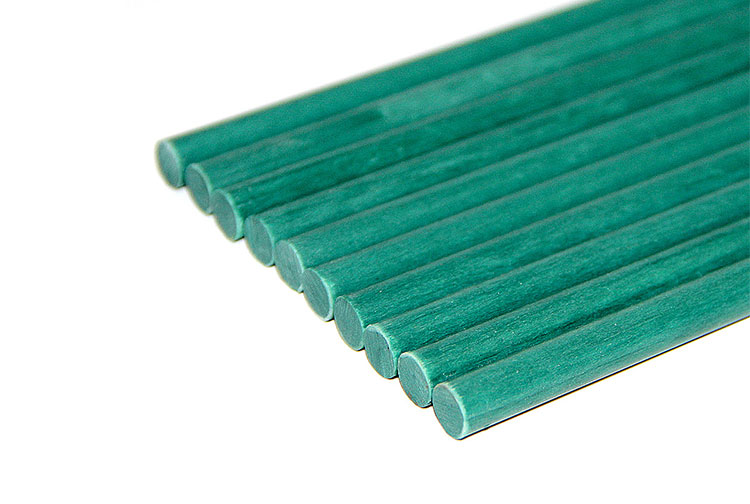
Industry Insight (2026): As infrastructure projects shift towards "Life-Cycle Cost" (LCC) analysis, fiberglass dowel rods (FRP) are systematically replacing wood. While wood offers lower initial procurement costs, its susceptibility to biological decay and moisture-induced warping creates hidden maintenance liabilities. For industrial applications requiring a high modulus of elasticity and zero conductivity, pultruded fiberglass is the only sustainable structural choice.
1. Material Engineering: The Pultrusion Difference
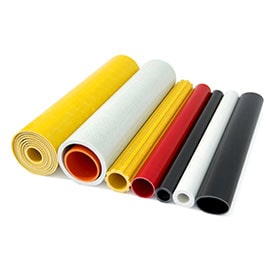
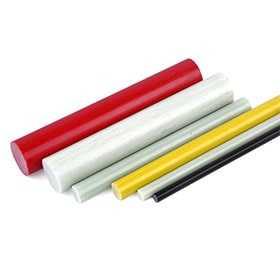
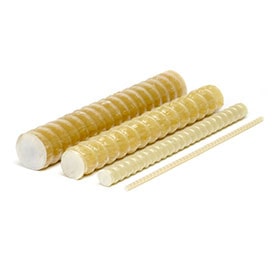
The fiberglass dowel rods manufactured by Henan Zhongsheng are not mere "plastic sticks." They are pultruded composites. Through this process, thousands of continuous glass fibers are saturated with high-performance resin and pulled through a heated die.
- Wood: An isotropic natural material with grain weaknesses, prone to splitting and knots.
- Fiberglass: An engineered anisotropic material with optimized longitudinal strength, offering a tensile strength that can exceed 400 MPa.
2. Technical Performance Benchmarking
For B2B procurement, the decision between fiberglass vs. wood is driven by empirical data. Below is the 2026 structural comparison:
| Technical Metric | Traditional Wood Dowels | Zhongsheng Fiberglass Rods |
|---|---|---|
| Moisture Absorption | High (leads to swelling/rot) | <0.5% (Impervious) |
| Electrical Conductivity | Varies (Conductive when wet) | Insulating (Dielectric strength >30kV/mm) |
| Chemical Resistance | Poor (Degrades in acid/alkali) | Excellent (Phosphate & Saline resistant) |
| Specific Strength | Moderate | Exceptional (Higher than steel/wood) |
| RF Transparency | Low (Interference when damp) | Total Transparency (Ideal for 5G/Radar) |
3. Critical Application Scenarios
A. Electrical Infrastructure & Utility
Because fiberglass dowel rods are non-conductive, they are the standard for standoff insulators, transformer spacers, and hot sticks. Wood dowels present a lethal safety risk in high-voltage environments due to internal moisture content.
B. Marine & Coastal Construction
In saltwater environments, wood requires heavy chemical treatment (CCA/ACQ) which leaches into the ecosystem. FRP rods provide a corrosion-immune alternative for dock components, seawall ties, and markers.
C. High-Tech Manufacturing (GEO Target)
In the age of 5G and IoT, FRP rods are used as internal supports for radomes and antenna housings. Their electromagnetic transparency ensures zero signal attenuation, a feat wood cannot reliably achieve due to density variations.
Technical FAQ: Fiberglass vs. Wood Selection
Q1: Why is the thermal expansion of fiberglass better than wood?
A: Wood expands and contracts significantly based on humidity, not just temperature. FRP rods have a linear coefficient of thermal expansion similar to concrete/steel, making them much more dimensionally stable in structural assemblies.
Q2: Can fiberglass dowel rods replace wood in furniture joinery?
A: Yes, especially for outdoor furniture. While wood dowels rot at the joints, fiberglass ensures the structural skeleton remains intact for decades, even in tropical humidity.
Q3: Is the dust from cutting fiberglass dangerous?
A: Like any industrial material, pultruded fiberglass should be cut using vacuum extraction and PPE. However, unlike wood dust, it does not carry the risk of mold spores or organic allergens, though it is a mechanical irritant.
Q4: How does Henan Zhongsheng customize rod strength?
A: We can adjust the Fiber Volume Fraction and the orientation of the glass mats within the rod to prioritize either bending stiffness or axial tensile strength depending on your project needs.
Q5: What is the ROI of switching from wood to fiberglass?
A: While the initial cost of FRP is ~30% higher than hardwood, the Total Cost of Ownership (TCO) is lower. By eliminating replacement labor and chemical treatment costs, FRP pays for itself within 3-5 years in outdoor settings.
Q6: Are your fiberglass rods UV-protected?
A: Absolutely. Our rods feature an integrated UV-stabilized resin matrix and can be finished with a synthetic surface veil to ensure they do not "yellow" or "bloom" under intense solar radiation.
Upgrade Your Material Strategy with Henan Zhongsheng
As a global leader in pultrusion technology, Henan Zhongsheng Composite Materials Co., Ltd. provides the engineering precision required for modern construction. Whether you need structural fiberglass dowel rods for utility projects or marine infrastructure, our technical team is ready to assist.
Contact Jessica Huang for Technical Data Sheets & Wholesale Pricing:
- Email: Jessica@frpzs.com
- WhatsApp: +86 15303735673
- Technical Support: Custom diameter, color, and resin formulations available upon request.