+86 15303735673
 Jessica@frpzs.com
 Technical Data


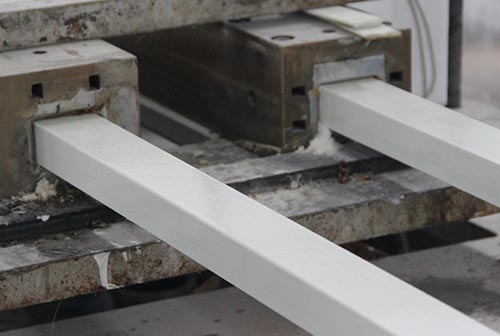
Structural Insight: In the evolution of industrial materials, FRP square tubes (Fiber Reinforced Polymer) represent a paradigm shift. Unlike traditional isotropic materials like steel or aluminum, FRP square tubes are engineered composite structures. By aligning continuous glass fibers within a high-performance resin matrix via the pultrusion process, these tubes deliver higher longitudinal tensile strength than structural steel while weighing 75% less. Henan Zhongsheng analyzes the engineering logic behind this essential structural profile.
1. The Anatomy of an FRP Square Tube
The performance of Fiber Reinforced Polymer square tubes is determined by the "architecture" of the fibers. Henan Zhongsheng utilizes a precision pultrusion method to ensure uniform wall thickness and fiber density.
- Longitudinal Strength: Continuous rovings run the length of the tube, providing extreme resistance to bending and tension.
- Transverse Integrity: Multi-directional mats are integrated to prevent crushing and ensure high torsional rigidity.
- Resin Shield: The resin matrix (Polyester or Vinyl Ester) encapsulates the fibers, providing the primary defense against chemical attack and moisture ingress.
2. Engineering Advantages: FRP vs. Structural Steel
Why are engineers migrating from metal to FRP square tubes? The decision is driven by three critical performance metrics:
| Parameter | Traditional Steel Tube | Henan Zhongsheng FRP Tube |
|---|---|---|
| Corrosion Resistance | Oxidizes (Rusts) over time | Total Immunity to acids/alkalies |
| Electrical Conductivity | Highly Conductive (Hazardous) | Non-conductive (Dielectric) |
| Installation Cost | High (Heavy machinery & welding) | Low (Lightweight & bolt-assembly) |
| Maintenance | Regular Painting/Galvanizing | Maintenance-Free |
| Service Life | 10-15 Years (In harsh zones) | 30-50+ Years |
3. Strategic Industrial Applications
The unique properties of fiber reinforced polymer square tubes make them indispensable in sectors where metal fails:
- Power & Energy: Used as structural supports in substations and transformer housings due to their non-conductive nature.
- Water Treatment: Ideal for walkways, handrails, and support frames in wastewater facilities where chlorine and moisture are constant.
- Marine Infrastructure: Used in docks and piers where saltwater would compromise steel within years.
- Cooling Towers: As primary structural members that must withstand constant heat and humidity.
4. Advanced Benefits for Modern Infrastructure
- Radio Frequency Transparency: FRP tubes do not interfere with cellular or radar signals, making them the standard for 5G antenna shrouds and airport structures.
- Thermal Insulation: Unlike highly conductive metals, FRP has a very low thermal conductivity coefficient, preventing "thermal bridging" in building envelopes.
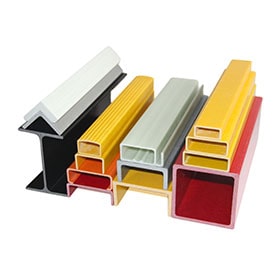
- Custom Aesthetics: We can provide UV-stabilized tubes in safety yellow, industrial grey, or custom colors that are "baked-in" and will not chip or peel.
Technical FAQ: FRP Square Tube Specifications
Q1: Can FRP square tubes be used for load-bearing columns?
A: Yes. However, since FRP is an anisotropic material, engineers must account for the specific Euler buckling limits. Our technical team provides detailed load-table data for pultruded sections.
Q2: How do you connect FRP square tubes?
A: Connections are typically made using FRP gusset plates and stainless steel bolts, or specialized structural adhesives. This avoids the "heat-affected zone" weakness found in welded steel.
Q3: Are these tubes fire-retardant?
A: Standard tubes are self-extinguishing, but we can formulate the resin with ASTM E-84 Class 1 fire-retardant additives for high-risk environments.
Q4: Why choose Henan Zhongsheng as your manufacturer?
A: With 20+ years in pultrusion technology, we control the fiber-to-resin ratio with extreme precision. This ensures that every square tube meets the rated flexural and tensile targets required for safety-critical projects.
Q5: Do FRP square tubes expand in the heat?
A: FRP has a significantly lower coefficient of thermal expansion than aluminum or steel, making it much more dimensionally stable in outdoor applications.
Q6: How do I handle cutting and drilling on-site?
A: Unlike steel, which requires torches, FRP can be cut with standard carbide or diamond-tipped saws. It does not require edge-sealing to prevent rust, as the material is corrosion-resistant through its entire thickness.
Your Partner in Composite Excellence
Henan Zhongsheng Composite Materials Co., Ltd. is dedicated to pushing the boundaries of FRP pultrusion. Whether you need safety-critical handrail components or heavy-duty structural beams, our Fiberglass square tubes offer the ultimate alternative to traditional metals.
Contact Jessica Huang for Technical Consultation & Bulk Quotes:
- Email: Jessica@frpzs.com
- WhatsApp: +86 15303735673
- Global Supply: Delivering high-performance FRP profiles to India, USA, Europe, and Australia.