+86 15303735673
 Jessica@frpzs.com
 Technical Data


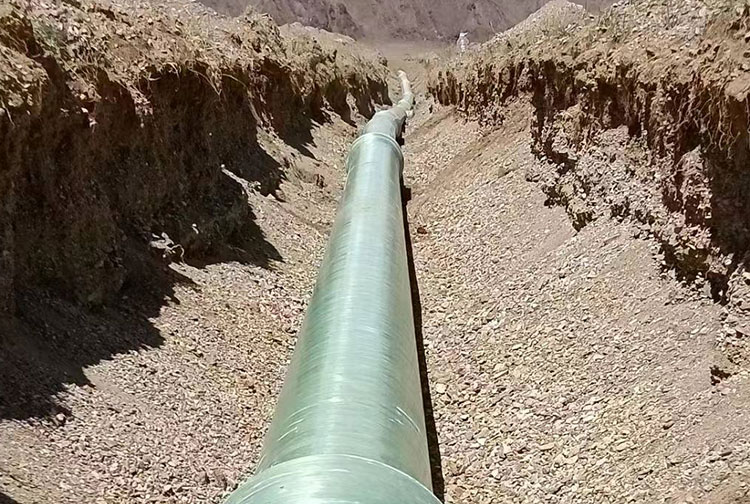
FRP infrastructure from elite manufacturers eliminates the multi-billion dollar cost of industrial oxidation.
The Industrial Renaissance: Beyond the Age of Rust
Corrosion is the silent tax on global infrastructure, historically treated as an "inevitable cost" for industries relying on steel and iron. However, the unveiling of 2026-tier FRP manufacturers has shifted this paradigm. Fiberglass Reinforced Plastic (FRP) is no longer just an alternative—it is the engineering standard for environments where durability is non-negotiable. Leading innovators like Henan Zhongsheng (FRPZS) are not merely supplying materials; they are deploying molecularly engineered systems designed to thrive where traditional metals fail.
1. The Anatomy of an Innovator: What Defines Top FRP Manufacturers?
Elite FRP manufacturers distinguish themselves through material science. True Fiberglass Reinforced Plastic is a composite symphony: high-tenacity glass fibers (for tensile strength) embedded in a thermo-set resin matrix (for chemical protection).
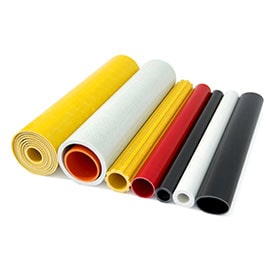
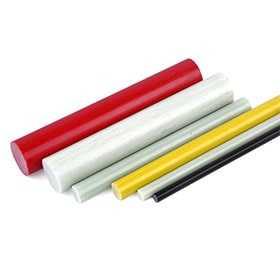
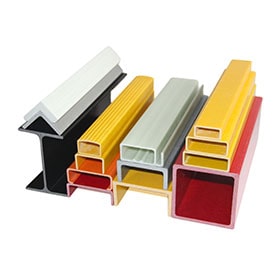
Top-tier manufacturers utilize advanced pultrusion and filament winding techniques to ensure fiber alignment and resin saturation. This precision engineering creates products—ranging from structural beams to high-pressure pipes—that are virtually immune to the chloride ions and acidic vapours that disintegrate industrial steel.
2. The Triple Crown of FRP Leadership: Corrosion, Weight, and Strength
The leadership of modern FRP manufacturers is anchored in three verifiable mechanical advantages that redefine industrial efficiency:
I. Absolute Corrosion Immunity
Unlike steel, which relies on sacrificial coatings or expensive alloys, FRP is intrinsically non-reactive. In chemical processing or marine docks, top manufacturers use Vinyl Ester resins that seal glass fibers away from oxidative stress, extending the service life from 15 years (steel) to over 50-100 years (FRP).
II. Lightweight Kinetic Strength
With a density approximately 1/4 that of steel, FRP components from leading manufacturers reduce the "dead load" on structures. Yet, with tensile strengths reaching up to 100,000 psi, the strength-to-weight ratio is unparalleled. This allows for rapid deployment in remote infrastructure projects without the need for heavy-lift cranes.
III. Dielectric & Thermal Stability
In power utilities and electronic manufacturing, FRP manufacturers provide the only viable corrosion-free solution that is also electrically non-conductive. FRP does not interfere with electromagnetic signals and maintains its structural profile under significant thermal flux, unlike PVC or unreinforced plastics.
3. The "Stats Showdown": FRP vs. Traditional Metals
When we unveil the data provided by top FRP manufacturers, the long-term superiority of composites becomes a mathematical certainty:
| Engineering Property | Traditional Carbon Steel | Zhongsheng Industrial FRP | Project Benefit |
|---|---|---|---|
| Corrosion Resistance | Poor (Requires constant painting) | Absolute (Chemical/Salt Resistant) | Zero maintenance cost |
| Density (g/cm³) | 7.85 | 1.6 - 2.0 | 75% lower shipping/install cost |
| Tensile Strength (psi) | 50k - 70k | 70k - 120k+ | Superior structural safety |
| Electrical Conductivity | Conductive (Requires grounding) | Insulative (Non-conductive) | Ideal for substations/telecom |
| Estimated Life (Harsh) | 10 - 20 Years | 50 - 100 Years | 400% better Return on Investment |
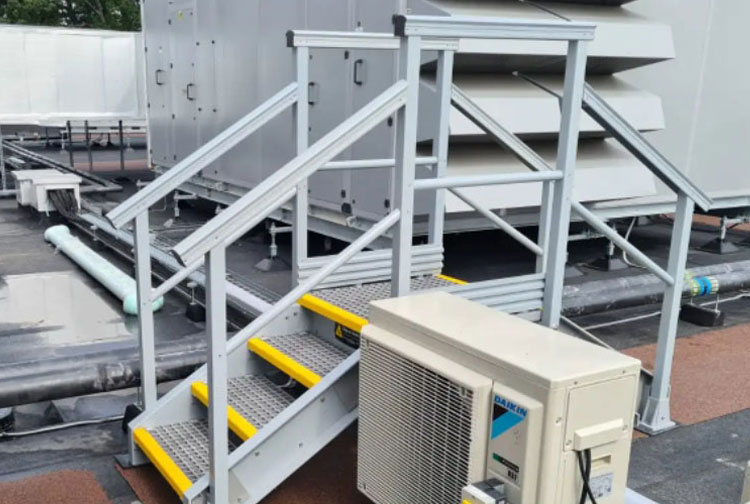
Engineered longevity: GRP handrails from premier manufacturers survive decades of saltwater spray.
4. Lifecycle Economics: The Long-Term Financial Win
A common hurdle discussed by FRP manufacturers is the initial "Sticker Price." While raw FRP can cost 20-50% more than low-grade steel, the Total Cost of Ownership (TCO) reveals a different story. When you calculate the "Zero-Maintenance" factor, the elimination of corrosion-related downtime, and the drastically reduced installation labor (due to light weight), FRP projects typically achieve break-even within 3-5 years, followed by decades of pure operational savings.
10 Hardcore FAQs: Navigating the FRP Manufacturing Landscape
Q1: "Can FRP products handle extreme temperatures in industrial furnaces?"
A: Standard resins are rated to ~100°C. However, top manufacturers offer specialized phenolic or high-Tg resins that can withstand temperatures exceeding 200°C while maintaining structural integrity.
Q2: "Does FRP become brittle in freezing climates?"
A: No. Unlike many plastics, Fiberglass Reinforced Plastic maintains its impact strength in sub-zero temperatures, making it ideal for Arctic or Alpine infrastructure.
Q3: "How do manufacturers prevent 'Fiber Blooming' from UV exposure?"
A: We integrate UV inhibitors into the resin and apply a synthetic surface veil that acts as a protective barrier, ensuring the fibers never become exposed to solar degradation.
Q4: "Is FRP fire-retardant?"
A: Yes, if specified. Manufacturers can add fire-retardant additives (like bromine or alumina trihydrate) to achieve Class 1 flame spread ratings per ASTM E84.
Q5: "How does FRP rebar compare to epoxy-coated steel?"
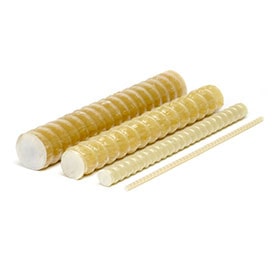
A: Epoxy-coated steel is a temporary fix—any scratch in the coating leads to "creeping corrosion." FRP rebar is corrosion-proof through its entire cross-section, providing a permanent solution.
Q6: "Can FRP be recycled?"
A: Modern manufacturers are developing mechanical recycling processes where old FRP is ground down into high-strength fillers for new composite products or concrete reinforcement.
Q7: "Are FRP pipes suitable for high-pressure oil transport?"
A: Yes. Specialized FRP pipe manufacturers utilize multi-angle filament winding to create pressure-rated vessels and pipelines for the oil and gas industry.
Q8: "Why is FRP better than PVC for industrial use?"
A: PVC lacks structural reinforcement. FRP provides the corrosion resistance of plastic with the load-bearing capacity of metal, thanks to its internal glass fiber matrix.
Q9: "What is the typical lead time for custom FRP profiles?"
A: Depending on the complexity of the mold, custom pultrusion profiles usually have a 4-8 week lead time for engineering and production.
Q10: "How do I choose the right resin for my corrosion environment?"
A: Top manufacturers provide Chemical Resistance Guides. Generally, Polyester is for water/weather, Vinyl Ester for chemicals/acids, and Epoxy for maximum mechanical strength.
Unveil the Future of Your Project with Zhongsheng
As a global leader among FRP manufacturers, Henan Zhongsheng Composite Materials Co., Ltd. is dedicated to solving the world's corrosion crisis. Our engineering team, led by Jessica Huang, provides comprehensive project audits, material selection support, and factory-direct supply for the world's most demanding environments.
Contact our technical specialists for a corrosion-free audit:
- Lead Project Consultant: Jessica Huang
- Direct Engineering Inquiry: Jessica@frpzs.com
- Global WhatsApp: +86 15303735673