+86 15303735673
 Jessica@frpzs.com
 Technical Data


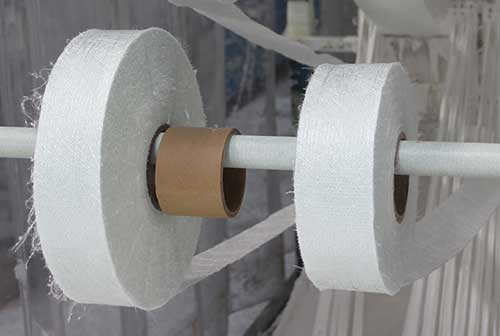
Zhongsheng Innovation: Leveraging CSM for high-performance pultruded structural components.
The Science of Multi-Directional Reinforcement
In the evolving landscape of 2026 infrastructure, Fibre Reinforced Plastic (FRP) profiles have transcended traditional material limits. At Henan Zhongsheng (FRPZS), we have optimized the integration of Chopped Strand Mat (CSM)—a non-woven mat of randomly oriented short glass fibers—to solve the inherent weaknesses of unidirectional composites. While rovings provide longitudinal strength, CSM acts as the critical "binding network" that ensures structural integrity in multi-axial stress environments.
1. Mechanical Transformation: How CSM Enhances Performance
Integrating CSM into the pultrusion layup isn't just about cost-efficiency; it’s about engineering a superior mechanical response. Our 2026 production standards highlight four key performance leaps:
I. 50% Surge in Impact Resistance
Unlike woven fabrics that have defined "weak planes," the random fiber orientation of CSM creates an isotropic energy-dissipation zone. When an FRP profile faces a sudden blow, the CSM layer absorbs and spreads the energy across a wider area, preventing delamination and shattering.
II. Optimized Flexural & Transverse Strength
Standard pultrusion is incredibly strong along its length but vulnerable to transverse (side-to-side) splitting. CSM provides the transverse reinforcement necessary to handle bending loads and prevents the profile from "zipping" open when bolted or stressed laterally.
III. Significant Weight Reduction (The 50% Factor)
By using CSM in strategic layers, we can achieve the same structural rigidity as thicker, heavy-weave alternatives. This allows for weight savings of up to 50% compared to traditional metallic-reinforced composites, drastically lowering shipping costs and labor requirements during installation.
IV. Premium Surface Finish & Coating Adhesion
CSM serves as a protective "veil" that hides the underlying coarse roving pattern. This results in a smooth, resin-rich surface that is ideal for UV-resistant painting or protective coatings, essential for industrial manufacturing applications.
2. Diverse Applications: CSM in Action
| Industry Sector | Application Example | The CSM Advantage |
|---|---|---|
| Construction | Beams, Trusses, Support Columns | Prevents longitudinal splitting under heavy torque. |
| Transportation | Truck Bodies, Boat Hulls, Bus Panels | High shatter resistance for crash safety. |
| Industrial | Conveyor Systems, Pipes, Storage Tanks | Smooth internal bore for improved flow and chemical resistance. |
3. Sustainability & Efficiency: The Zhongsheng Commitment
Our commitment to 2026 environmental standards means our CSM is increasingly sourced from recycled glass streams. Beyond the mechanical benefits, using CSM reduces manufacturing downtime because it conforms better to complex pultrusion dies than rigid woven fabrics, lowering scrap rates by up to 15%.
10 Professional FAQs: Implementing CSM in FRP
Q1: "Is CSM a replacement for unidirectional roving?"
A: No. CSM and roving work in tandem. Roving handles the tension (longitudinal), while CSM provides the "toughness" and transverse strength.
Q2: "Does CSM increase the resin consumption?"
A: Yes, CSM typically has a higher resin-to-glass ratio, which is actually beneficial for chemical resistance and surface smoothness.
Q3: "Can I use CSM-reinforced profiles in offshore marine environments?"
A: Absolutely. The resin-rich surface created by CSM is an excellent barrier against saltwater ingress and osmotic blistering.
Q4: "How does CSM affect the dielectric properties?"
A: It maintains high electrical insulation. In fact, the uniform surface prevents "arcing" that can occur with exposed coarse fibers.
Q5: "Why is CSM cheaper than woven fabric?"
A: The manufacturing process for CSM is faster and less energy-intensive than weaving, and it utilizes chopped strands which are more cost-effective to produce.
Q6: "Can CSM handle extreme temperatures?"
A: Yes. The random orientation helps manage thermal expansion more uniformly across the profile axes compared to woven materials.
Q7: "Will the profile be more flexible with CSM?"
A: CSM increases the energy-absorption (toughness), but the overall stiffness is determined by the total fiber volume and resin type.
Q8: "Is it easier to drill holes in CSM profiles?"
A: Much easier. CSM helps the material resist "burring" and delamination during drilling and cutting.
Q9: "Does CSM help with fire retardancy?"
A: Indirectly, by holding a higher concentration of fire-retardant resin at the surface where it is most needed.
Q10: "How do I specify the amount of CSM I need?"
A: Our engineering team at Zhongsheng can calculate the ideal CSM weight (e.g., 300g/m² vs 450g/m²) based on your project's load requirements.
Expert Material Consultation with Zhongsheng
Drive your project's performance with the engineering expertise of Henan Zhongsheng Composite Materials Co., Ltd. Led by Jessica Huang, our team provides technical support, custom pultrusion layups, and global logistics for high-demand industries.
Connect with our technical team today:
- Lead Technical Consultant: Jessica Huang
- Direct Engineering Inquiry: Jessica@frpzs.com
- Global WhatsApp: +86 15303735673
- Technical Library: www.frpzs.com
- Follow our Innovation: LinkedIn | YouTube