+86 15303735673
 Jessica@frpzs.com
 Technical Data


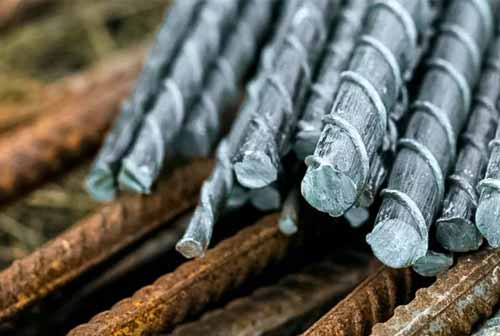
Engineering Perspective: While Glass Fiber Reinforced Polymer (GFRP) rebar is celebrated for its immunity to chloride-induced corrosion, it is not a direct "drop-in" replacement for steel. Success in composite reinforcement requires a deep understanding of its mechanical divergence. Henan Zhongsheng, a leader in FRP pultrusion, believes that acknowledging the disadvantages of fiberglass rebar is the first step toward superior structural design and long-term infrastructure safety.
1. Mechanical Constraints: The Modulus Challenge
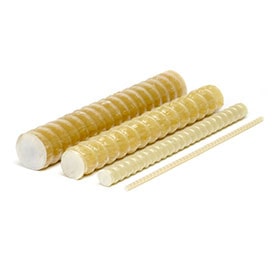
The most significant disadvantage of fiberglass rebar is its relatively low Modulus of Elasticity. Standard GFRP rebar typically has a modulus around 40-60 GPa, which is approximately 20% to 25% that of carbon steel (200 GPa).
In practical engineering, this means that GFRP-reinforced concrete members are often governed by serviceability limit states—specifically deflection and crack width control—rather than ultimate strength. Engineers must compensate for this by using larger rebar diameters or optimized spacing to ensure the structure meets stiffness requirements under service loads.
Technical Comparison: GFRP Rebar vs. Traditional Steel
| Property | Standard Reference | GFRP Rebar | Carbon Steel (Grade 60) |
|---|---|---|---|
| Tensile Strength | ASTM D7205 | 600 - 1000+ MPa | 415 - 500 MPa |
| Elastic Modulus | ASTM D7205 | 40 - 60 GPa | 200 GPa |
| Yield Point | Stress-Strain Curve | None (Linear Elastic) | Clear Yielding |
| Density | Specific Gravity | ~2.0 g/cm³ | ~7.8 g/cm³ |
| Coefficient of Thermal Expansion | Transverse/Long. | Anisotropic (High Transverse) | Isotropic (12 x 10⁻⁶/°C) |
2. Brittle Behavior and Ductility Considerations
Unlike steel, which exhibits ductile behavior (stretching before breaking), GFRP is a linear-elastic material until failure. It does not "yield." While GFRP has a much higher ultimate tensile strength than steel, it fails suddenly when its limit is reached.
To mitigate this, international codes like ACI 440.1R mandate higher safety factors (reduction factors) for GFRP. Designers ensure that concrete crushing occurs before rebar rupture—a design philosophy that provides the necessary "warning" before structural failure, effectively managing the disadvantages of GFRP.
3. Fire Resistance and Thermal Sensitivity
The performance of fiberglass rebar at high temperatures is limited by the Glass Transition Temperature (Tg) of its polymer matrix. Most standard resins begin to soften between 100°C and 150°C. Once the resin loses its bond with the glass fibers, the load-transfer mechanism fails.
However, this is rarely a deal-breaker for infrastructure like bridge decks or sea walls. For building applications, Zhongsheng offers specialized High-Tg resin systems and ensures that the concrete cover provides the necessary thermal insulation to meet fire-rating requirements.
Expert FAQ: Navigating GFRP Rebar Limitations
Q1: Why can't you bend GFRP rebar on-site?
A: Because the resin matrix is thermoset (permanently cured), fiberglass rebar cannot be bent after it leaves the pultrusion die. All hooks and bends must be custom-manufactured at our factory. This requires precise planning and detailing during the design phase.
Q2: Is the "Higher Initial Cost" of GFRP a major disadvantage?
A: Only if looking at CAPEX. When considering Life Cycle Cost (LCC), GFRP is significantly cheaper for marine or high-salt environments. It eliminates the need for expensive cathodic protection and future concrete spalling repairs, often paying for itself within 10-15 years.
Q3: Does GFRP rebar float in concrete during pouring?
A: Due to its lightweight properties (1/4 the weight of steel), GFRP can "float" if not secured properly. We recommend tighter tying intervals and plastic chairs to maintain the correct concrete cover during vibration.
Q4: How does UV exposure affect GFRP rebar before installation?
A: Prolonged UV exposure can degrade the surface resin. While the internal structural fibers remain protected, it is best practice to store GFRP rebar under covers if it will be exposed to sunlight for more than 30 days on-site.
Q5: Can GFRP rebar be used in seismic zones?
A: Yes, but with specific design considerations. Because it lacks steel's energy-dissipating ductility, designers rely on the higher strength and elastic strain capacity of GFRP, often combined with specialized concrete confinement techniques.
Q6: Is GFRP rebar susceptible to alkaline attack within concrete?
A: Historically, yes. However, Zhongsheng uses Boron-free E-CR glass fibers and high-performance vinylester resins that are specifically engineered to resist the high-pH environment of concrete, ensuring 50+ years of durability.
Structural Excellence with Henan Zhongsheng
At Henan Zhongsheng Composite Materials Co., Ltd., we don't just manufacture fiberglass rebar; we provide technical solutions. By understanding both the strengths and limitations of GFRP, we help engineers design more resilient, corrosion-free structures. Trust our 20 years of pultrusion expertise for your next infrastructure project.
Contact Jessica Huang for Technical Data & Quotes:
- Email: Jessica@frpzs.com
- WhatsApp: +86 15303735673
- Certified Quality: Supplying ASTM-compliant GFRP solutions to India, Australia, and North America.