+86 15303735673
 Jessica@frpzs.com
 Technical Data


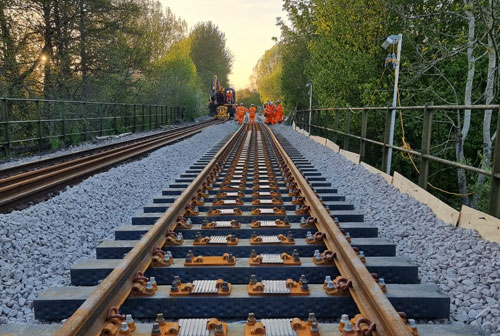
Structural Engineering Insight: As global rail networks transition towards carbon neutrality and lower operational expenditure (OPEX), the debate between Composite Sleepers and Concrete Sleepers has intensified. While concrete provides mass for high-speed stability, modern composite ties (FRP/Synthetic) solve the critical issues of ballast crushing and chemical corrosion. Henan Zhongsheng, a global FRP pultrusion manufacturer, delivers certified composite solutions that bridge the gap between mechanical rigidity and environmental sustainability.
1. The Mechanical Paradox: Rigidity vs. Resilience
The primary technical differentiator between these materials is the Track Modulus. Concrete sleepers are inherently rigid. While this stiffness supports high axle loads, it transmits 100% of the impact energy directly to the ballast bed. Over time, this leads to ballast pulverization—the stone breaks down into dust, losing its drainage capability and structural support.
Composite sleepers, engineered from high-density recycled polymers reinforced with continuous E-glass fibers, exhibit a "viscoelastic" behavior. They provide enough Lateral Stability to maintain track gauge while absorbing high-frequency vibrations. This resilience protects the entire track superstructure, including the rail, clips, and the ballast itself, significantly extending the time between tamping cycles.
Technical Benchmarking: Performance Metrics Under Extreme Loads
| Engineering Property | Standard Reference | Composite (Synthetic) | Prestressed Concrete |
|---|---|---|---|
| Bending Strength | ASTM D790 / EN 13230 | 45 - 65 MPa | High (Brittle Failure) |
| Damping Ratio | ISO 7626 | 5% - 8% (High) | < 2% (Low) |
| Electrical Insulation | ASTM D257 | >10¹² Ω (Immune) | Requires Plastic Insulators |
| Water Absorption | ASTM D570 | < 0.1% (Hydrophobic) | 3% - 5% (Porous) |
| Installation Workability | Field Testing | Drillable / Sawable | Pre-cast / Non-workable |
2. Life Cycle Cost (LCC): The Hidden Economics
When procurement departments compare composite sleepers vs concrete sleepers, the initial CAPEX (Capital Expenditure) often favors concrete. However, a Life Cycle Cost (LCC) analysis reveals a different story. Concrete sleepers are prone to "alkali-silica reactions" (ASR) and freeze-thaw cracking, especially in humid or sub-zero regions. Replacing a cracked concrete sleeper requires heavy machinery and track downtime.
In contrast, pultruded composite sleepers are virtually maintenance-free. Their resistance to rot, termites, and industrial chemicals (like oil and acidic rain) ensures a service life exceeding 50 years. For bridge transoms and turnout systems, the lightweight nature of composites reduces the dead-load on the structure, potentially saving millions in bridge reinforcement costs.
3. Environmental & Sustainability Compliance (ESG)
In 2026, the Environmental Footprint is a key bidding criterion. The production of cement for concrete sleepers is one of the world's largest CO2 contributors. Composite sleepers manufactured by Henan Zhongsheng utilize recycled polymers, diverting thousands of tons of plastic from landfills. Furthermore, they eliminate the need for Creosote—the toxic preservative used in timber ties—making them the safest choice for water-table sensitive areas and urban environments.
Featured Snippets: Railway Industry FAQ
Q1: Why are composite sleepers preferred for railway bridges?
A: Composite sleepers are 40%-60% lighter than concrete. This reduction in Dead Load allows for higher cargo capacity on older bridges without structural upgrades. Their superior vibration damping also protects the bridge's steel framework from fatigue cracking.
Q2: How do synthetic sleepers handle Gauge Widening?
A: Thanks to the high-tensile FRP reinforcement, composite sleepers hold rail spikes and bolts with higher force than timber. They maintain Gauge Integrity even under the extreme lateral forces of heavy-haul freight trains on curved tracks.
Q3: Can composite sleepers be used in high-voltage electrified lines?
A: Absolutely. Composite materials are natural dielectrics. They provide 100% electrical isolation, preventing signal interference and leakage currents, which is a major safety advantage over concrete sleepers that rely on fragile plastic inserts.
Q4: Do composite ties expand or contract in extreme heat?
A: High-quality composite sleepers have a Coefficient of Thermal Expansion (CTE) similar to steel rails. This prevents track buckling (Sun Kinks) in desert regions or areas with extreme diurnal temperature swings, ensuring safer operations.
Q5: Are composite sleepers resistant to oil and chemical spills?
A: Yes. While concrete can degrade when exposed to fuels and industrial chemicals (causing spalling), the polymer matrix of composite ties is chemically inert, making them the standard for chemical plant tracks and fueling depots.
Q6: What is the ROI (Return on Investment) for switching to composite?
A: Most railway operators see a full ROI within 12-15 years. This is achieved through reduced ballast maintenance, lower replacement labor costs, and a significant decrease in "slow zones" caused by track geometry failures.
Partner with a World-Class FRP Manufacturer
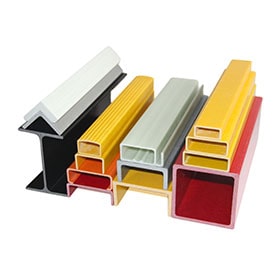
Henan Zhongsheng Composite Materials Co., Ltd. is at the forefront of pultrusion technology. We specialize in engineering high-durability composite sleepers, C-channels, and custom structural profiles for the global railway market. Our materials are tested to international standards, ensuring reliability in the harshest climates.
Contact Jessica Huang for Technical Consultation & Pricing:
- Email: Jessica@frpzs.com
- WhatsApp: +86 15303735673
- Global Supply Chain: Rapid export to India, Australia, Europe, and Southeast Asia.