+86 15303735673
 Jessica@frpzs.com
 Technical Data


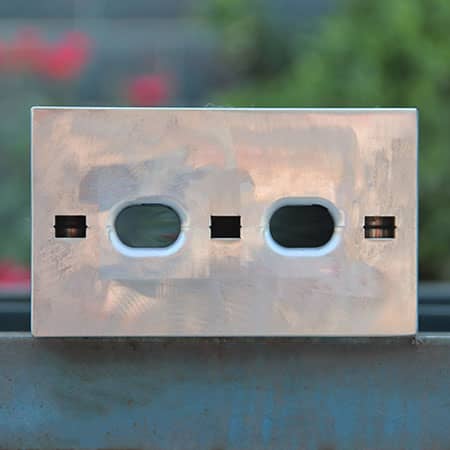
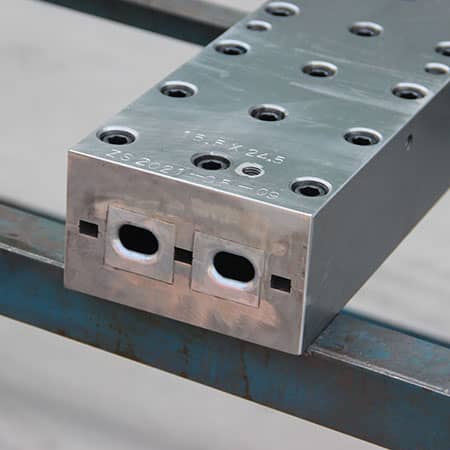
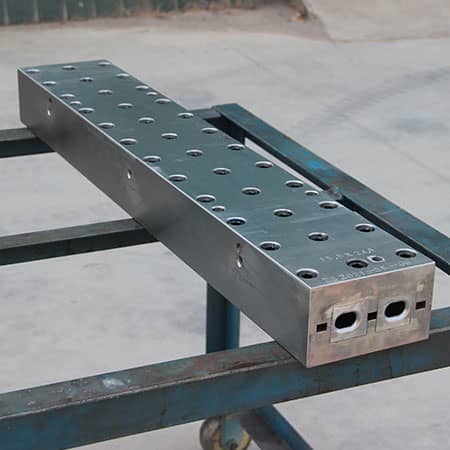
Advanced Tooling for Industrial Oval Rod Profiles
In the 2026 industrial landscape, Oval FRP Rods are increasingly preferred for specialized applications like high-voltage insulation, tool handles, and ergonomic structural supports. The FRP Oval Rod Pultrusion Mould is a high-precision tool designed to handle the unique resin-flow dynamics of non-circular solid profiles. At Henan Zhongsheng (FRPZS), we engineer our oval dies with optimized internal thermodynamics to ensure uniform curing and zero internal voids, providing profiles with exceptional bending strength and surface quality.
1. The Mechanics of Oval Rod Pultrusion
Manufacturing an oval rod requires more than just an elliptical cavity. It involves managing the transverse stress during the phase transition from liquid resin to solid composite:
- Fiber Distribution Logic: The oval cross-section naturally creates uneven tension across the rovings. Our moulds feature custom-designed pre-former plates to ensure glass fiber density is uniform throughout the major and minor axes.
- Zonal Temperature Control: Since an oval rod is solid, the exothermic heat generated during curing must be dissipated carefully. Our moulds implement multi-stage heating zones to prevent "core cracking" in the center of the rod.
- Tapered Compaction: The mold entry is CNC-machined with a specific lead-in taper to gradually increase pressure, effectively removing air bubbles and ensuring a high-density, void-free matrix.
2. Premium Materials & Surface Engineering
Solid rod production is high-volume and highly abrasive. To ensure a long service life, we utilize premium metallurgy:
- Cr12 / Cr12MoV: The industry standard for glass fiber production, offering exceptional hardness (HRC 58-62) and abrasion resistance.
- H13 Tool Steel: Recommended for high-speed runs or epoxy-based resins where thermal fatigue and toughness are critical.
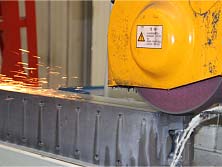
- Mirror Polishing (Ra 0.012): The internal cavity is polished to a mirror finish and plated with 0.05mm of hard chrome. This ultra-smooth surface reduces pulling friction by 25%, significantly lowering the risk of surface "fuzzing."
3. FRP Oval Rod Mould Technical Parameters
| Engineering Specification | Zhongsheng Standard Value | Industrial Significance |
|---|---|---|
| Profile Specification | 15.5mm ~ 24.5mm (Customizable) | Optimized for insulation and handles. |
| Cavity Material | Cr12 / H13 / 38CrMoAI | Exceptional wear & heat resistance. |
| Cavity Hardness | HRC 55 - 62 | Immune to fiber-induced erosion. |
| Surface Smoothness | Ra 0.025 ~ 0.012 | Ensures a high-gloss, low-friction finish. |
| Straightness | < 0.02 mm / meter | Critical for precision mechanical parts. |
| Plating Thickness | 0.04 - 0.06 mm | Industrial-grade chrome protection layer. |
4. Optimized Performance Factors
- Resin Consistency: Compatible with Unsaturated Polyester, Vinyl Ester, and Polyurethane systems, the mould handles a wide range of chemical exotherms.
- High Pulling Speeds: The ultra-low friction of our chrome-plated cavities allows for pulling speeds up to 1.2 m/min, maximizing daily output.
- Structural Balance: Designed to accommodate up to 80% longitudinal roving content, ensuring maximum tensile strength for structural applications.
10 Professional FAQs: Oval Rod Mould Engineering
Q1: "Can the ovality ratio (major vs. minor axis) be customized?"
A: Yes. We can machine the cavity to any elliptical ratio required for your specific ergonomic or mechanical design.
Q2: "What is the expected lifespan of a Cr12 oval rod mould?"
A: With proper maintenance and mirror-finish chrome plating, you can expect between 100,000 and 150,000 meters of production.
Q3: "How do you prevent 'core cracking' in thick oval rods?"
A: This is managed through precision multi-zone heating that controls the curing speed from the outer surface to the core, preventing thermal stress build-up.
Q4: "Is carbon fiber compatible with this mould?"
A: Yes, but for carbon fiber, we recommend H13 steel with specialized nitriding or DLC coating to handle the specific fiber properties.
Q5: "Does the mould come with matched pre-former plates?"
A: Yes. Every oval rod mould includes a set of stainless steel pre-formers to ensure fibers are perfectly aligned before entering the heated zone.
Q6: "Why is the straightness tolerance so tight (0.02mm)?"
A: Precision is key for rods used in electrical switchgear or automated machinery where any bowing can cause mechanical failure.
Q7: "Can I use the same die for both Polyester and Vinyl Ester resins?"
A: Yes. The hard chrome surface is chemically inert and highly resistant to both resin systems.
Q8: "What is the typical pulling speed for a 20mm oval rod?"
A: Depending on the resin system, speeds typically range from 0.5 to 1.0 meters per minute.
Q9: "How do I clean resin residue from the elliptical cavity?"
A: Our Ra 0.012 finish makes cleaning easy. We recommend using brass scrapers while the mould is warm followed by a light solvent wipe.
Q10: "Do you offer technical consultation for heating rod placement?"
A: Yes. Along with the mould, we provide a recommended heating configuration to ensure optimal curing across the elliptical profile.
Expert Precision Tooling Consultation
Scale up your profile production with Henan Zhongsheng Composite Materials Co., Ltd. Led by Jessica Huang, our engineering team is a world leader in high-precision FRP Pultrusion Moulds.
Get a technical quote for your oval die:
- Lead Engineering Consultant: Jessica Huang
- Technical Engineering Email: Jessica@frpzs.com
- Global WhatsApp: +86 15303735673