+86 15303735673
 Jessica@frpzs.com
 Technical Data


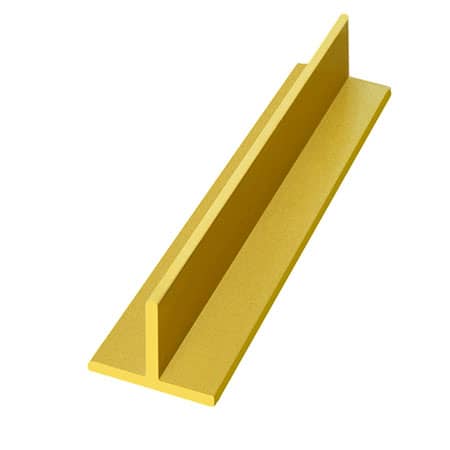
Fiberglass T Profiles: The Structural Backbone of Modern Composites
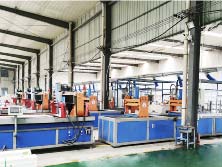
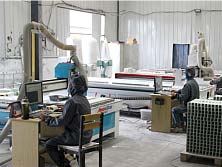
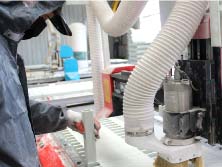
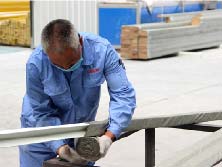
In the evolving industrial landscape of 2026, Fiberglass T Profiles (also known as GRP T-sections) have become the go-to solution for structural framing where weight reduction and corrosion immunity are non-negotiable. Engineered through a precise pultrusion process, these profiles combine continuous strand rovings with specialized resin matrices to provide high longitudinal strength and flexural stiffness. At Henan Zhongsheng (FRPZS), we manufacture T-profiles that bridge the gap between architectural flexibility and heavy-duty industrial endurance.
1. Mechanical Superiority & Material Benefits
Fiberglass T-sections offer a unique geometry that excels in load distribution for support grids and cable management systems. Their advantages over traditional aluminum or steel include:
- Elite Strength-to-Weight Ratio: With a density of only 1.85 g/cm³, our T-profiles are significantly lighter than steel, allowing for rapid installation and reduced structural dead loads without compromising on 400 MPa flexural strength.
- Dielectric & Thermal Insulation: Naturally non-conductive, these profiles are ideal for high-voltage environments like power plants and substations, preventing electrical tracking and reducing thermal bridging.
- Exceptional Chemical Resilience: Whether exposed to sulfuric acid in chemical plants or salt spray in offshore wind farms, our Vinyl Ester and Polyurethane T-profiles remain structurally sound and rust-free.
- Dimensional Stability: Low thermal expansion coefficients ensure that your frames remain perfectly aligned even in regions with extreme temperature fluctuations.
2. Technical Performance & Parameters
The mechanical performance of a GRP T-profile is a result of precision fiber arrangement (rovings for tension, mats for transverse stability). Below are the standardized benchmarks for our industrial-grade T-sections:
| Engineering Property | Unit | Typical Value Range | Industrial Impact |
|---|---|---|---|
| Density | g/cm³ | 1.85 | 75% lighter than steel beams. |
| Tensile Strength | MPa | 200 - 400 | High load-bearing capacity. |
| Flexural Strength | MPa | 300 - 500 | Resists bending under weight. |
| Modulus of Elasticity | GPa | 20 - 40 | Predictable structural rigidity. |
| Dielectric Strength | kV/mm | 10 - 20 | Essential for electrical utilities. |
| Flammability | UL94 | V0 / HB | Self-extinguishing properties. |
3. Versatile Applications
- Structural Grids: Used as support beams for FRP gratings in wastewater treatment and chemical facilities.
- Cable Management: Serving as the main rail for high-capacity cable trays and ducts in corrosive tunnels.
- Marine Infrastructure: Rot-proof fencing and railing systems for piers, docks, and offshore platforms.
- Cooling Towers: Primary structural frames that withstand constant moisture and fluctuating chemical loads.
10 Professional FAQs: Fiberglass T-Profile Selection
Q1: "Which resin system is best for a T-profile exposed to caustic chemicals?"
A: For extreme chemical exposure, Vinyl Ester is the gold standard. It provides a superior barrier against acid and alkaline penetration compared to standard polyester.
Q2: "Can T-profiles be used as direct replacements for aluminum in window frames?"
A: Yes. Due to their low thermal conductivity (0.2 - 0.4 W/mK), they provide excellent thermal breaks, reducing energy loss significantly.
Q3: "How do you join two GRP T-profiles together?"
A: They can be joined using stainless steel hardware or specialized FRP connectors and industrial-grade adhesives like MMA (Methyl Methacrylate) for a seamless structural bond.
Q4: "Are these profiles UV-stable for outdoor use?"
A: Absolutely. We incorporate UV inhibitors into the resin matrix and apply a synthetic surfacing veil to ensure long-term color and structural integrity under direct sunlight.
Q5: "What is the maximum length available for pultruded T-profiles?"
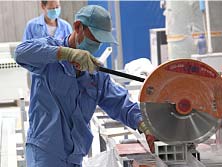
A: While pultrusion is a continuous process, standard shipping lengths are 6 or 12 meters. We can cut to custom lengths based on your project requirements.
Q6: "Can you provide T-profiles with fire-retardant properties?"
A: Yes. We offer formulations that achieve the UL94 V0 rating, making them suitable for tunnels and indoor industrial facilities.
Q7: "Is it possible to paint or dye the profiles?"
A: The color is usually integrated during the pultrusion process. However, the surface provides an excellent "key" for high-performance industrial paints if on-site color matching is needed.
Q8: "Do you offer custom cross-section dimensions for T-profiles?"
A: Yes. While we have many standard moulds, we can engineer custom tooling for specific width, height, and thickness requirements.
Q9: "How do FRP T-profiles handle impact compared to PVC?"
A: FRP is far superior. The glass fiber reinforcement provides impact resistance (up to 50 KJ/m²) that prevents the shattering or brittle failure common in unreinforced plastics.
Q10: "How do I specify the fiber percentage for my order?"
A: Our engineering team can help. Generally, a higher fiber percentage (up to 65-70%) is used for high-tensile applications, while a balanced mix is used for general structural framing.
Request a Structural Quote
Partner with Henan Zhongsheng Composite Materials Co., Ltd. for premium Fiberglass T-Profile solutions. Led by Jessica Huang, we provide high-performance structural composites to the global industrial market.
Contact us with your project specifications:
- Technical Sales Director: Jessica Huang
- Engineering Support Email: Jessica@frpzs.com
- Global WhatsApp: +86 15303735673