+86 15303735673
 Jessica@frpzs.com
 Technical Data


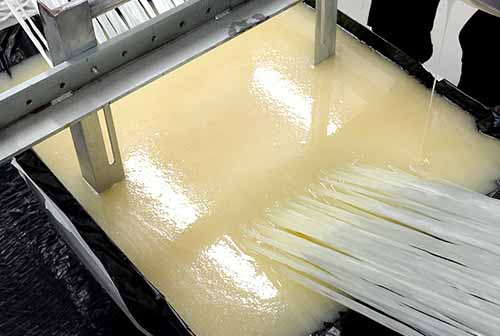
Engineering Insight: In the production of FRP profiles, the resin acts as the polymer matrix that binds glass fibers together and protects them from environmental degradation. The choice of FRP Profile Resin directly dictates the profile's ultimate strength-to-weight ratio, its dielectric properties, and its resistance to corrosive chemicals. Henan Zhongsheng, with over 20 years of manufacturing excellence, analyzes the critical differences between resin systems.
1. The Fundamental Split: Thermoset vs. Thermoplastic
Understanding the molecular behavior of FRP Profile Resins is essential for any construction or industrial project. These resins are broadly categorized into two chemical families:
Thermosetting Resins (The Industrial Standard)
Thermosetting resins undergo an irreversible chemical reaction (cross-linking) during the curing process. Once hardened, they cannot be remelted.
[Image of polymer cross linking]- Strengths: Superior thermal stability, high mechanical modulus, and exceptional resistance to creep (deformation under load).
- Key Types: Unsaturated Polyester (UPR), Vinyl Ester (VER), Epoxy, and Phenolic.
- Why they matter: These are the backbone of pultruded profiles used in bridges, cooling towers, and chemical plants.
Thermoplastic Resins (The Flexible Alternative)
Thermoplastics soften when heated and harden when cooled, a repeatable cycle that allows for recyclability.
- Strengths: High impact toughness and short processing cycles. Common materials include Nylon (PA), ABS, and Polyethylene.
- Limitations: Lower heat resistance and higher susceptibility to "cold flow" under long-term structural loads compared to thermosets.
2. Deep Dive into Thermoset Resin Varieties
Not all thermosets are created equal. Depending on the environment, different FRP profile resins offer specialized protection:
A. Unsaturated Polyester Resin (UPR)
The most widely utilized resin in the pultrusion industry due to its economic efficiency and versatility.
- Isophthalic Polyester: Offers enhanced water resistance and mechanical strength, ideal for outdoor infrastructure.
- Orthophthalic Polyester: The standard choice for general-purpose applications where extreme corrosion is not a factor.
B. Vinyl Ester Resin (VER): The Corrosion Champion
Essentially an epoxy-modified resin, Vinyl Ester provides the ultimate defense against acidic and alkaline attacks. It bridges the gap between the processability of polyester and the toughness of epoxy.
C. Epoxy Resin: The Precision Choice
Known for the highest interfacial adhesion with glass fibers, epoxy is reserved for high-performance aerospace and high-voltage electrical components due to its superior dielectric strength.
3. Comparative Performance Analysis
| Resin Category | Chemical Resistance | Mechanical Strength | Thermal Stability | Best Value Application |
|---|---|---|---|---|
| Isophthalic Polyester | Moderate | High | Good | Structural Beams, Cable Trays |
| Vinyl Ester | Superior | Very High | Excellent | Chemical Tanks, Marine Grating |
| Epoxy | High | Extreme | High | Aerospace, Electrical Rods |
| Phenolic | Good | Moderate | Superior (FST) | Subways, Tunnel Liners |
Technical FAQ: FRP Resin Selection
Q1: Why is unsaturated polyester the most popular FRP profile resin?
A: It offers the best balance between cost, ease of molding, and structural performance for 80% of construction and industrial needs.
Q2: Can FRP profiles be recycled?
A: Thermoplastic FRP is easily recyclable. Thermoset FRP (most profiles) is typically repurposed as aggregate or filler in concrete, as its cross-linked structure cannot be remelted.
Q3: How does resin choice affect electrical insulation?
A: While all FRP resins are non-conductive, Epoxy resin provides the highest dielectric strength and lowest moisture absorption, making it the safest choice for high-voltage environments.
Q4: What is the benefit of "Epoxy-modified" vinyl resin?
A: It provides the chemical resistance of vinyl ester with the high-heat deflection temperature and fatigue resistance of epoxy.
Q5: How does UV radiation impact the resin?
A: Without additives, resin can undergo "fiber blooming" (surface erosion). Henan Zhongsheng integrates UV stabilizers and surface veils into the matrix to ensure 30+ years of outdoor durability.
Q6: Is phenolic resin worth the higher cost?
A: Yes, if your project requires strict Fire-Smoke-Toxicity (FST) compliance. Phenolic resin is the gold standard for enclosed public spaces like tunnels and subways.
Expert Resin Engineering by Henan Zhongsheng
With two decades of specialization, Henan Zhongsheng Composite Materials Co., Ltd. doesn't just sell FRP profiles; we engineer them. Our technical team can customize the FRP Profile Resin system to meet your exact specifications for corrosion, heat, and load.
Contact Jessica Huang for Technical Consultation & Quotes:
- Email: Jessica@frpzs.com
- WhatsApp: +86 15303735673
- Global Reach: Supplying premium engineered composites to India, USA, Europe, and Australia.