+86 15303735673
 Jessica@frpzs.com
 Technical Data


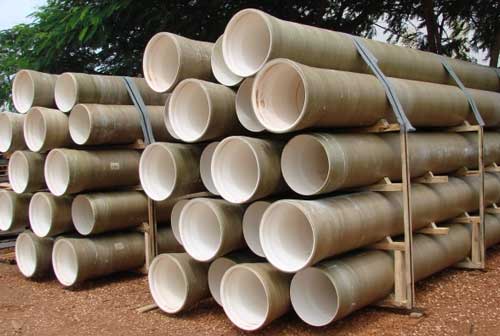
Zhongsheng Composite Engineering: High-performance FRP piping and structural solutions.
Introduction: The Material Science Behind FRP
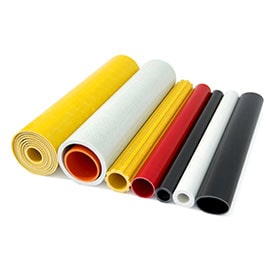
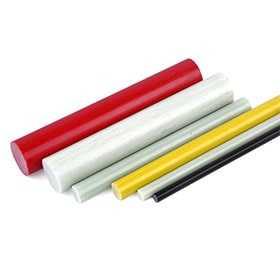
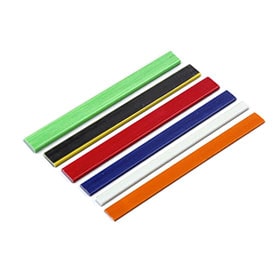
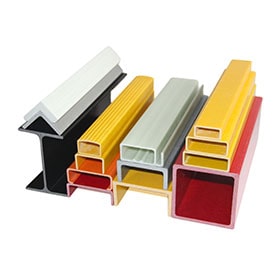
In 2026, Fibre Reinforced Plastic (FRP) has redefined the limits of structural engineering. As a composite system, FRP synergizes the high tensile strength of reinforcing fibers with the protective, stress-distributing properties of a polymer matrix. At Henan Zhongsheng (FRPZS), we leverage this versatility to create custom-engineered profiles that outperform metals in strength-to-weight ratio, fatigue resistance, and total cost of ownership (TCO).
1. The Anatomy of Versatility: Fibers & Matrices
The "Versatility" of Fibre Reinforced Plastic stems from the ability to tailor its chemistry and architecture to specific mechanical loads.
I. The Reinforcement Phase
- Glass Fiber (GFRP): The industry standard for balanced cost, electrical insulation, and chemical resistance.
- Carbon Fiber (CFRP): Specified for ultra-high modulus and extreme weight reduction in aerospace and high-speed rail.
- Aramid Fiber (AFRP): Essential for impact resistance and ballistic protection due to its high toughness and energy absorption.
II. The Matrix Phase (Thermosetting Systems)
The resin matrix binds the fibers and dictates the environmental limits of the component:
- Epoxy: Superior adhesion and mechanical strength for critical structural parts.
- Vinyl Ester: Excellent corrosion resistance, ideal for marine and chemical processing.
- Polyester: The versatile, cost-effective choice for general construction and pultruded profiles.
2. Sector-Specific Applications (2026 Insights)
| Industry | Core Application | FRP Advantage |
|---|---|---|
| Aerospace | Gliders, Helicopter Rotors, Fairings | Extreme strength-to-weight; fatigue resistance |
| Automotive | EV Battery Enclosures, Chassis Parts | Weight reduction for extended range; EMI shielding |
| Marine | Boat Hulls, Offshore Platforms | Absolute resistance to saltwater & osmotic blistering |
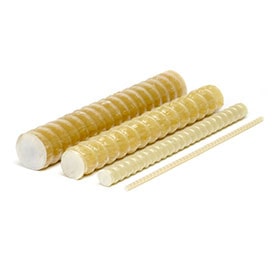
| Construction | Fiberglass Rebar, I-Beams, Bridges | Non-corrosive alternative to steel; 100-year life |
3. Advanced Engineering: Tailored Strength
The true power of Fibre Reinforced Plastic lies in its directional tailoring. Unlike isotropic metals (which have the same strength in all directions), FRP can be pultruded or molded to align fibers specifically with the load paths of the structure. This eliminates "wasted" material weight, allowing for high-efficiency designs in bridge girders and industrial equipment.
4. Future Prospects: Sustainability & Automation
As we move further into 2026, research focuses on two major fronts:
- Bio-Based Resins: Developing high-performance polymers derived from sustainable sources to reduce the carbon footprint of FRP manufacturing.
- Automated Pultrusion: Using AI-driven closed-loop systems (like those deployed at Henan Zhongsheng) to ensure zero-defect production and ultra-consistent mechanical properties.
10 Technical FAQs: Maximizing FRP Versatility
Q1: "Is Fibre Reinforced Plastic recyclable?"
A: Yes. Modern thermal and chemical processes can now reclaim fibers from cured FRP, which are then used to reinforce high-strength concrete or new composite thermoplastic components.
Q2: "How does FRP handle high-temperature environments?"
A: It depends on the resin. While standard polyesters work up to 80°C, specialized Phenolic or high-TG Epoxy systems can maintain structural integrity at temperatures exceeding 200°C.
Q3: "Can I use FRP in contact with drinking water?"
A: Yes, by utilizing food-grade resins that comply with FDA or WRAS standards, FRP is an excellent choice for water storage and piping.
Q4: "Is it more expensive than aluminum?"
A: While the material cost may be comparable or slightly higher, the **Total Lifecycle Cost** is lower due to zero corrosion maintenance and significantly reduced installation labor.
Q5: "Does FRP conduct electricity?"
A: GFRP (Fiberglass) is an excellent insulator. However, CFRP (Carbon Fiber) is conductive, which is why GFRP is preferred for power utility applications.
Q6: "How do you join two FRP components?"
A: We utilize a combination of high-strength structural adhesives (Epoxy/MMA) and mechanical fasteners (SS316 bolts) to ensure load transfer across joints.
Q7: "Can FRP be made fire-retardant?"
A: Absolutely. By adding alumina trihydrate (ATH) or using brominated resins, our FRP profiles can achieve Class A fire ratings (ASTM E84).
Q8: "Does UV light degrade the plastic matrix?"
A: All polymers are sensitive to UV, but we integrate UV stabilizers and a polyester surface veil to prevent surface "blooming" and maintain mechanical properties for decades.
Q9: "What is the typical lead time for custom FRP profiles?"
A: For standard geometries, we maintain stock. For custom pultrusion molds, our in-house tooling team can typically deliver a prototype within 3-4 weeks.
Q10: "Can Zhongsheng match specific architectural colors?"
A: Yes. We pigment the resin matrix to any RAL or Pantone color, ensuring the color is consistent throughout the entire thickness of the profile.
Expert Composite Engineering: Henan Zhongsheng
Discover the full potential of Fibre Reinforced Plastic with Henan Zhongsheng Composite Materials Co., Ltd. Led by Jessica Huang, our technical team supports your project from material selection to global logistics.
Consult with our FRP specialists today:
- Technical Consultant: Jessica Huang
- Direct Engineering Inquiry: Jessica@frpzs.com
- Global WhatsApp: +86 15303735673