+86 15303735673
 Jessica@frpzs.com
 Technical Data


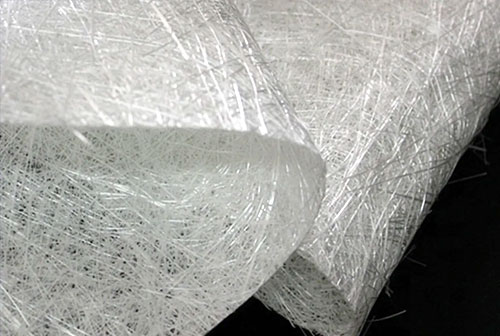
Zhongsheng Material Science: The synergy of unidirectional roving and CSM in high-strength pultrusion.
The Missing Link: Why Unidirectional Roving is Not Enough
In standard pultrusion, unidirectional glass rovings provide immense longitudinal strength. However, without Chopped Strand Mat (CSM), an FRP profile would be prone to longitudinal splitting and lacks transverse integrity. At Henan Zhongsheng (FRPZS), we utilize CSM as a strategic reinforcement to transform anisotropic fibers into a robust, multi-directional structural component.
1. The Mechanical Impact of CSM: Beyond the Surface
CSM consists of randomly oriented glass strands bonded by a soluble binder. Its integration into the pultrusion layup provides several critical mechanical upgrades:
I. Transile & Transverse Strength
While rovings handle the pulling tension, CSM provides transverse strength (cross-wise strength). This prevents "splitting" along the grain when the profile is subjected to side-loading, bolting, or mechanical fastening.
II. Impact Energy Absorption
The random orientation of CSM strands creates a "web" that dissipates energy. Unlike pure roving, which can delaminate upon localized impact, CSM-reinforced profiles exhibit superior shatter resistance and toughness.
III. Dimensional Stability & Isotropic Balance
CSM reduces the extreme anisotropy of pultruded profiles. By balancing the thermal expansion coefficient between the longitudinal and transverse axes, CSM ensures the profile maintains its shape under extreme temperature fluctuations, preventing warping.
2. Surface Integrity: The Protection Barrier
One of the most overlooked functions of CSM is its role in Surface Quality. During the pultrusion process, CSM acts as a filter and a carrier:
- Resin-Rich Surface: CSM helps hold a higher resin-to-glass ratio at the surface, creating a protective barrier against chemical ingress.
- Preventing Fiber Blooming: By encapsulating the internal rovings, CSM prevents "fiber blooming" (where individual fibers become exposed over time due to UV or abrasion).
- Interlaminar Bonding: CSM provides a better "key" for secondary coatings or bonding adhesives compared to smooth roving surfaces.
3. Comparative Performance Analysis
| Property | Pure Roving Profile | Roving + CSM Profile | Technical Advantage |
|---|---|---|---|
| Longitudinal Strength | Extremely High | High (Slightly Lower) | Adequate for most structural loads |
| Transverse Strength | Very Low | Significant Improvement | Prevents splitting/bolting failure |
| Impact Resistance | Brittle (Delaminates) | Tough (Energy Dissipation) | Higher safety in dynamic loads |
| Surface Finish | Roving patterns visible | Smooth & Homogeneous | Better aesthetics and UV life |
| Weatherability | Moderate | Excellent | Resistant to fiber exposure |
4. Sector Applications of CSM-Reinforced Profiles
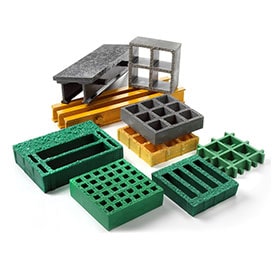
- Industrial Infrastructure: Grating and I-beams in chemical plants where transverse loads and chemical protection are paramount.
- Marine Construction: Piles and boardwalks exposed to salt spray and high-energy wave impacts.
- Telecommunications: Antenna masts where dimensional stability is required to maintain signal alignment during wind loads.
- Electrical Engineering: Cross-arms and ladders where the smooth surface prevents electrical tracking and provides safe handling for workers.
10 Professional FAQs: Optimizing CSM in FRP Profiles
Q1: "Does adding CSM increase the cost of the profile?"
A: Yes, material and processing costs are slightly higher, but the increase is offset by the 50% increase in transverse strength and longer service life.
Q2: "Can CSM replace woven roving or fabric?"
A: CSM is excellent for general reinforcement. However, for ultra-high shear loads, we recommend a combination of CSM and Continuous Filament Mat (CFM) or stitched fabrics.
Q3: "How does CSM affect the weight of the profile?"
A: CSM has a lower fiber density than roving, meaning the profile may be slightly lighter for the same volume, though resin content typically increases.
Q4: "Is CSM suitable for all resin types?"
A: Most CSM is compatible with Polyester and Vinyl Ester. For Epoxy systems, specialized mats with specific binders must be used to ensure full wetting.
Q5: "Why is my profile splitting even with CSM?"
A: This usually points to an incorrect "layup" where the CSM layer is too thin or wasn't properly impregnated with resin during the pultrusion cycle.
Q6: "Does CSM improve the fire rating?"
A: CSM itself doesn't change the flame spread, but it holds fire-retardant resins at the surface more effectively than roving does.
Q7: "Is there a specific thickness for CSM layers?"
A: Typical CSM weights for pultrusion range from 300g/m² to 900g/m², depending on the structural requirements of the profile wall.
Q8: "Does CSM help with UV resistance?"
A: Indirectly, yes. It allows for a thicker resin-rich outer layer which protects the core glass fibers from UV-driven erosion.
Q9: "Can I get a custom layup with extra CSM for impact zones?"
A: Absolutely. At Zhongsheng, we can engineer custom layups that concentrate CSM in high-stress areas of the profile cross-section.
Q10: "How do I know if a profile contains CSM?"
A: A profile with CSM will have a smooth, uniform surface appearance, whereas roving-only profiles often show parallel lines or "ghosting" of the internal glass strands.
Expert Reinforcement Engineering: Zhongsheng FRP
Partner with Henan Zhongsheng Composite Materials Co., Ltd. for high-performance pultruded solutions. Our technical team, led by Jessica Huang, specializes in optimized fiber-layup designs for your most demanding industrial applications.
Contact our composite specialists today:
- Technical Consultant: Jessica Huang
- Direct Engineering Inquiry: Jessica@frpzs.com
- Global WhatsApp: +86 15303735673
- Full Product Catalog: www.frpzs.com
- Stay Connected: LinkedIn | YouTube