+86 15303735673
 Jessica@frpzs.com
 Technical Data


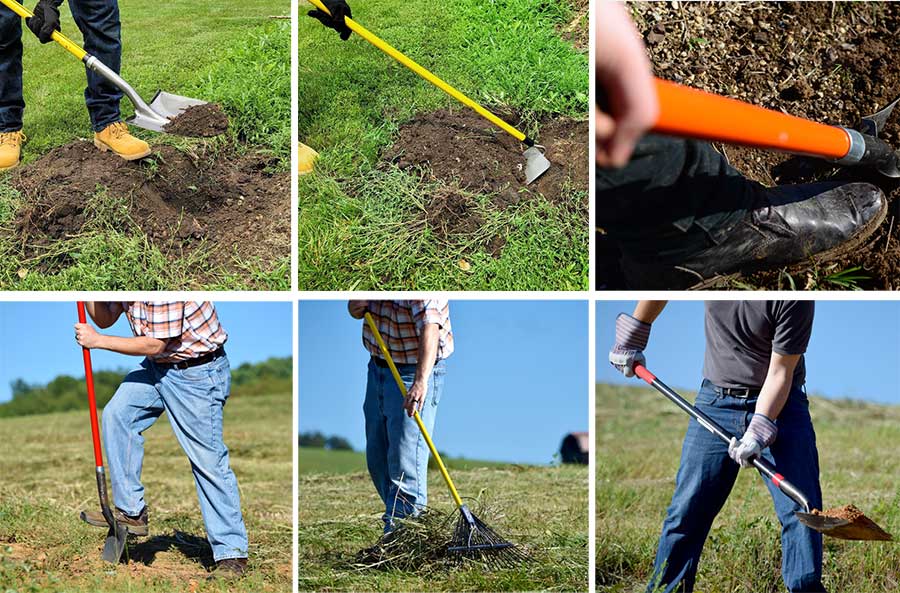
Professional Insight: In the professional tool industry, the shift from traditional ash or hickory to Fiberglass Reinforced Polymer (FRP) handles is driven by more than just durability. It is an evolution toward enhanced dielectric safety and mechanical consistency. Henan Zhongsheng, with over 20 years of pultrusion expertise, manufactures high-modulus fiberglass handles that eliminate the inherent biological flaws of timber, providing a precision-engineered solution for global markets.
1. Mechanical Consistency: Fiberglass vs. Wood
The primary disadvantage of wood is its anisotropy—the material's strength varies significantly based on grain direction and moisture content. Wood handles are prone to "checking" (splitting) and can become brittle in dry climates or rot in humid ones.
Fiberglass handles, produced via the pultrusion process, offer perfectly consistent longitudinal strength. By aligning high-strength glass rovings within a specialized resin matrix, we create a handle with a Strength-to-Weight Ratio far exceeding that of even the best hickory. This ensures that every handle produced meets the exact same flexural and tensile specifications.
Technical Benchmarking: Material Performance Metrics
| Property | Testing Standard | Zhongsheng FRP Handle | Premium Ash/Hickory |
|---|---|---|---|
| Electrical Conductivity | Dielectric Test | Non-Conductive (Safe) | Conductive when Damp |
| Moisture Absorption | ASTM D570 | < 0.5% (Stable) | 12% - 20% (Swelling) |
| Vibration Damping | Internal Damping | High (Reduces Fatigue) | Moderate |
| Corrosion Resistance | Chemical Resistance | Excellent (Acids/Oils) | Poor (Biodegradable) |
| Service Life | Accelerated Aging | 20+ Years | 3 - 5 Years (Variable) |
2. Safety and Ergonomics: The Dielectric Advantage
For utility workers and electricians, the non-conductive nature of fiberglass is its most critical feature. Wood can absorb moisture and minerals, making it a dangerous conductor in electrical environments. FRP handles act as natural insulators, providing an essential layer of secondary protection against accidental line contact.
Furthermore, fiberglass excels in Vibration Damping. When using high-impact tools like sledges or axes, fiberglass absorbs more of the shock wave, reducing the repetitive strain on the user’s joints (often referred to as "Hand-Arm Vibration Syndrome"). Unlike wood, fiberglass will not splinter, eliminating the risk of puncture injuries during high-force use.
3. Environmental Resilience: All-Weather Performance
Industrial tools are often left in the beds of trucks or on outdoor sites. Wood handles swell and shrink with humidity, eventually loosening the tool head—a major safety hazard. Pultruded fiberglass handles are dimensionally stable from -40°C to +80°C. They are immune to rot, termite attack, and chemical exposure (such as oils, fuels, and hydraulic fluids), ensuring that the tool head remains securely seated for the life of the tool.
Expert FAQ: Choosing the Right Tool Handle
Q1: Why are fiberglass handles more expensive initially?
A: The cost reflects the high-quality E-glass fibers and thermoset resins used in pultrusion. While the CAPEX is higher, the Total Cost of Ownership is lower because fiberglass handles outlast wood by 4 to 5 times, reducing replacement and labor costs.
Q2: Can fiberglass handles be customized for specific tools?
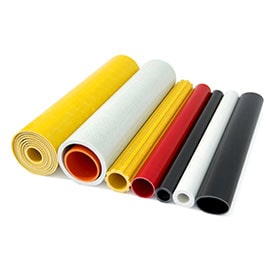
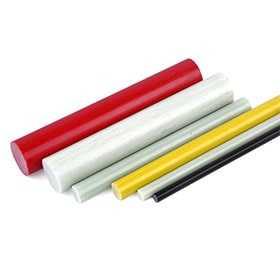
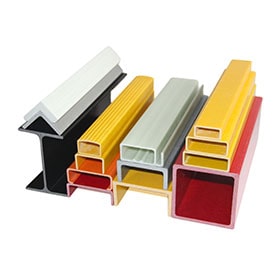
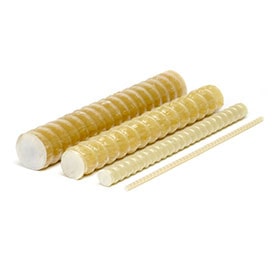
A: Yes. At Henan Zhongsheng, we offer various profiles, including solid rods, hollow tubes, and custom shapes. We can also integrate a "textured grip" directly into the surface veil for improved slip resistance in oily or wet conditions.
Q3: How do you identify a high-quality fiberglass handle?
A: Look for a smooth, resin-rich finish. Lower-quality handles may have exposed fibers (fiber blooming). Our handles utilize a protective surface veil that ensures no glass fibers ever come into contact with the user's skin.
Q4: Do fiberglass handles become brittle in the cold?
A: Unlike basic plastics, thermoset FRP maintains its impact strength in sub-zero temperatures, making it the preferred choice for winter forestry and railway maintenance in arctic climates.
Q5: Is fiberglass environmentally friendly?
A: Sustainability is found in durability. By choosing a handle that lasts 20 years instead of 4, you significantly reduce the cycle of resource consumption, waste generation, and transportation energy.
Q6: Are fiberglass handles heavier than wood?
A: Typically, no. In most tool applications, a hollow-core fiberglass handle provides equivalent strength to solid wood at a 20-30% weight reduction, making it much more ergonomic for long-shift use.
Upgrade Your Tool Inventory with Henan Zhongsheng
Henan Zhongsheng Composite Materials Co., Ltd. is a premier FRP manufacturer specializing in high-strength pultruded profiles. We partner with tool brands worldwide to provide handles that define "Professional Grade." Whether you need insulated handles for electrical work or heavy-duty shovel handles, our technical team can deliver to your exact specifications.
Contact Jessica Huang for a Quote & Sample:
- Email: Jessica@frpzs.com
- WhatsApp: +86 15303735673
- Global Supply: Providing ASTM-compliant fiberglass solutions across India, Australia, Europe, and America.